The Ultimate Guide To Playa Arrecifes in Tayrona National Park
Playa Arrecifes (Arrecifes Beach) is a stunning stretch of coastline found deep inside Tayrona National Park. One of many beaches inside the 150 km² national park, it’s a popular stopover for hikers and explorers to camp at.
In this ultimate travel guide, we’re deep-diving into everything you need to know about visiting Playa Arrecifes, where you can camp and the process of getting there. Stick around until the end where we’ll provide our opinion on whether Playa Arrecifes is worth visiting or not!
This post may contain affiliate links. Please read our Disclosure Policy.
About Playa Arrecifes in Tayrona
Playa Arrecifes literally translates to ‘reef beach’. We’re not entirely sure why though, as it’s actually forbidden to swim here due to the strong currents so you can’t even snorkel the reef even if you wanted to.
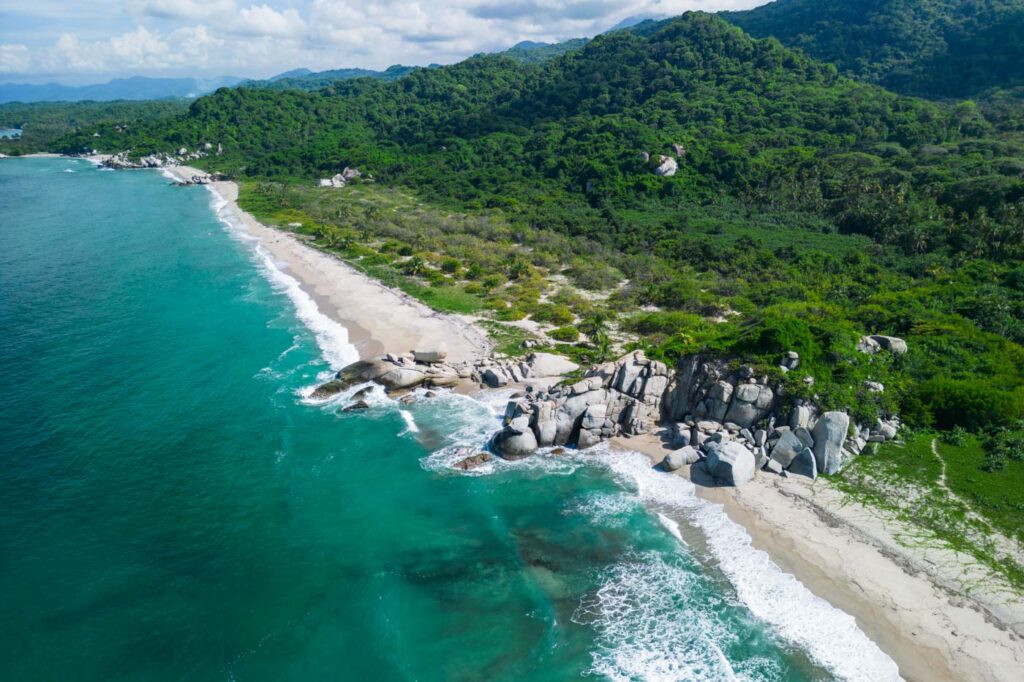
An astonishingly long beach, Playa Arrecifes is broken into two sections by a huge rocky outcrop. Generally you’ll find it pretty empty, a result of the no swimming rule which, by extension, also leads to a no sunbathing rule as well.
Playa Arrecifes is fringed by palm trees and low-growth plants, kind of lending to a ‘post-apocalyptic’ vibe where nature is slowly taking over. The beach itself is incredibly wide and there’s very little escape from the sun, so it’s not the most tourist friendly beach either.
Where is Playa Arrecifes?
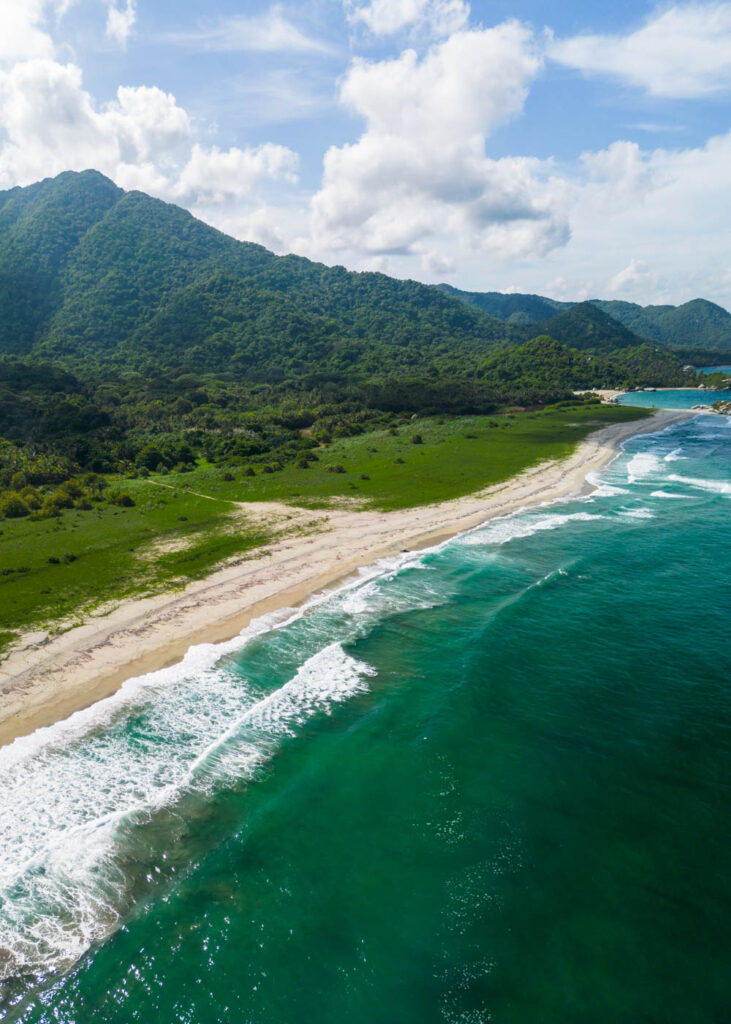
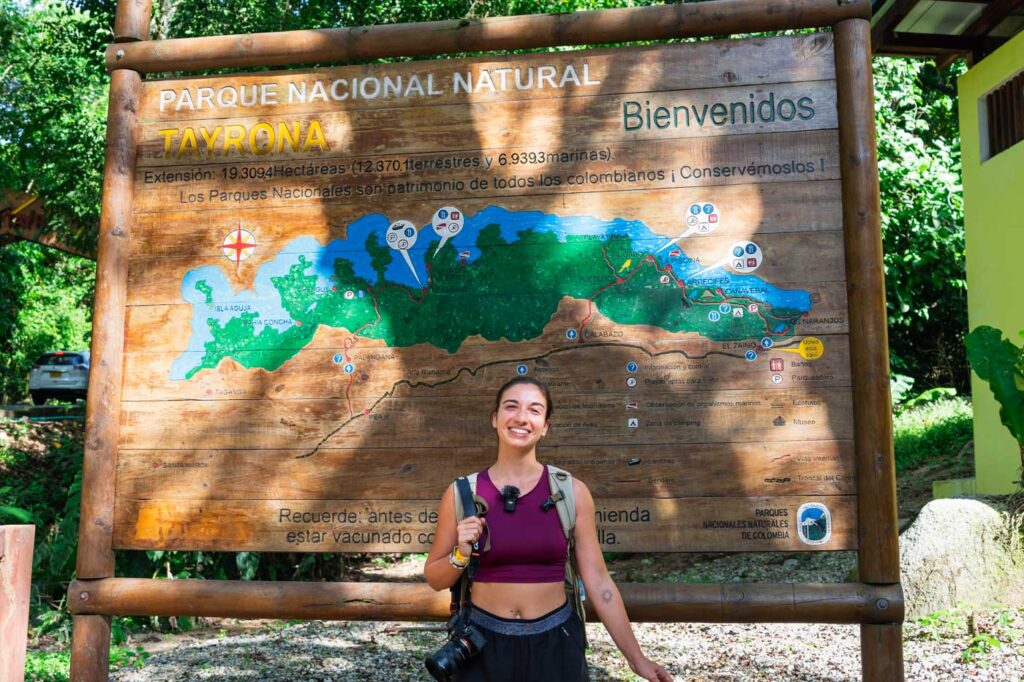
Playa Arrecifes is located roughly an 8km hike into Tayrona National Park – or Parque Tayrona. But where is Tayrona? It’s situated on the Caribbean coast of Colombia in the country’s north-east region.
The nearest town to Playa Arrecifes is Santa Marta. You may not have heard of Santa Marta before, and we don’t blame you, but it’s a quaint town about a 4.5 hour drive east from Cartagena.
How to get to Tayrona National Park
To get to Tayrona National Park, you first need to either get to the Santa Marta area or Cartagena. Ideally, Santa Marta would be your best shot as it’s much closer to the park.

By plane
For a swift and hassle-free journey to Santa Marta, catching a flight is your best choice. The town’s historic centre is conveniently located just a 30-minute drive from Simón Bolívar International Airport.
Having personally flown from Medellin to Santa Marta, we found it to be a simple enough process, costing approximately $90 per person, including 23kg of checked luggage. If you find yourself in the Medellin or Bogota region, we wholeheartedly suggest that you fly to save time.
By bus
For those who have been exploring Cartagena or Barranquilla, or seeking a budget-friendly travel option, taking a bus is the only option available. Colombia’s bus system is intricately connected, catering to both locals and budget-conscious travellers. Without a train network, it’s the only affordable alternative for those who may find airfares less accessible.

Our favourite site to book buses in Colombia was Busbud. We used it a few times, the buses were super comfy and we never had any issues.
Santa Marta to Parque Tayrona
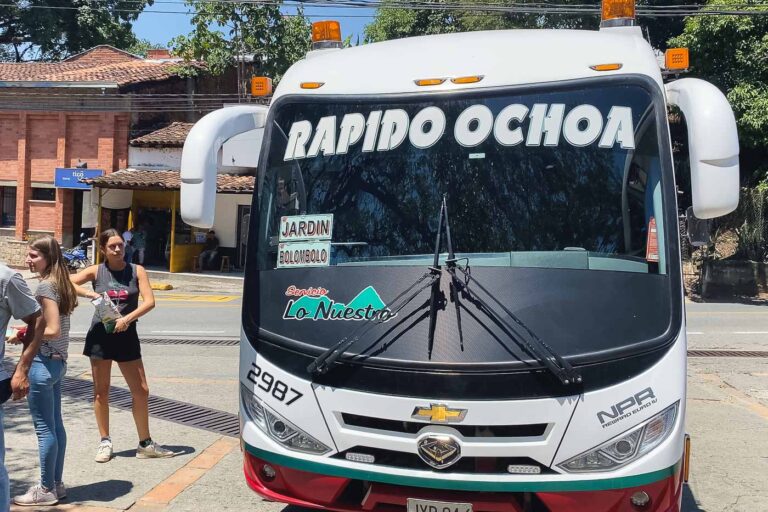
The easiest and most cost-effective way to make the journey is to take the public bus. They run from the Mercado Publico de Santa Marta in the centre of the town every 15-minutes or so.
They’re usually green, but if you can’t find them, ask a local to point you in the right direction. The buses charge 8,000 COP ($1.99) each way, so have some small change! Make sure you get off at the El Zaino entrance of Parque Tayrona.
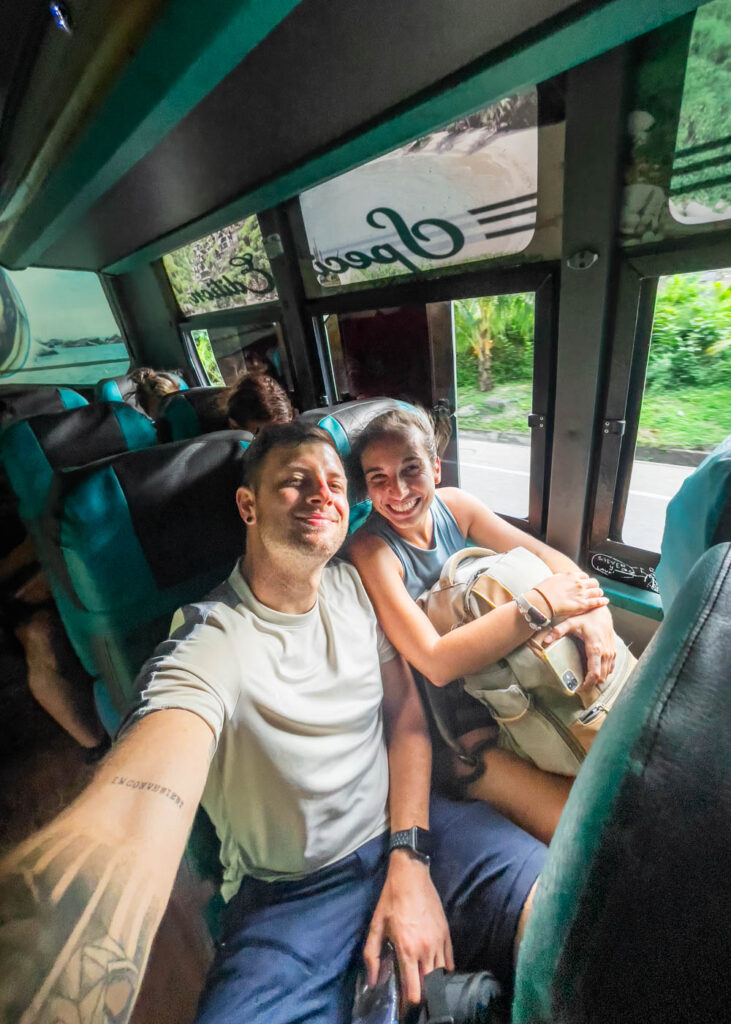
We decided to book a taxi from Santa Marta. It was more of a bougie option but we couldn’t be bothered to fiddle around with buses at 7am. We hailed the cab using an app called InDrive, like Uber but different. The driver charged us 100,000 COP ($25) and dropped us right outside the park entrance.
Cost of entering Tayrona National Park
Once you’ve reached El Zaino, it’s time to enter the park! As a protected area, you’ll need to pay an entrance fee to support park conservation efforts.

While the fee isn’t exorbitant, it’s a noteworthy expense. The entrance cost is 62,000 COP ($15.39) per person, regardless of whether you plan to explore the park for a single day or multiple days.
In addition to the entrance fee, there’s a mandatory insurance charge. This applies even if you already have your own travel insurance. The park is equipped with first aid tents and ambulances for emergencies and to access these services, you’ll need to pay 6,000 COP ($1.49) per day upon entry.

Once you’ve paid, you’ll receive wristbands indicating how many days you’ll be spending in the park. Don’t forget to bring your passport as it’s needed to purchase your tickets.
You need travel insurance.
Sara and I have been using Safety Wing for over two years now! They specialise in nomad travel insurance, so whether you’re travelling long-term or on a short trip, they got you covered!
Hiking to Playa Arrecifes in Tayrona
Now that you’re inside the park, we’ll outline the hike you need to undertake to get to Playa Arrecifes.

Bear in mind that we’re going to cover the hike directly to Arrecifes, there’ll be no passing go or collecting $200. If you’re looking for more detailed guides on other beaches or hiking trails in Tayrona, we’ve probably written them or are planning to write them. So we’ll link the relevant articles!
El Zaino to Cañaveral
This initial stretch of the hike offers two options: you can either choose to walk or opt to take the convenient shuttle buses!

Our choice was to continue on foot. We had read online that we would see a ton of Colombia’s distinctive wildlife along the way. The trail is straightforward, just follow the road, but do exercise caution as the shuttle buses speed past every 10-minutes.
Here are the hiking stats:
DISTANCE
4km
ELEVATION
42m
EST. TIME
1 hour
SKILL LEVEL
Easy
DISTANCE
4km
ELEVATION
42m
EST. TIME
1 hour
SKILL LEVEL
Easy
Despite our expectations, our wildlife encounters during the hour-long trek boiled down to a lone cotton-top tamarin in the trees and hearing the distant sounds of howler monkeys. The lack of wildlife along the road is possibly due to the frequent road traffic.
After our experience, we actually suggest that you take the bus. The bus fare is a mere 7,000 COP ($1.74) per person, and the journey to Canaveral in less than 10 minutes.

Cañaveral to Arrecifes
DISTANCE
3.8km
ELEVATION
89m
EST. TIME
70 mins
SKILL LEVEL
Moderate
DISTANCE
3.8km
ELEVATION
89m
EST. TIME
70 mins
SKILL LEVEL
Moderate
Continuing on with the second half of our journey, we trekked from Playa Canaveral to Playa Arrecifes. You’ll either be happy or devastated to know that this section has a relatively moderate elevation climb.
Most of the trail, though, is covered with boardwalks, so the hike is relatively smooth. There are the occasional set of stairs, but they’ve also been constructed for easy walking.

Reaching the summit of the elevation rewards you with your first, breathtaking panorama of Playa Arrecifes. The huge beach features a long stretch of white-sand beach, adorned with picturesque palm trees and sculpted rocks acting as wave breaks. It was at this point that we truly felt we had stepped into paradise.
As you head down to Arrecifes, you’ll come across a couple of vendors offering water and ice cream. After a solid climb and breaking out into tropical humidity sweats, an ice-pop really helped replenish our energy. We highly recommend you indulge in an ice-pop too!

Not long after, you’ll find yourself arriving at Playa Arrecifes in Tayrona National Park!
Camping at Playa Arrecifes in Tayrona
One of the more popular activities in Arrecifes is to camp! In fact, there are a few different camping options in this area and it’s sort of turned Playa Arrecifes into a littling camping village.
The most popular campsite in Playa Arrecifes, though, is Camping Tequendama Playa. It’s a more upmarket accommodation option than most of the other campsites nearby. Like most campsites inside Tayrona, they offer pre-pitched tents, hammocks and cabana options. We actually ate lunch at the restaurant here and the food was brilliant!

Other campsites around the area are cheaper but are also much more difficult to book. We actually can’t find anywhere to book these other places online. It’s likely the only way to book at these other sites is to turn up on the day and pray they have space. The quality of the alternatives are not quite as nice as Tequendama though, do we recommend you try to book well in advance!

Would we actually recommend camping at Playa Arrecifes though?
Well actually, no. You can’t sunbathe at the beach or swim in the ocean, so what’s the point? The only reason to stay here is if you’ve entered the park later than planned and don’t think you’ll have time to hike to Cabo San Juan.
We actually published an ultimate guide to Cabo San Juan, so check that out! It’s actually where we would recommend that you camp instead of at Playa Arrecifes.
Restaurants at Playa Arrecifes
As previously mentioned, we stopped at the main restaurant next to Camping Tequendama Playa for lunch. We both chose a chicken-mayo sandwich (because the burgers were sold out) and it was a fancy sandwich to say the least. The meal along with two cokes and two waters set us back 78,000 COP ($19.49), so not too shabby!

There are also smaller restaurants dotting the area around Playa Arrecifes, but not too many. There’s also a small panaderia too which claims to sell breaded goods that were baked on the very same day. We were stuffed from lunch so didn’t indulge.
Playa Arrecifes packing list
If you’re heading to Playa Arrecifes and Tayrona National Park, here’s a quick checklist of items that you NEED to pack:
- Sun Cream – for the sun.
- Mosquito Repellent – the stronger the better.
- Long pants – to protect from mosquitos also.
- Drinking Water – essential to life and living, especially in the tropics.
- Snacks – mainly for if you get peckish en route.
- Spare Clothes – to change out of the sweaty hiking clothes.
- Swimmers – not for Playa Arrecifes though, you can’t swim there…
- Rain Jacket – it may rain, especially in the rainy season.
- Hat/Cap – to protect your head from direct sunlight to prevent possible heat strokes.
- Head Torch – to move around the campsite at night.
- Padlock – essential for lockers if you opt for a hammock.
- Cash – the restaurant does take card but most places are cash only.
- Passport – also essential to be able to enter the park.
- Hiking Boots/Trail Runners – study footwear to make the trek.
- Flip Flops – to walk around camp.
- Toilet Paper – because you never know…

Tips for visiting Playa Arrecifes
After we tackled Tayrona National Park slightly underprepared, here are some tips from two travellers to another:
- No plastic bottles allowed – to help prevent littering in the park, you’re not allowed to enter with plastic bottles.
- Visiting in the off-season rules – we underwent the hike in November. It was technically the rainy season but luckily we only got a bit of rain overnight. The benefit being there’s less people on the trail and at Cabo San Juan.
- Avoid the weekends – similarly, weekends will see large influxes of domestic tourists to Tayrona. If possible, try to plan your trip between Monday to Thursday.
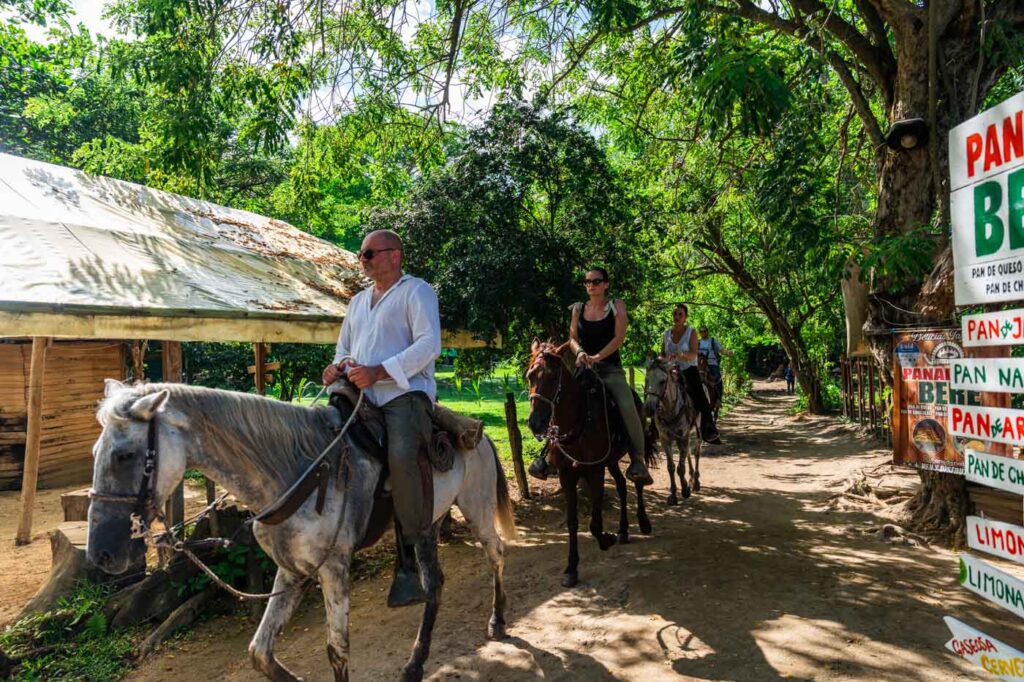
- Tackle some of the trails on horseback – if you’re not the fittest person and you don’t hike very often, consider hiring a horse to ferry you over the longest distances.
- Check to see if Tayrona National Park is open – at certain points of the year Tayrona closes its gates to visitors at the request of the indigenous population. It looks like in 2024, Tayrona will be closed between 1st-15th February, 1st – 15th June and October 19th to November 2nd.
- Prepare for rain – even outside of the rainy season, Tayrona National Park is still a tropical rainforest. So even though it’s less likely, you still may experience some rain.
- Opt for the shuttle bus – we just want to reiterate that the main road from El Zaino to Canaveral doesn’t see much wildlife action. If we were to go again, we’d definitely choose the shuttle instead of walking.
Other beaches to visit close to Playa Arrecifes
In case you haven’t done too much research into Parque Tayrona just yet, we’re going to outline a few of the other beaches you should consider visiting.
Playa Cañaveral
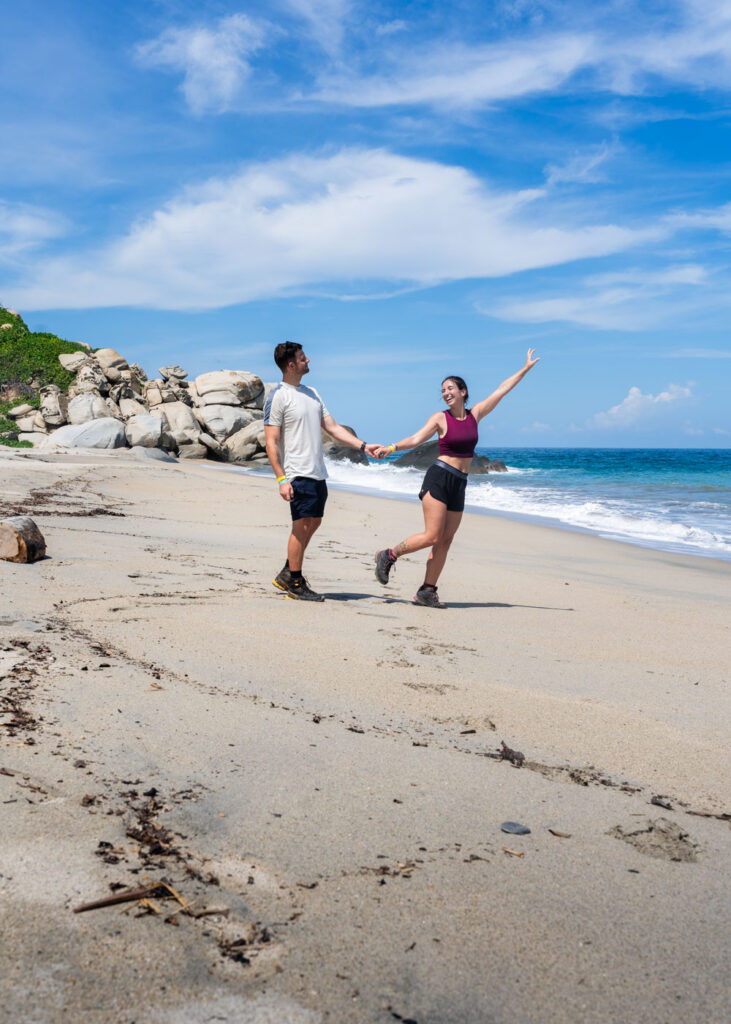
You would have passed by Playa Canaveral en route to Arrecifes. It’s a similar beach, with a similar look and similar rules; no swimming and no sunbathing. Honestly there’s not too much to say about this one!
Playa Arenilla
Playa Arenilla is the first beach along this hiking route that you can actually swim in. A small bay protects from the harshest currents and results in a very tranquil ocean to take a dip. It was actually one of the most peaceful beaches we saw.
There’s a tree line to escape the sun, a couple of small vendors selling drinks and snacks and some cool looking rock stacks to explore. Overall, Playa Arenilla is a great beach.

La Piscina
La Piscina is literally next door to Playa Arenilla. We assume it’s called ‘the pool’ because once again, it’s a swimmable beach! It’s very similar to Playa Amarillo in looks and size and is definitely another high contender for a beach day.

Cabo San Juan
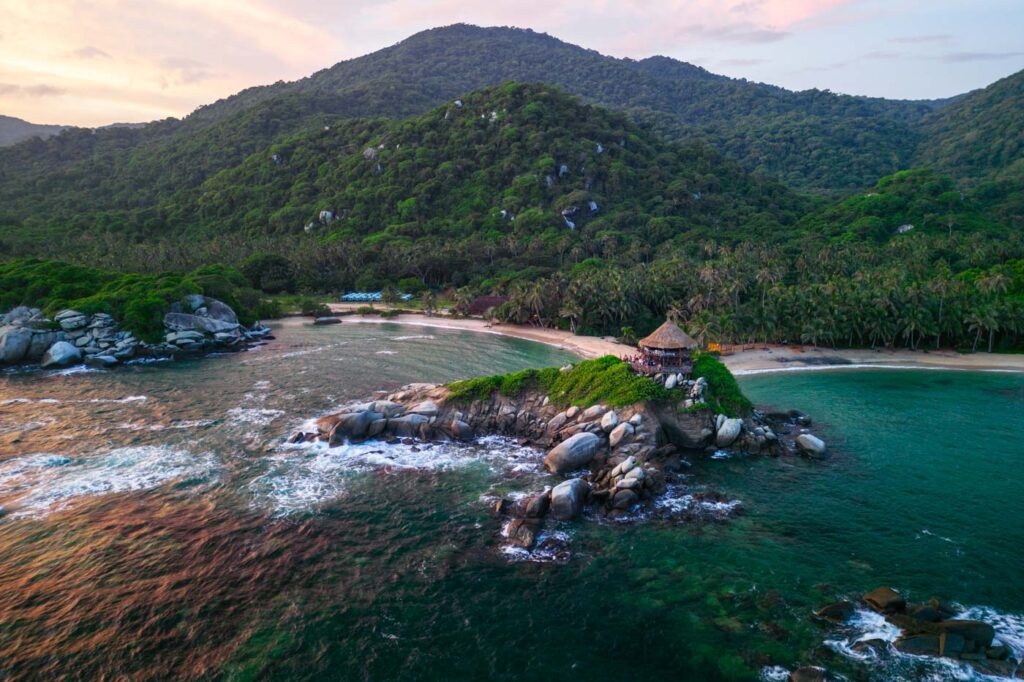
Cabo San Juan is the beach that we actually recommend you book your first night in Tayrona at. It’s a beautiful area with two beaches separated by an outcrop of rocks. We had a great time sunbathing and swimming at Cabo San Juan and could easily see ourselves spending two full days here.
As mentioned, there’s also a campsite here. On top of this, there are also showers, a shop and a restaurant. The restaurant only opens up at certain times during the day so just be aware of that.
Playa Nudista
Just a 15-minute walk beyond Cabo San Juan is Playa Nudista. True to its name, this is a nudist beach. We only passed by on the way through to the next hiking trail but I think we did see a couple of nude bodies in the distance.
Similarly to Playa Arrecifes, it’s forbidden to swim here. We assume that sunbathing is allowed though? It wouldn’t be a very good nudist beach if it wasn’t.
Playa Brava
We didn’t end up going to Playa Brava as we were so exhausted by our hike on the second day we couldn’t face the trek. However, if you decide on a 3-day itinerary in Tayrona National Park then Playa Brava is likely where you’ll be spending your second night.
Instead of tents, Playa Brava offers jungle cabins to sleep in. If you want a unique experience, we’d highly recommend booking one. We tried to book a night here the week before we left, alas, it was already sold out. With that in mind, definitely reserve your jungle hut well in advance!
More Tayrona beaches?
Check out our full guide to all the tourist-accessible beaches inside Tayrona National Park!
Is it worth visiting Playa Arrecifes
If your goal happens to be just to visit Playa Arrecifes, then no, it’s definitely not worth the money and effort to visit. You can’t sunbathe, you can’t swim… what’s the point? However this is highly unlikely to be the case – your goal is to explore Tayrona National Park!
And yes, Parque Tayrona is 100% worth visiting. I’m looking back over the photos to write these blogs and I’m hit with an overwhelming sense of joy as I remember our experiences trekking through the jungle. At the time you might not appreciate being covered in sweat, mosquito bites and having the living soul drained out of you. But trust us, you won’t regret it in the long run!