4 days in Cusco: A full itinerary and everything you need to know!
Congratulations, you’ve only gone and booked a 4 day trip to one of the most beautiful, most cultural and most adventurous cities in Peru!
Sara and I spent a significant amount of time exploring Cusco and the surrounding area. It quickly became one of our favourite places in South America.

We visited rainbow mountains, delved into museums and frolicked around the Sacred Valley. Not to mention the world famous lost city of Machu Picchu – a must-do in this area!
So we want to give you the BEST 4 days in Cusco guide on the internet!
Buckle up buddy, because this is an action packed itinerary that’ll make sure you hit all the major hot spots in one whistle-stop tour!
This post may contain affiliate links. Please read our Disclosure Policy.
Preparing your 4 day trip to Cusco
We already know that if you’re planning a trip to Peru, or South America in general, then you kinda already have an idea of what you’re getting yourself into.
But if Cusco is on your bucket list (actually, if you’re reading this guide then it definitely is!), then here are a few pointers from us:
- Prepare for hills – located in the mountains, it’s no surprise that Cusco isn’t the flattest city in Peru. You’re going to be walking up and down a lot of hills while exploring the area.
- Pack sturdy hiking gear – you’re planning a trip to Cusco, which means you’re probably an outdoor lover like us! There’s plenty of trails and treks around, so bring your best hiking gear.
- Know about the wet season – the rainy season runs from November until March, so plan your gear accordingly. However, we actually visited in December and January and the rain never stopped us from heading out to explore!
- Be ready for the altitude – at 3,400m above sea level, Cusco is one of the highest cities on the planet. Altitude sickness is a serious problem for some people, and we’ll cover it in more depth in the next section of this guide.
- It can get a bit chilly – following on from the altitude, being up this high means that some days can drop in temperature a fair bit. A light jacket or down jacket would be perfect to bring.
Arriving in Cusco and altitude sickness
There are two ways you’re likely to arrive in Cusco. The first is by plane, which is how Sara and I made our way to Cusco. However, this means you don’t have any opportunity to acclimatise.
The second way is by bus. If you’re on a more budget trip and you’re taking the overnight bus systems, we highly recommend stopping for a few days in Arequipa on your way to acclimatise to the altitude.

Altitude sickness in Cusco can affect different people in different ways. For us, we felt tired and lethargic for the first couple of days – especially when walking uphill.
To help with altitude sickness, make sure to drink more water than usual, rest up when you’re feeling tired and don’t undertake any strenuous exercise.
Also, we found making coca tea by stewing coca leaves in a pot really helped. Or you can chew them with an activating agent like bicarbonate soda. Don’t worry, it’s not the same as refined cocaine, coca leaves just help your body utilise oxygen and reduce the feelings of nausea.

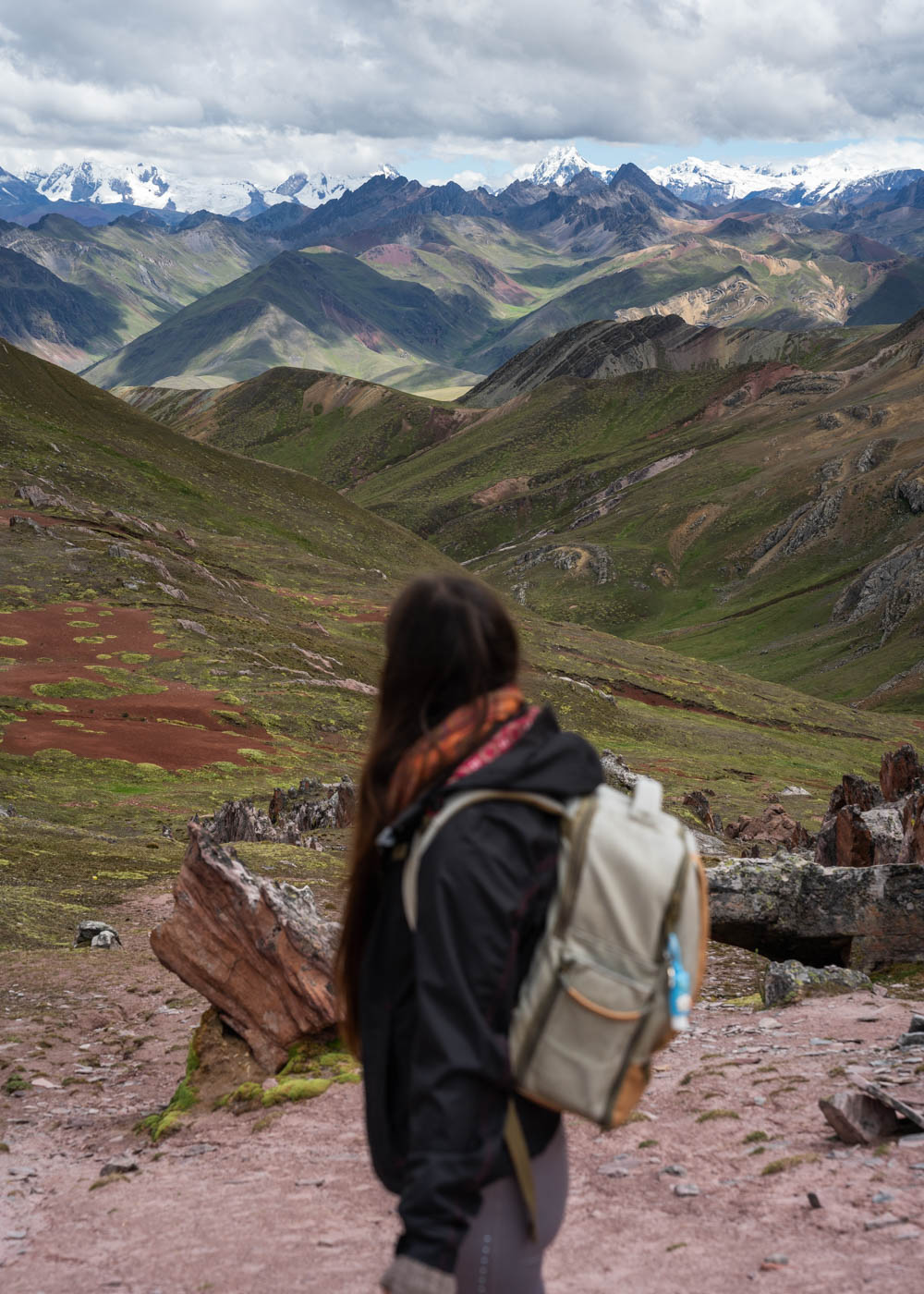
Bear in mind, there are plenty of things to do in Cusco while acclimating.
Remember, don’t try to play the hero. If you’re one of the rare ones that ends up being affected by altitude sickness super nastily, we highly recommend seeking doctor advice or even reducing your altitude to a different city to acclimatise further.
Is 4 days in Cusco enough time?
Sara and I always ask the question: is any amount of time enough time?
Most places we’ve visited, and we’ve visited a lot, could easily be explored for weeks, or even months!
In which case, we truly believe that any amount of time you have available is enough time. The time just dictates whether you need to move faster or skip a few things.
But in general, we think 4 days in Cusco is a decent amount of time if you’re willing to be busy… like BUSY.

And we’ve put together this itinerary to hit all the major spots and attractions that we think perfectly sum up the experience of being in and around Cusco.
However, if you can spare a couple of extra days, especially with the possibility of reacting badly to altitude, we would highly recommend it. The flexibility that would give you would be worth it!
What if you have less than 4 days in Cusco?
Don’t worry, we gotchu!
We’ve also designed multiple other itineraries to cover you for either 1 day, 2 days or 3 days in Cusco.
So if you end up being a bit shorter on time, definitely check one of them out!
The BEST 4 day itinerary for Cusco
Right then, it’s about time we dive into this guide, isn’t it?
Quick disclaimer, you can choose to order these days in whichever way you’d like. You don’t need to follow our advice to a tee!
But this itinerary has been put together so it can be followed directly too. We like to make sure your trip planning is as hassle-free as possible!
Day 1: Explore the city of Cusco
In a slight contrast to what we just mentioned, our itinerary for day 1 is actually meant to be followed to a tee.
We’ll make sure you hit every major landmark in Cusco city with the most optimised walking routes!
Plaza de Armas
The best thing to do is start your day nice and early in the beating heart of the city – Plaza de Armas. Also known as Plaza Mayor, it’s a public area surrounded by tons of restaurants and shops.

Historically, Plaza de Armas was actually the centre of Cusco predating even the Spanish conquest. Now, it’s a great place to chill out on a bench, feed the birds and people watch as the locals go about their daily lives.
If you’re planning to visit Cusco around the holidays, just like we did, then this is a great place to spend Christmas and New Year’s Eve!
- Entrance fee: FREE!
- Opening times: 24/7
- Time to visit: 30 minutes
- Location: Del Medio 123, Cusco 08000, Peru
Cusco Cathedral
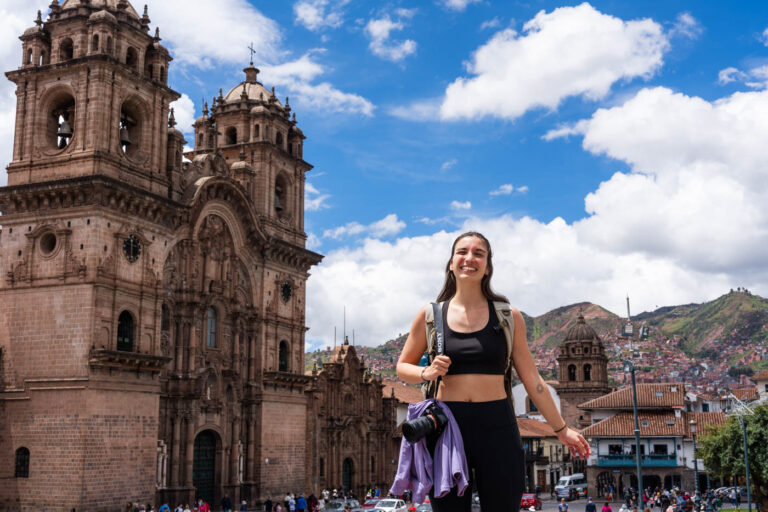
There are two religious buildings around the edge of Plaza de Armas, but the one that stands out the most is Cusco Cathedral.
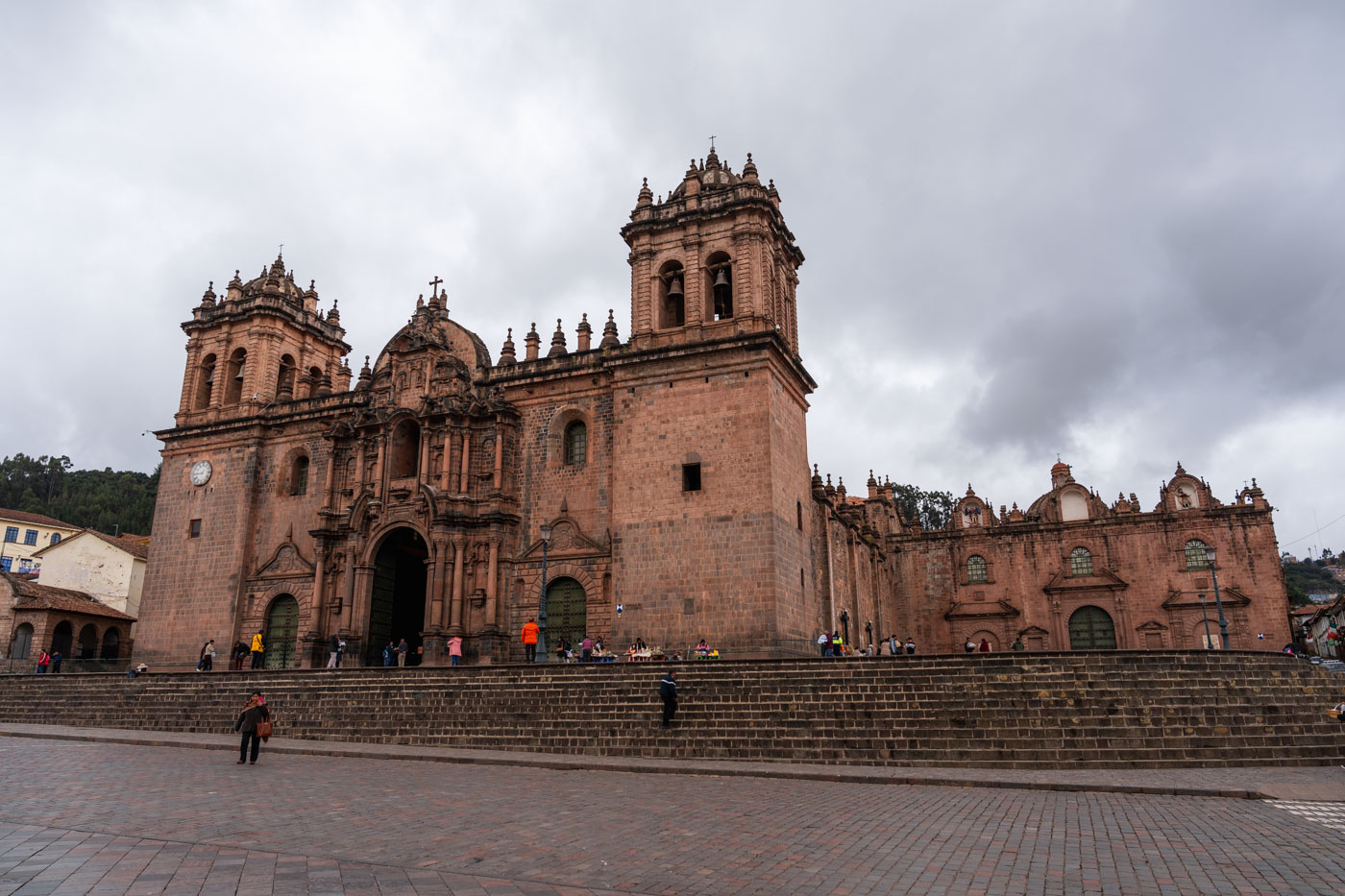
Located at the north end of the plaza (honestly it’s hard to miss), this cathedral was built in 1668 by the Spanish. It’s kind of expensive to enter in our opinion, but if you’re into history and religious architecture like we are, it’s going to be a great visit!
- Entrance fee: S/.40 ($10.68)
- Opening times: 6am – 8pm
- Time to visit: 30 to 60 minutes
- Location: Cusco 08002, Peru
Twelve Angled Stone
Just a short walk around the corner of the cathedral, in a narrow city alley, we found an original Inca wall that’s home to the infamous Twelve Angled Stone.
Once a section of the Inca palace in Cusco, this stone stands out in the wall thanks to… well, it’s twelve sides! These days it’s actually considered a national heritage object in Peru.
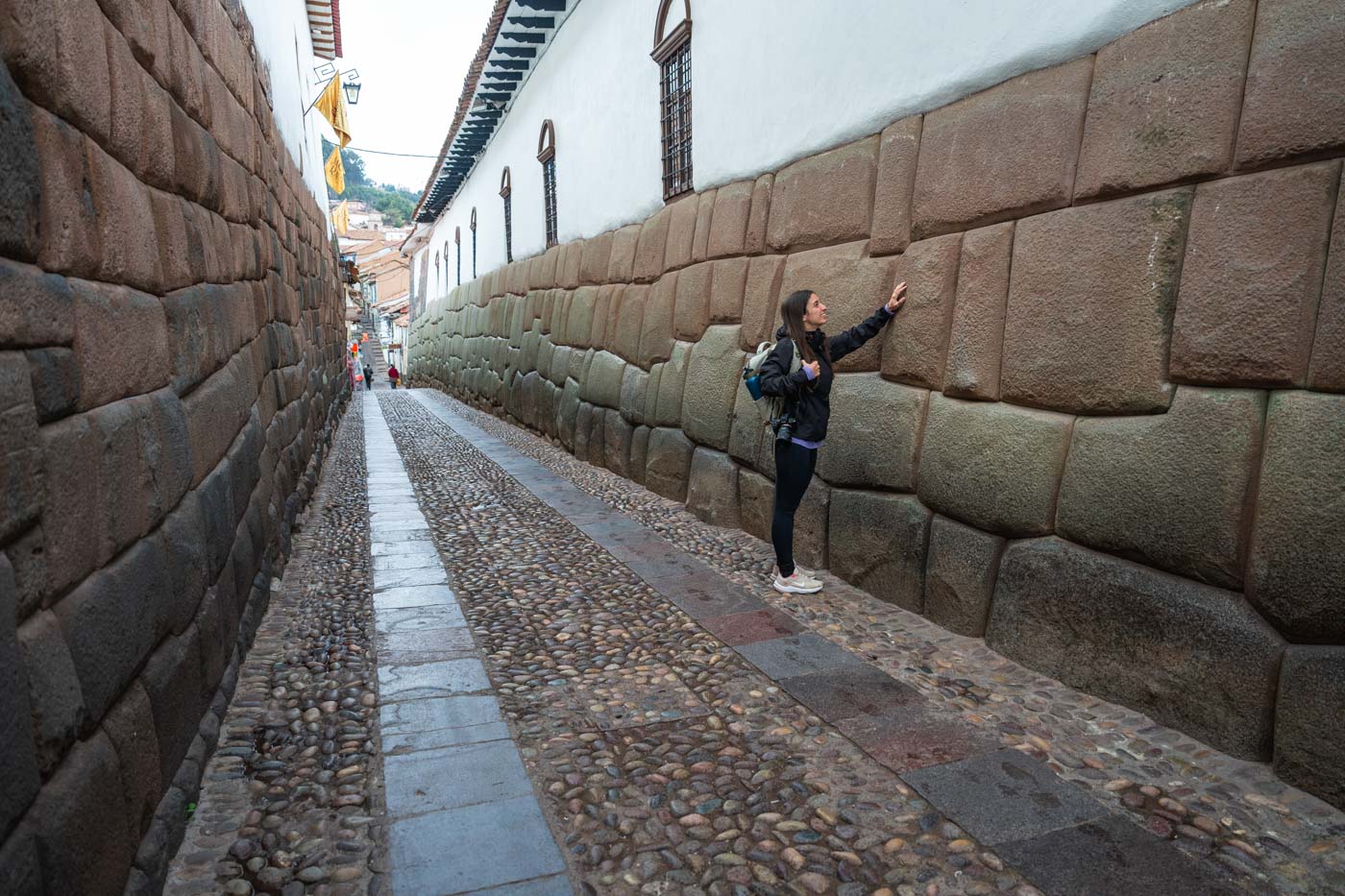
It’s worth noting that we walked past this stone on multiple occasions during our time in Cusco, and it can get quite busy. So an early morning visit is definitely something we’d recommend!
- Entrance fee: FREE!
- Opening times: 24/7
- Time to visit: 10 minutes
- Location: C. Hatunrumiyoc 480, Cusco 08002, Peru
The Sun Temple (Santo Domingo Convent & Church)
Unfortunately, the Spanish took it upon themselves to destroy (almost) every Inca temple inside the city of Cusco. They did so to reuse the stones to build the currently standing churches and monasteries. It was a whole catholic strategy to convert the indigenous peoples to God.
Lucky for us, they actually preserved the Sun Temple, the most important temple in the Incan religion.
Albeit they preserved it inside… you guessed it, a church and monastery!
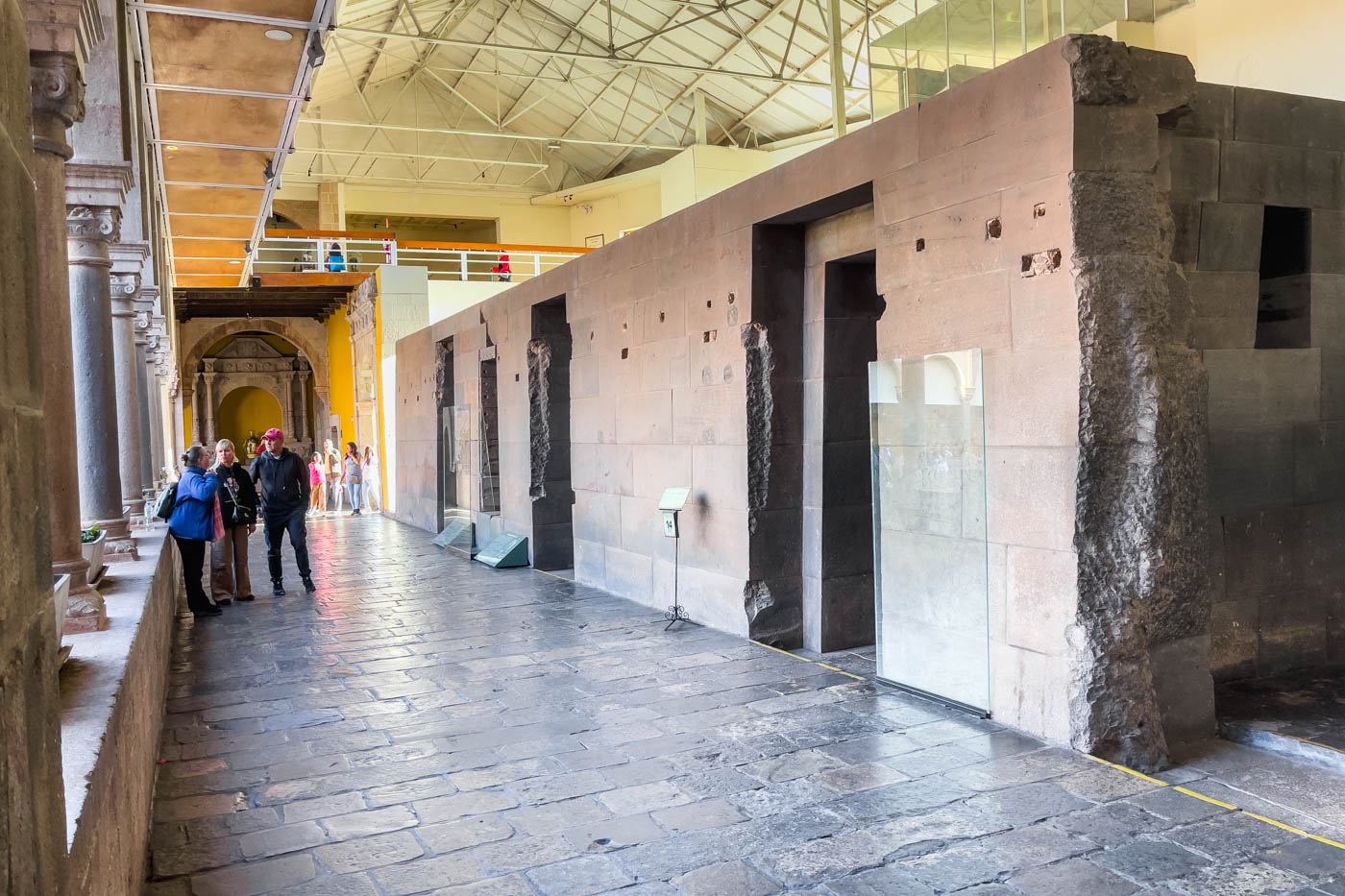
So it’s time to head on a short walk to the Santo Domingo Convent and Church. Enter inside, be welcomed by the most ornate courtyard and marvel at how well preserved these Incan temples are!
- Entrance Fee: S/.15 ($4)
- Opening times: 6am – 5:30pm
- Time to visit: 30 to 60 minutes
- Location: Ahuacpinta 659-A, Cusco 08002, Peru
San Blas Market (Lunch)
Cor blimey, that’s been one hell of a morning already, hasn’t it?!
Don’t worry, we’re sending you to your first food stop of the day – San Blas market.
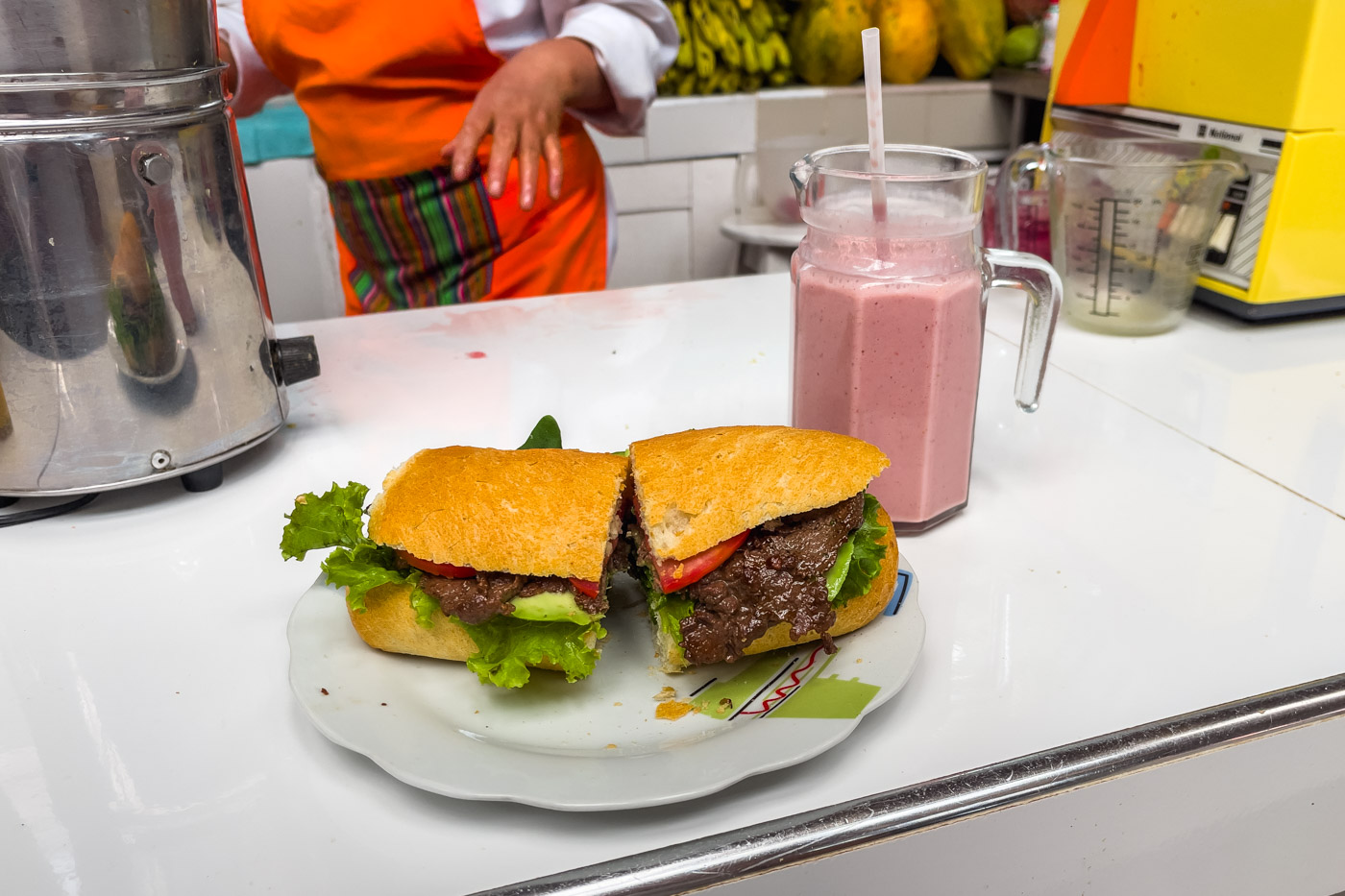
A lot of blogs will actually send you to Mercado San Pedro. However, from our experience eating in both, even though San Blas is smaller, it offers fresher food and a way cleaner environment.
We opted for a steak sandwich that was prepared right in front of us, as well as a freshly blended mixed fruit juice. But you could also take your pick from a range of stalls offering menu del día too!
- Entrance fee: FREE! But the food costs.
- Opening times: 6am – 4pm, closed Sundays.
- Time to visit: 30 minutes
- Location: C. Tandapata, Cusco 08003, Peru
Temple of the Moon
What we didn’t tell you, is that we sent you to San Blas market to fuel up for the biggest walk of the day. Sara and I are sending you up into the foothills of Cusco to explore the ruins of the Temple of the Moon!

The antithesis to the Sun Temple, the Temple of the Moon evaded destruction by the Spanish because it’s not technically in the city. Although, it hasn’t stood the test of time as well as the Sun Temple.
The Temple of the Moon is built into a giant bedrock and offers views of the surrounding mountains as well as over Cusco.
We actually really enjoyed escaping the city and getting into the countryside!
- Entrance fee: FREE!
- Opening times: 24/7
- Time to visit: 20 minutes
- Location: F2VP+P3, Cusco 08003, Peru
Cristo Blanco Viewpoint
You’ll be happy to know that all the uphill walking is pretty much done for the day. Now it’s just a short, flat walk through the foothills of Cusco to Cristo Blanco – one of the most popular viewpoints in Cusco.
From here, we had an unobstructed view over the majority of the city of Cusco. We could see down to Plaza de Armas and Cusco Cathedral, all the way to where our Airbnb was on the opposite side of the city.
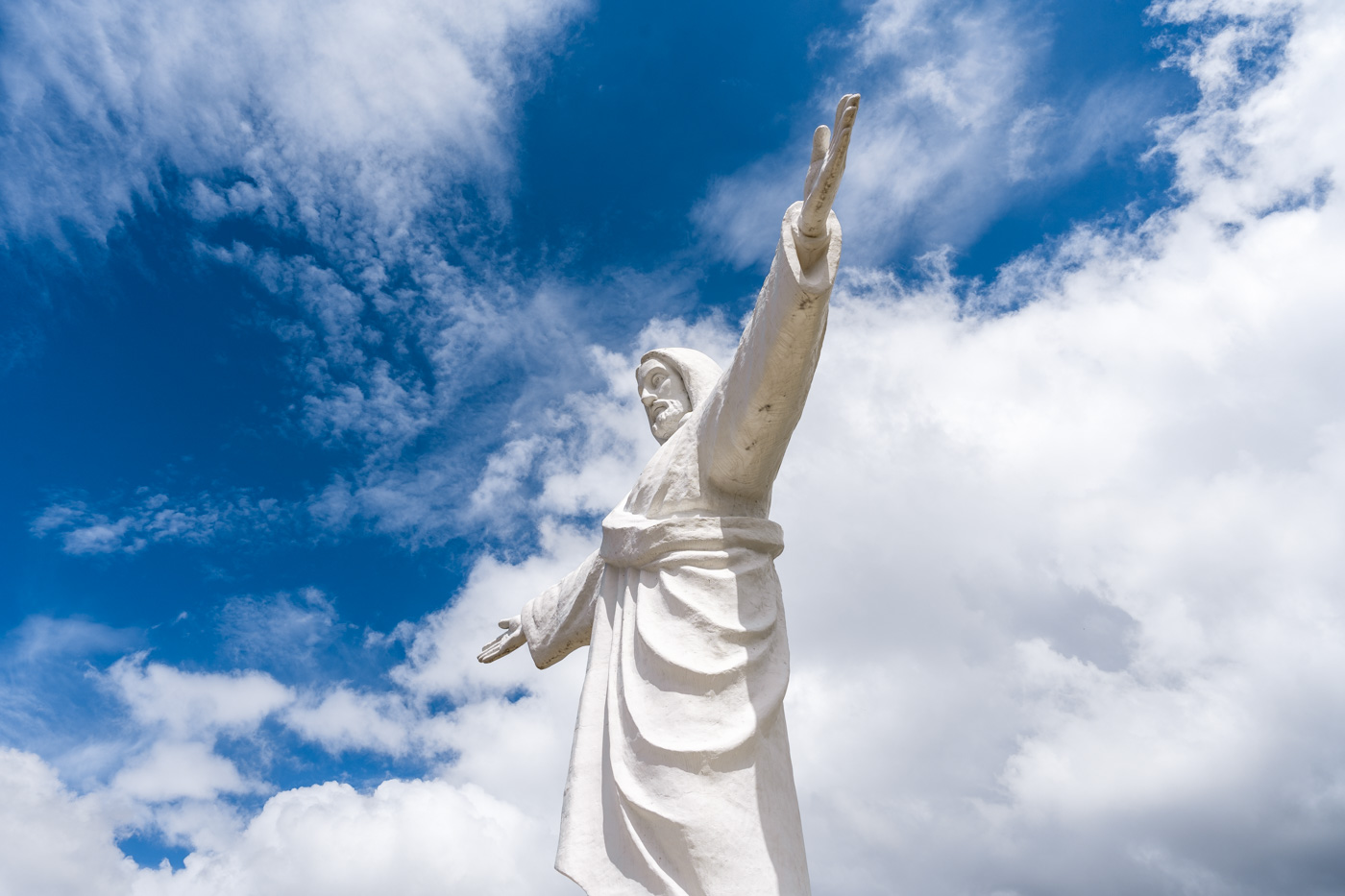
Not to mention, the giant, white statue of Jesus that looks down over all the people below!
- Entrance fee: FREE!
- Opening times: 24/7
- Time to visit: 20 minutes
- Location: Cristo Blanco, Cusco 08003, Peru
Saqsaywaman Inca Ruins
Built in the 15th century by Sapa Inca Pachacuti, one of the most prominent Incan figureheads, Saqsaywaman was an Incan citadel overlooking Cusco.
At 3,700m above sea level, one of the main characteristics of these ruins are the perfect Incan walls. Similar to the Twelve Angled Stone wall and the Sun Temple, walls as pristinely made as these are reserved only for palaces and temples.
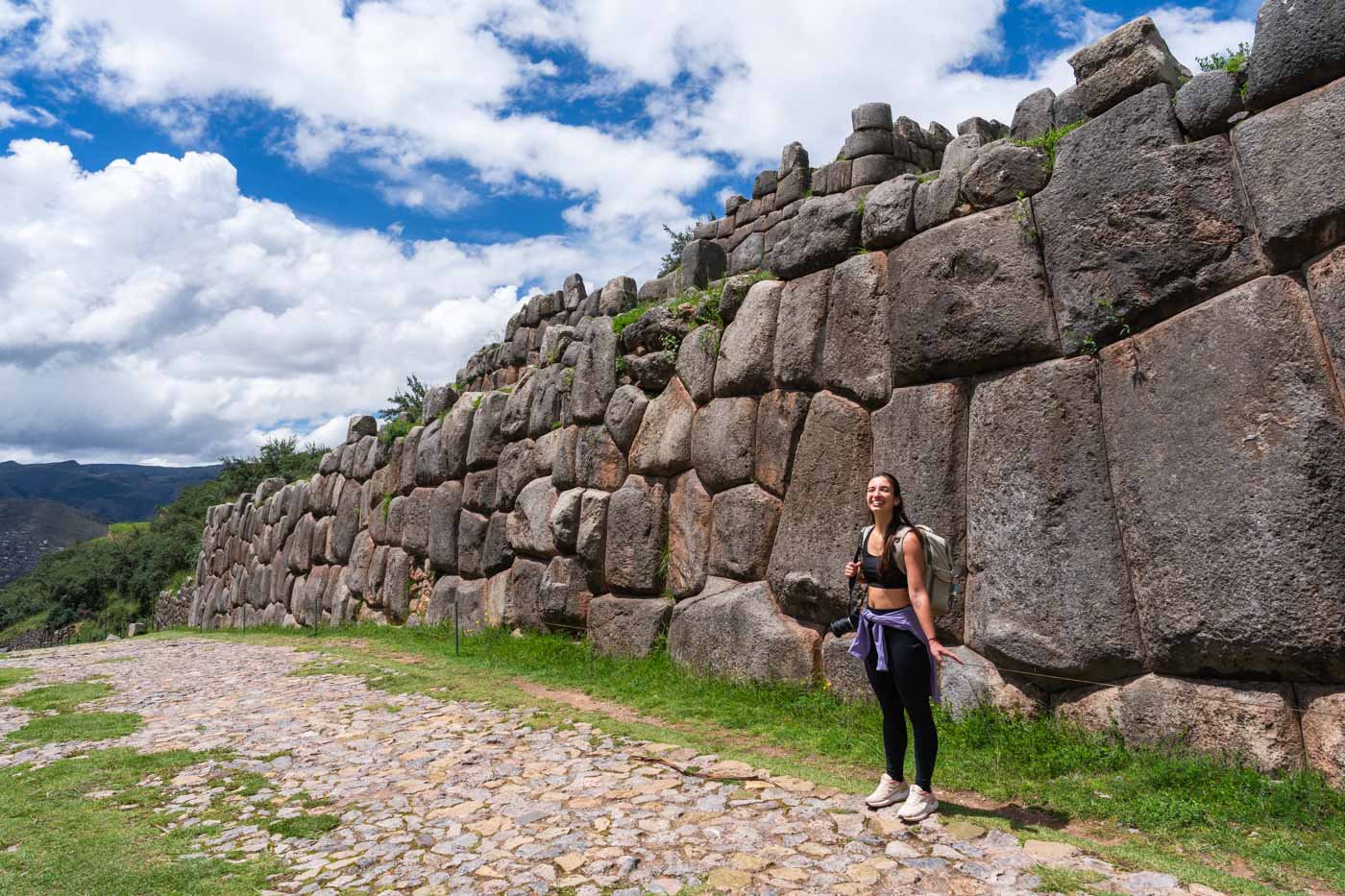
You can pay the pretty high price to venture inside and explore the ruins… or you could do what we did. While walking towards Saqsaywaman from Cristo Blanco, you’ll be able to see the entire compound without stepping a foot inside.
You can even get up close to the walls of Saqsaywaman along the path that leads back down to Cusco!
- Entrance fee: S/.70 ($18.72)
- Opening times: 7am – 5:30pm
- Time to visit: 60 minutes
- Location: Cusco 08002, Peru
Morena Peruvian Kitchen (Dinner)
After a long walk into the hills and back again, we were super hungry when we finally arrived back down Cusco. So we’re sure that you are too!
One of our favourite restaurants we visited in the city was Morena Peruvian Kitchen. It offers mouth-watering local cuisine at an affordable price.

And the food here is pretty much gourmet! You won’t regret it.
- Opening times: 12pm – 10pm
- Location: Esquina con, plaza de armas, C. Procuradores 320, Cusco 08002, Peru
Note: if you’re a budget traveller, then check out Restaurante y Pizzería URPI beside Mercado San Pedro. We found it to have a high quality Peruvian menu for a pretty low price!
Pisco Sour Tasting
Finally – and you can skip this if you don’t drink alcohol – Sara and I thoroughly enjoyed dipping our toes into the national drink of Peru – the pisco sour.
Pisco sours are made with a pisco brandy liquor, along with lime, egg whites and a dash of bitters. It has a taste that sort of resembles a mild tequila… at least I think it does!

There are a few places to try pisco in Cusco, but one of the most popular is Pisco Republica near the main plaza. Just don’t go too crazy, you have an early start and a long day ahead tomorrow!
- Opening times: 12pm – 1am
- Location: C. Plateros 354, Cusco 08002, Peru
You NEED to have travel insurance!
Sara and I have been using Safety Wing for over three years now! They specialise in nomad travel insurance, so whether you’re travelling long-term or on a short trip, they got you covered!
Day 2: Visiting the lost city of Machu Picchu
It’s time to head to one of the seven wonders of the world: Machu Picchu!
Actually, we’d imagine that MaPi is one of the main reasons that you ventured to Cusco in the first place. So we want to make sure you have all the information to make your trip as smooth as possible.
What is Machu Picchu?
Machu Picchu is Peru’s famous world wonder that sits atop a mountain in the remote jungles of the Andes. Actually named after the mountain beside it (Machu Picchu literally translates from Quechua as ‘old mountain’), this complex is considered the Lost City of the Incas.
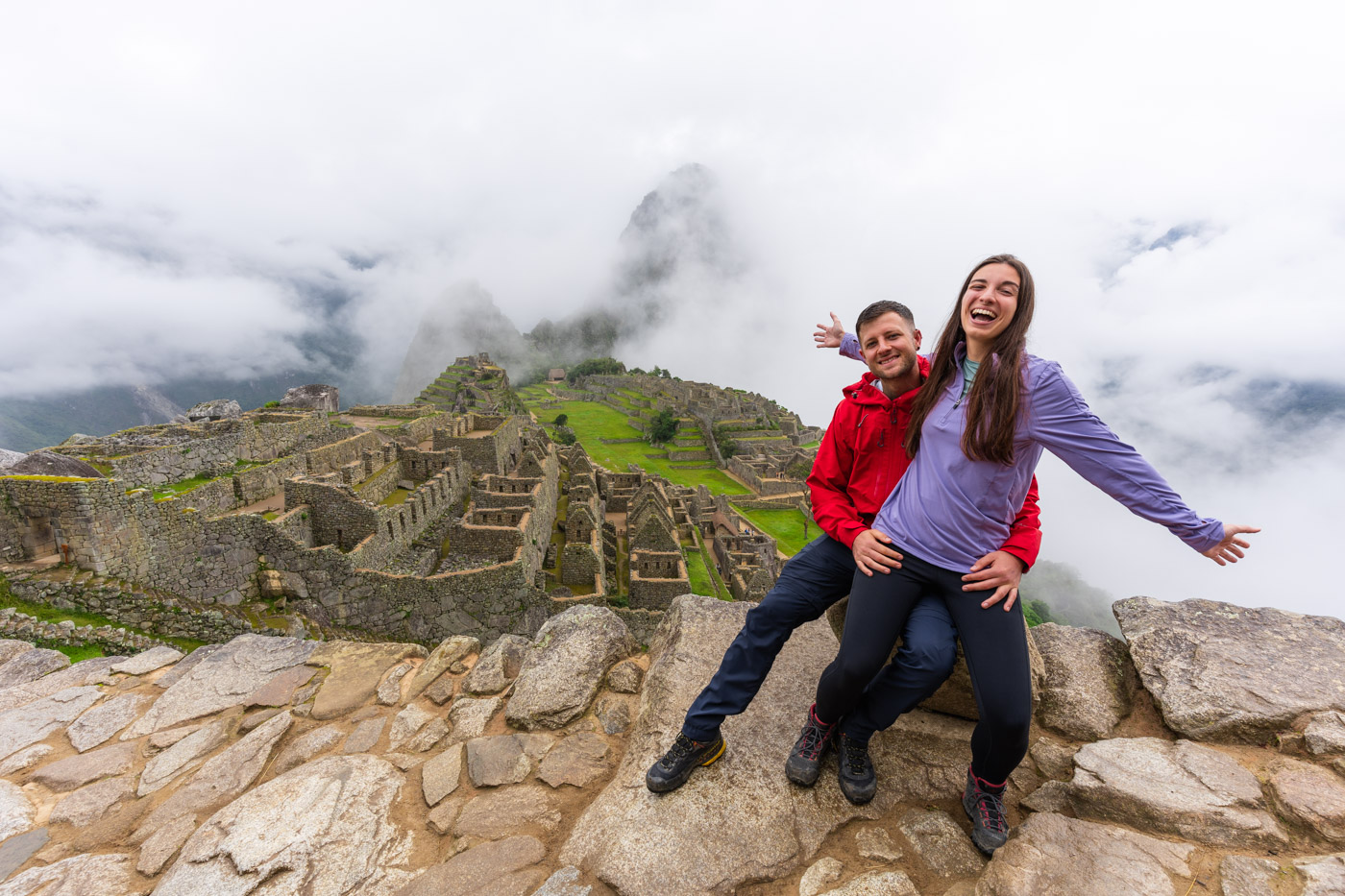
The story goes, Machu Picchu was commissioned by the Inca Emperor Pachacuti, to be a sort of ‘holiday estate’ from Cusco. And between 1420 to 1530 (or as is estimated), it became a functional mountain city with state-of-the-art houses, drainage and agricultural systems.
Machu Picchu was lost in the early 1500’s and wasn’t found again until Agustín Lizárraga rediscovered it in 1902. But it wasn’t until 1911 when Hiram Bingham went looking for Machu Picchu that the news of the lost city was spread through the world.
Is Machu Picchu worth it?
Oh god, Machu Picchu is 100% worth it, and we don’t say that lightly!
Between us, we’ve visited 5 out of the 7 world wonders, and we both agree that Machu Picchu is by far the best one.
Buy why?
Well the remoteness of the Lost City is hard to beat. All of the other world wonders you just sort of drive up, park in the car park and pay to go in…

But not Machu Picchu, no no no.
Machu Picchu is in the mountains beside a tourist town called Aguas Calientes, and it’s impossible to drive there. But we’ll cover the ways to get there in the next section.
However, this remoteness and absolute adventure to reach Machu Picchu is what, in our opinion, lands it in the number one spot of world wonders.
Not to mention wandering around the city is one of the most mystical feelings we’ve ever experienced.
How to get to and from Machu Picchu?
There are a few ways to get to Machu Picchu…
There are the Inca trails and Salkantay treks that take around 4 to 5 days to complete.
There’s the way we took, which is a 6-hour bus to Hidroelectrica and a 3-hour hike to Aguas Calientes. This is the cheapest route!
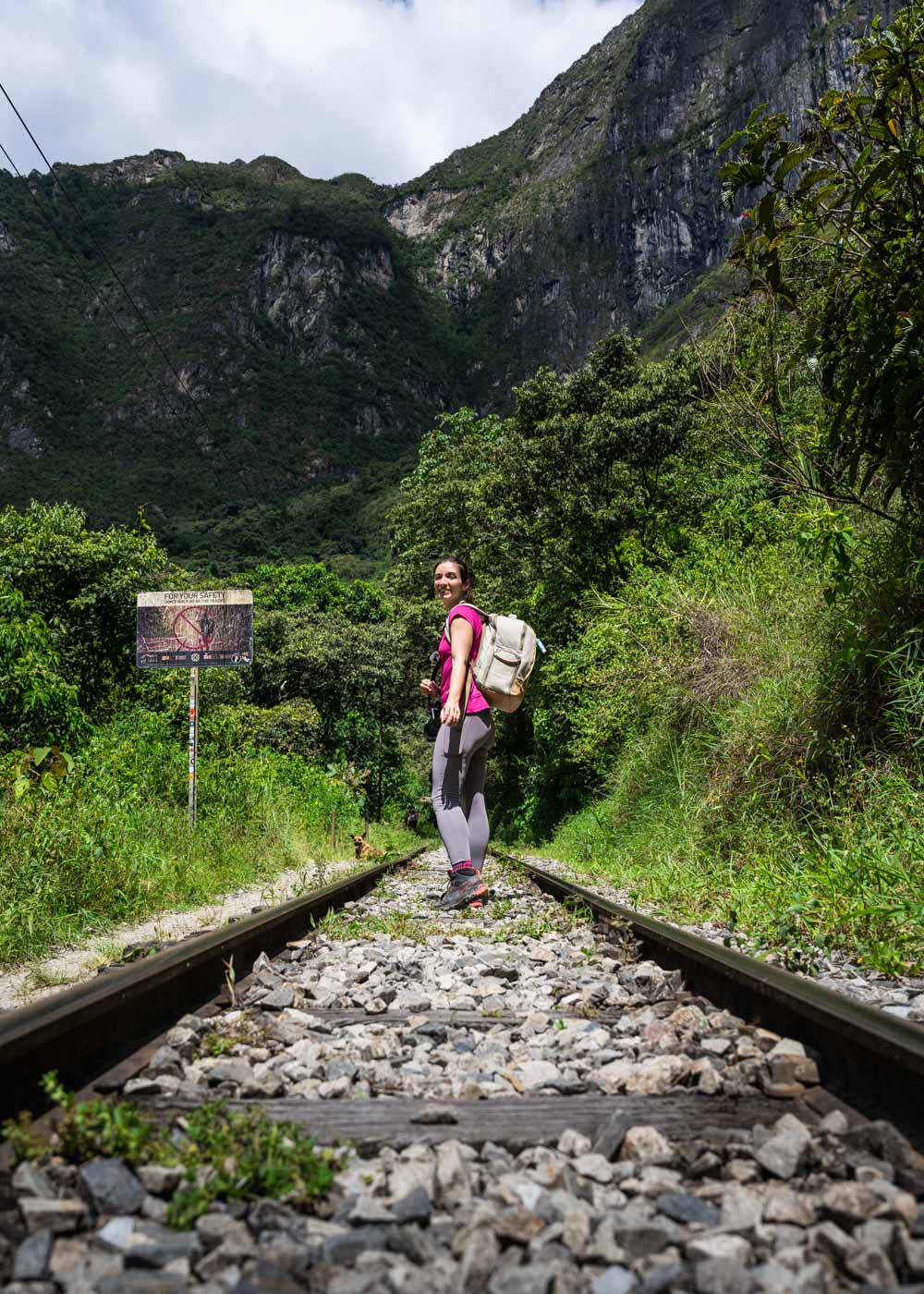
But unfortunately, because you only have 4 days in Cusco, you’ll need to use the final and most expensive mode of transport – the train.
The train is the only way to get from Cusco, to Machu Picchu and back in a single day.
Within the $60+ ticket, a bus will run from Cusco to Ollantaytambo, where you’ll swap over to the train which takes you directly to Aguas Calientes. The entire journey takes around four hours and it’ll cost another $60+ ticket to book the return trip.

You can also purchase more expensive ticket packages that include a guide and the entry ticket to Machu Picchu.
If you opt for the basic ticket, you’ll also need to fork out a further $25 for a return shuttle from Agua’s Calientes to the entrance gate.
How much does Machu Picchu cost?
We paid around $40 each for our tickets. But there are some more expensive options as well if you plan to hike the mountains.
Also, if you’re a college or uni student, or a minor (3-17 years) then tickets are around $20.
You can book tickets to Machu Picchu online. Just remember that some circuits (more on that soon) book out month in advance. I just had a quick look at the website to double check the prices and some tickets are sold out until the 8th of October (I’m writing this on August 2nd).

When we booked online, we then had to head to the Machu Picchu ticket office in Cusco to pay for them in person. You head in with your confirmation email and the person at the counter will sort out the rest!
It’s worth mentioning that a friend of mine took the trip to Aguas Calientes without a ticket and managed to pick one up in the tourist office the day before she visited Machu Picchu. But they only allocate 1000 tickets per day here so in our opinion it’s not worth the risk.
Which circuit should you book for Machu Picchu?
When we visited Machu Picchu, there were 4 different circuits that could be booked. After just checking now, there are only 3, but of different variations.
So if you’re finding this guide a few months down the line, definitely double check our information here to the information on the official website. There’s a high chance the circuits have changed.

We personally booked the Inca Laqta ticket that meant we could explore all 4 circuits. Unfortunately it looks like this option doesn’t exist anymore.
The next best thing is to book onto Circuit 2 the “classic designed route”. Similarly to when we visited, Circuit 2 will take you to most of the major sites around Machu Picchu.
But if you want to see the Inca Bridge or climb Machu Picchu (the mountain), you’ll need to book Circuit 1. Also, if you plan to climb Wayna Picchu, you’ll need to book Circuit 3.
Hassle-free Machu Picchu tours
If you have no interest in booking each of these tickets individually, you can also just book directly onto a Machu Picchu day trip tour from Cusco.
Then all you need to do is turn up to the right place at the right time, and everything else is handled for you!
Day 3: Hike a rainbow mountain to 5000m
One of our favourite things to do near Cusco was to hike up a rainbow mountain. Topping off at over 5000m above sea level, this was the highest we’ve ever been on earth!
Higher than our limit for our travel insurance.. Shhhhh.
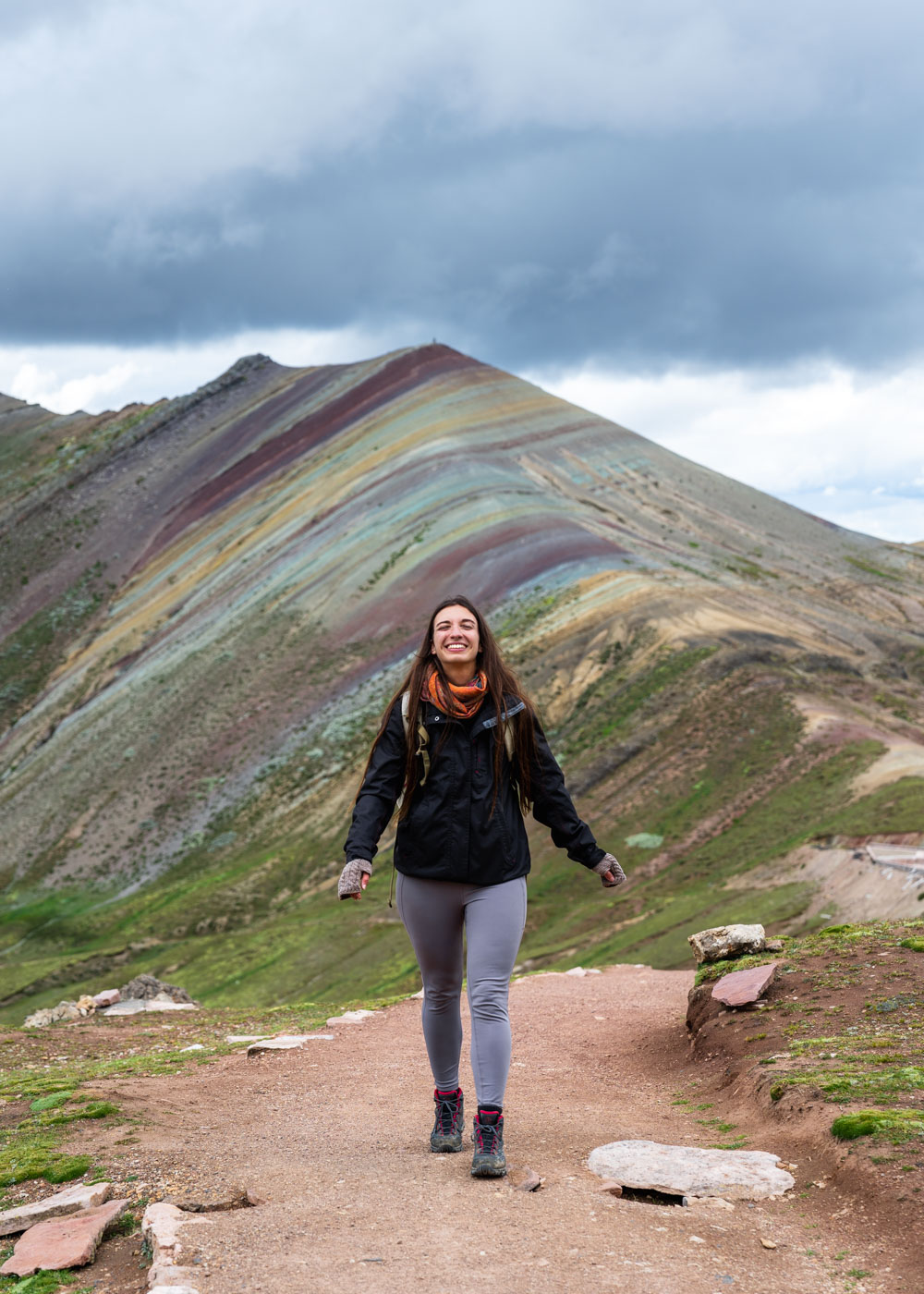
Some people will tell you that visiting a rainbow mountain is overrated. But that’s because they don’t know our little secret.
There’s actually more than one!
Vinicunca
Vinicunca is the rainbow mountain everyone talks about if they say visiting is overrated. It’s the mountain that was made popular by social media, influencers and photographers.
As such, it can get super crowded here with over 3000 visitors passing through daily.
But on the flip side, it’s also the most pointy and vibrant of the rainbow mountains. This is what made it popular in the first place!
So if you’re looking to visit that quintessential Peruvian rainbow mountain, then Vinicunca is the one you’re looking for!
Palcoyo
What Sara and I actually recommend is visiting Palcoyo!
We came here on a tour and when we arrived, we were only one of two tour groups in the area. It was almost like we had the entire mountain to ourselves!
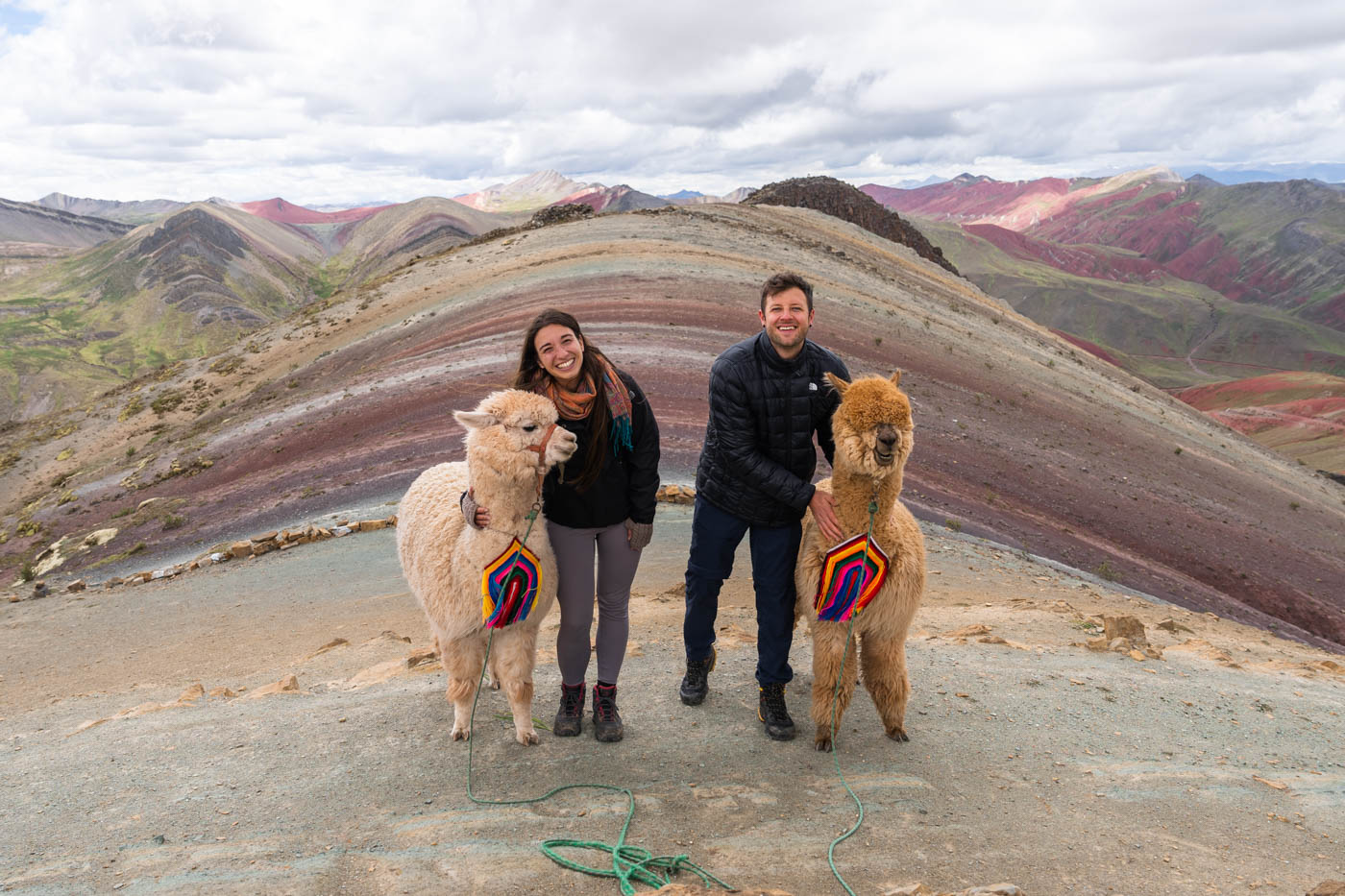
Palcoyo only sees around 300 visitors a day. There were 20 people in our tour group which means that’s only around 15-20 tour groups passing through instead of Vinicunca’s 150-200 groups.
Also the hike up to the summit is shorter and less steep as well. Which at this altitude makes a TON of difference.
So if you’re not too bothered about the famous Instagram shot, go to Palcoyo instead!
Day 4: Take a whistle stop tour of the Sacred Valley
On our final day of this 4 days in Cusco itinerary, Sara and I are sending you on a full day out on a Sacred Valley tour.
This tour isn’t for relaxing, as when we went, we hit up around 6 different spots in one day. So be prepared for a lot of time sitting on a bus!
But it’s a great way to visit a ton of spots in a short amount of time.
Artisan Market
Our first stop on the tour was at a local artisan market in a small Andean village. Here we were shown the skills and crafts of the women belonging to a local indigenous group.
Specifically how they manufacture natural dyes to weave the most beautiful alpaca wool clothing.
Yes, this stop is a bit of a tourist trap as it’s basically one giant shop. However, you do get a very interesting and kind of comedic demonstration by one of the ladies, showcasing the entire process!

Chinchero Archeological Site
Just down the road from the artisan market, our next stop was Chinchero archeological site. Here we were able to wander around the ruins of what was once the palace of Inca Túpac Yupanqui.
As we explored, we walked between walls, up stairs and along terraces that were once used for farming. The views from here were pretty good too!

Moray Archeological Site
When we pulled up at Moray archaeological site, we weren’t entirely sure what we were looking at. But what our guide said next blew our minds!
Essentially, the Incas constructed Moray in such a mathematical way that as the terraces were built deeper into the ground, the temperature got cooler (about a 5°C (41°F) difference from top to bottom).
The Incas had created little microclimates to be able to cultivate crops from different areas of the Andes in one place!
Honestly, this was crazy in our minds!

Maras Salt Mines
Next on our Sacred Valley whistle-stop tour was at the Maras Salt Mines. Actually, before the mines we stopped at a small roadside shop and tasted different salts which was super fun!
Today was the day we learned you could get garlic salt and coriander salt…
Anyway, the Maras Salt Mines is where a large portion of Peru’s salt production happens. In fact, each salt well produces 150-200kg of salt every month!
The mines are also kind of beautiful to look at as well.

Ollantaytambo Sun Gate
After a quick buffet lunch in the Urubamba Valley, it was onwards to one of our most anticipated stops of the tour.
We had heard so much about Ollantaytambo before visiting, and the town did not disappoint!
This place was once a significant Incan city, acting as the royal estate for Inca Pachacuti, and the stronghold for Manco Inca Yupanqui, the leader of the Incan resistance against the Spanish.
Our tour group climbed up these HUGE terraced ruins. Once up the top, our guide pointed out the Sun Gate, the storehouses and the face in the mountain.
He also explained how the Incas managed to construct huge projects like this, which was super interesting!

Pisac Archeological Site
Finally, after Ollantaytambo, it’s time to board the coach for the longest leg so far to the Pisac archaeological site.
This is the last stop of the trip and is another example of the crazy engineering of the Incas.
Similar to the other sites, you can spot the famous Incan terraces, guardhouses, storehouses and regular houses. You can even wander through some of them.
But what really stood out to us was the caves in the cliffs, which our guide explained to us were actually tombs! How the residents were able to carry their deceased up to these caves is unknown to us.

Where to eat in Cusco
Just quickly before we let you go, we just want to blast through some of our favourite places to eat in Cusco!
Morena Peruvian Kitchen
We won’t delve too deep on this one as we covered it as part of day 1 in this 3 days in Cusco itinerary!
But expect delicious, high quality Peruvian cuisine.
KION Chinese-Peruvian Fusion
If you fancy something a bit different, a twist to Peruvian food if you will, then we really enjoyed a dinner date at KION.
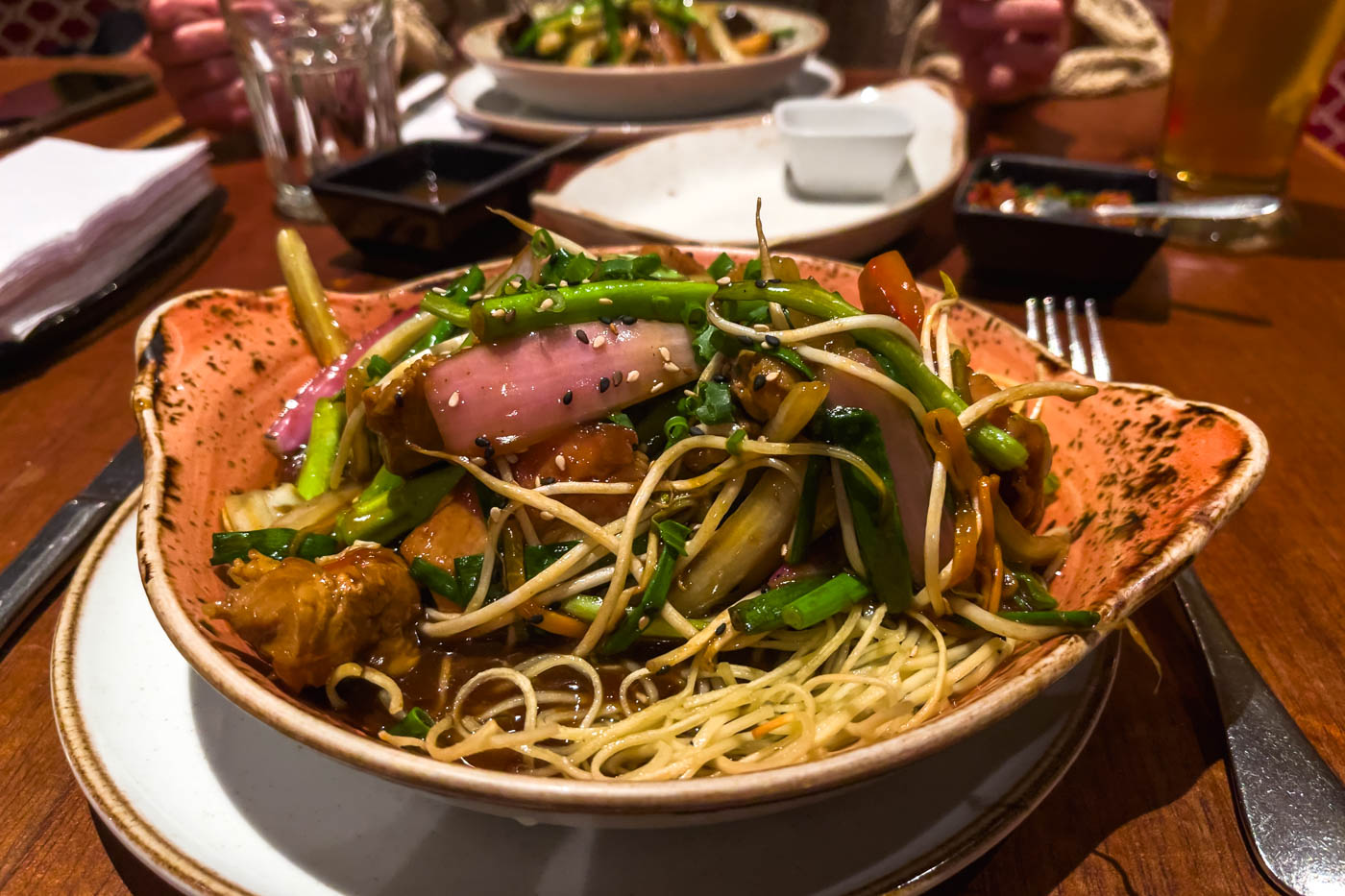
KION is a Peruvian-Chinese fusion menu that combines the best of both cuisines into one dish. Historically, there’s always been a large community of Chinese in Peru, and over time the food has come to reflect that.
So KION is a great way to celebrate the coming together of these two cultures!
JC’s Cafe Cusco
For more breakfast and brunch vibes, check out JC’s Cafe not too far from Plaza de Armas. The food here was super delicious and filled a craving for a western breakfast that we’d been having.
The wi-fi here is great too!
Mercado San Blas or Mercado San Pedro
Once again, we covered Mercado San Blas on day 1, but there’s also San Pedro too!
Mercado San Pedro is Mercado San Blas’s bigger and older cousin. It’s a place you can pick up anything, from trinkets, to presents, to juices, to fresh produce to lunch. At the back of the market, rows upon rows of small cantinas offer menu del día at very reasonable prices.
But like we mentioned, Mercado San Pedro seemed to us a bit dirtier and grittier than the equivalent in San Blas.
Molly’s Irish Bar
Sara and I didn’t even set foot inside Molly’s Irish Bar until the night before we left Cusco. But we were gutted we hadn’t tried it sooner!

Now, we know everyone loves an Irish bar, and Molly’s is exactly what you’d be looking for. Rustic Irish charm, decoration and the juicy and mouth-watering food to go with it!
Chakruna Native Burgers
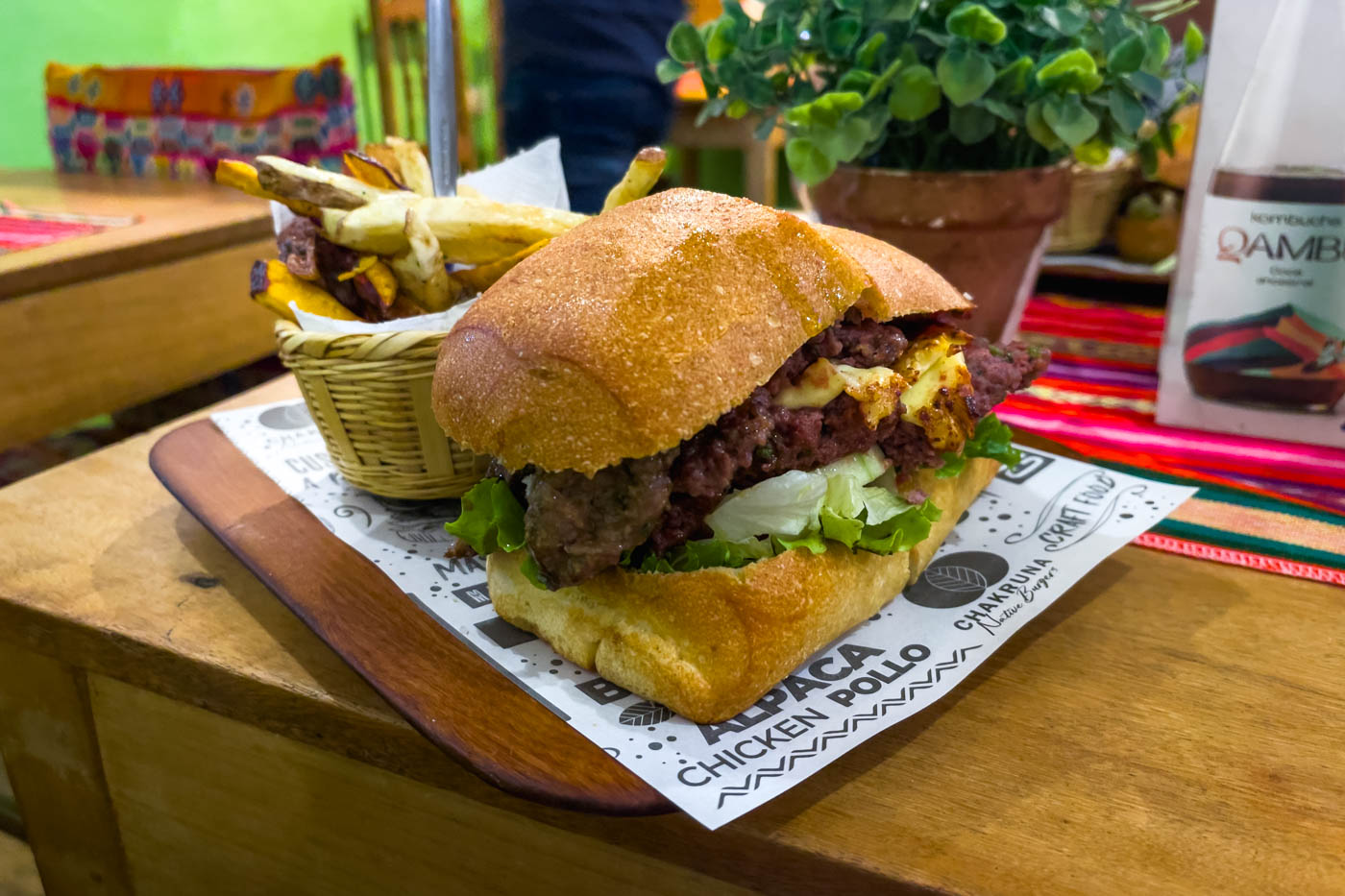
Finally, the BEST burgers we came across in Cusco were at Chakruna Native Burgers. Sara and I visited a few times. It was that good!
The smashed beef patties are to die for. It’s also a great place to try an alpaca burger if that sort of thing is on your bucket list. We did, and it was amazing!
Where to stay in Cusco Peru
If you’re planning to spend a few days in Cusco here are a few great spots in the historic center at different budgets!
Best budget hostels:
- Wild Rover Cusco ($7-15/night) ← Cusco’s party hostel.
- Viajero Kokopelli Hostel Cusco ($15-40/night)
- Cusco Rock Hostel ($16.50/night)
Best budget hotels:
- Eco Bunnu Inn ($23/night)
- Cochito Cusco ($28/night)
- Andean Valley Hotel ($26/night)
Mid-range hotels:
- Amaru Colonial ($57/night)
- Casa Montes San Blas ($49/night)
- Hotel Hacienda Cusco Centro Historico ($56/night)
Top luxury hotels:
- Union Hotel Cusco ($100/night)
- Auka Boutique San Blas ($74/night)
- Anahuarque Hotel Boutique ($72/night)
Should you spend 4 days in Cusco?
Absolutely! Two days, three days or four days, you should visit Cusco regardless!

Like we mentioned before, 4 days in Cusco is generally enough time to experience the majority of the sites. But if you want to get into the nitty gritty and really experience the culture and way of life in Cusco, we highly recommend a couple of weeks here.
But we really hope you enjoy your time in Cusco just as much as we did – Sara and I definitely plan to return some day!
Check out our other Cusco guides:
- Is Cusco safe to visit in 2024? Everything you need to know
- What’s the rainy season in Cusco like? – Peru Travel Guide
- Cusco Weather in January: A good time to visit?
- Cusco in December: Weather, celebrations, things to do and more!
- Spending Christmas in Cusco: Things to do and how to celebrate!
- One day in Cusco: The perfect 24 hour itinerary!
- 2 Days in Cusco: The best way to see everything quickly!
- 3 days in Cusco – a full itinerary and everything you need to know!
- 16 Completely FREE things to do in Cusco!
- How to avoid altitude sickness in Cusco and Peru!
- Visiting the Temple of the Moon in Cusco: Everything you need to know!
We hope that our guide covered everything you need to know about spending 4 days in Cusco. We always strive to offer the most accurate and up-to-date information we can but if you think something we’ve said is wrong, please let us know!