
Complete guide to living as a digital nomad in Chiang Mai in 2025
For years, Chiang Mai has been a top hotspot for digital nomads to live and work in. Thanks to its affordable cost of living, ideal working culture, and overall convenience, nomads flock to this city year after year.
We were recently fortunate to live as digital nomads in Chiang Mai for a full three months, fully embracing the city and its way of life. Our time in northern Thailand couldn’t have been more magical, and we truly believe it’s one of the most beautiful regions in the world.
After working in dozens of cafés and testing multiple coworking spaces, we gained tons of experience about the city’s work-friendly spots.
Add to that tasting local restaurants for breakfast, lunch, and dinner, and we’re excited to share everything we’ve learned with anyone considering making Chiang Mai their home away from home.
Whether it’s our favourite café to work in (which, by the way, is Bob Coffee), the best neighbourhood to live in (cough… Nimman), or tips on getting around Chiang Mai, we’ve got you!
By the end of this digital nomad guide, you’ll know exactly what to do when you arrive and how to set up your life as quickly and efficiently as possible.
This post may contain affiliate links. Please read our Disclosure Policy.
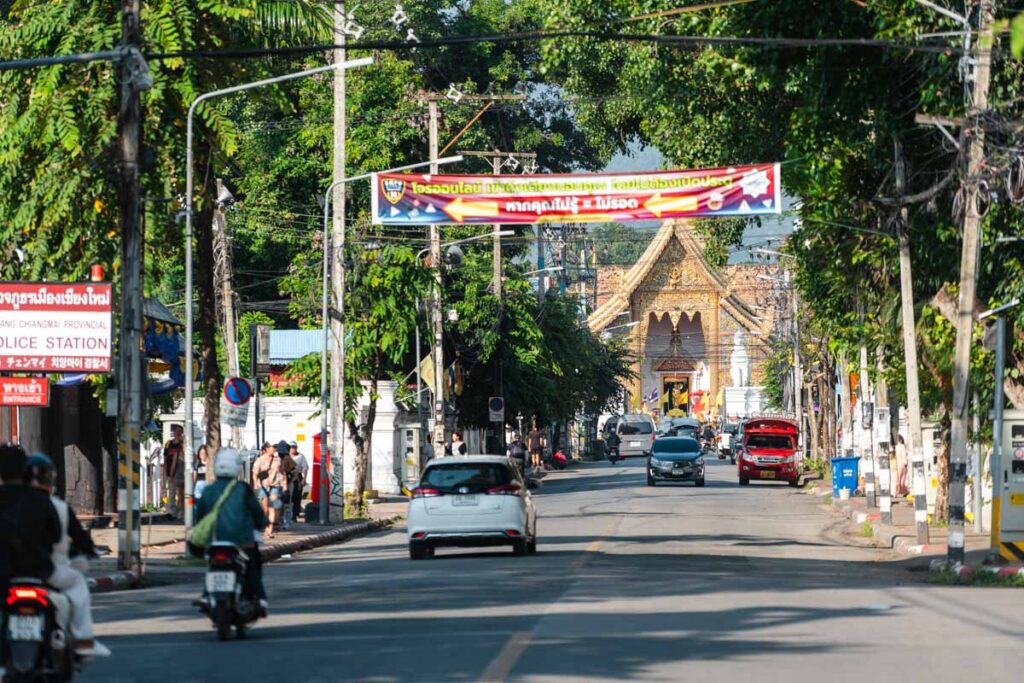
Digital Nomad in Chiang Mai – A quick overview
Make sure to read on for our super detailed guide, but here is a Chiang Mai at a glance for those who just want the cliff notes:
Best of Chiang Mai:
🌃 Best neighbourhood: Nimman
☕️ Best cafe for work: BOB Coffee
💻 Best coworking: LifeSpace
🛵 Best transport: Scooter
Useful Information:
🛩️ Closest airport: CNX
🛜 Wi-Fi speeds: 100 to 300+ Mbps
🗣️ Language: Thai
📱Mobile network: True or AIS
Cost of Living:
🤑 Monthly expenses: $600 to $1500
🏠 Apartments: $250 to $1000
🏍️ Scooter rental: $75 to $150
🥡 Thai food: $1 to $5
🍽️ Western food: $5 to $20
Visa Options:
🏃♂️ Best short-term: Visa On Arrival (60 + 30 days)
🛏️ Best long-term: DTV (5 years)
👨🏻🎓 Other: Student Visa, Work Permit, or Elite Visa
Chiang Mai Overall:
👨🏻💻 For remote working: 5⭐️
⛔️ Ease of access: 5⭐️
👯 Nomad community: 5⭐️
⛈️ Weather: 3.5⭐️
⛓️ Safety: 4⭐️
🍔 Food options: 4⭐️
📶 Internet: 4⭐️
🌳 Nature: 3.5⭐️
🏝️ Beaches: 0⭐️
Is Chiang Mai a good city for digital nomads to base in?
The quick and easy answer is yes! Genuinely, Chiang Mai has quickly become one of our favourite bases in the world.
This is largely thanks to the incredible digital nomad community who welcomed us with open arms. Quite often, in other nomad destinations, the community isn’t as welcoming…
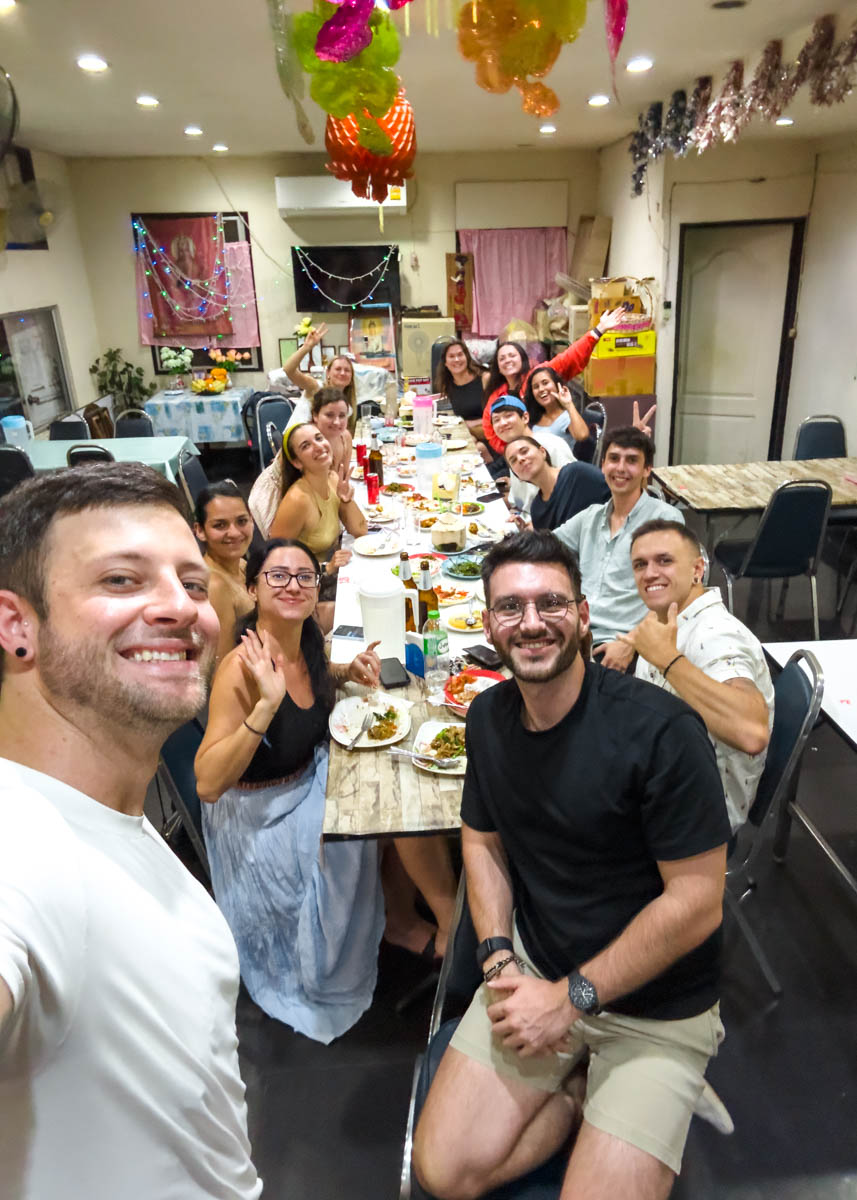
In addition, Chiang Mai has embraced the nomadic community to the point where the city is pretty much designed around nomads.
Take the work culture: there are countless coworking spaces (we checked out over 20!) and more laptop-friendly cafés than we can count. The internet speed is unmatched—most cafés have internet that’s five times faster than anything I’ve ever experienced back home in the UK.
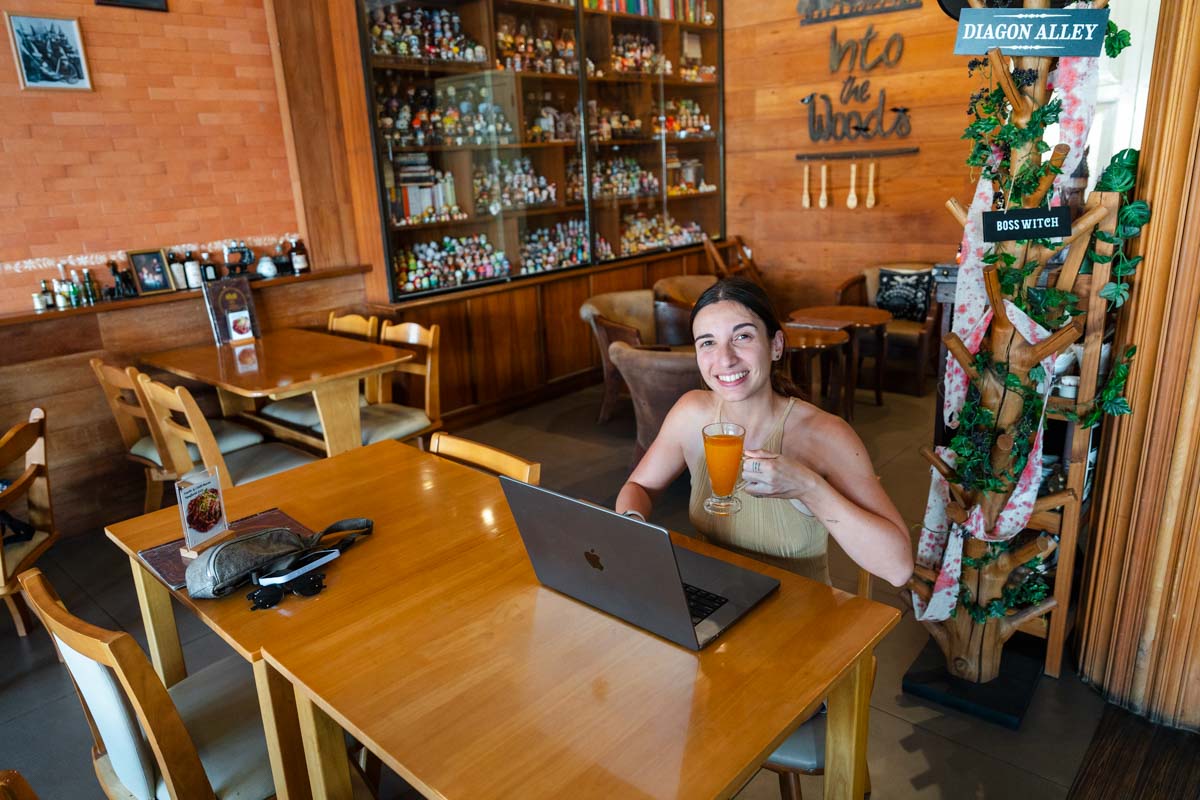
Thai locals in Chiang Mai are also warm and friendly toward nomads. Not once did we have an issue with anyone; most locals are all smiles and laughs.
Services also run incredibly smoothly—we never experienced a single power cut or any outage whatsoever.
Our experience living & working as digital nomads in Chiang Mai
We’ve chosen to base ourselves in Chiang Mai on two occasions: once in March 2023 and again more recently in September 2024. Altogether, we’ve lived in Chiang Mai for three months, and our experiences have made it one of our favourite cities.
Right off the bat, our first month in March was slightly marred by the burning season (more on that later). But even then, we still had an amazing time in Chiang Mai.
Our more recent visit, however, has become a core memory.
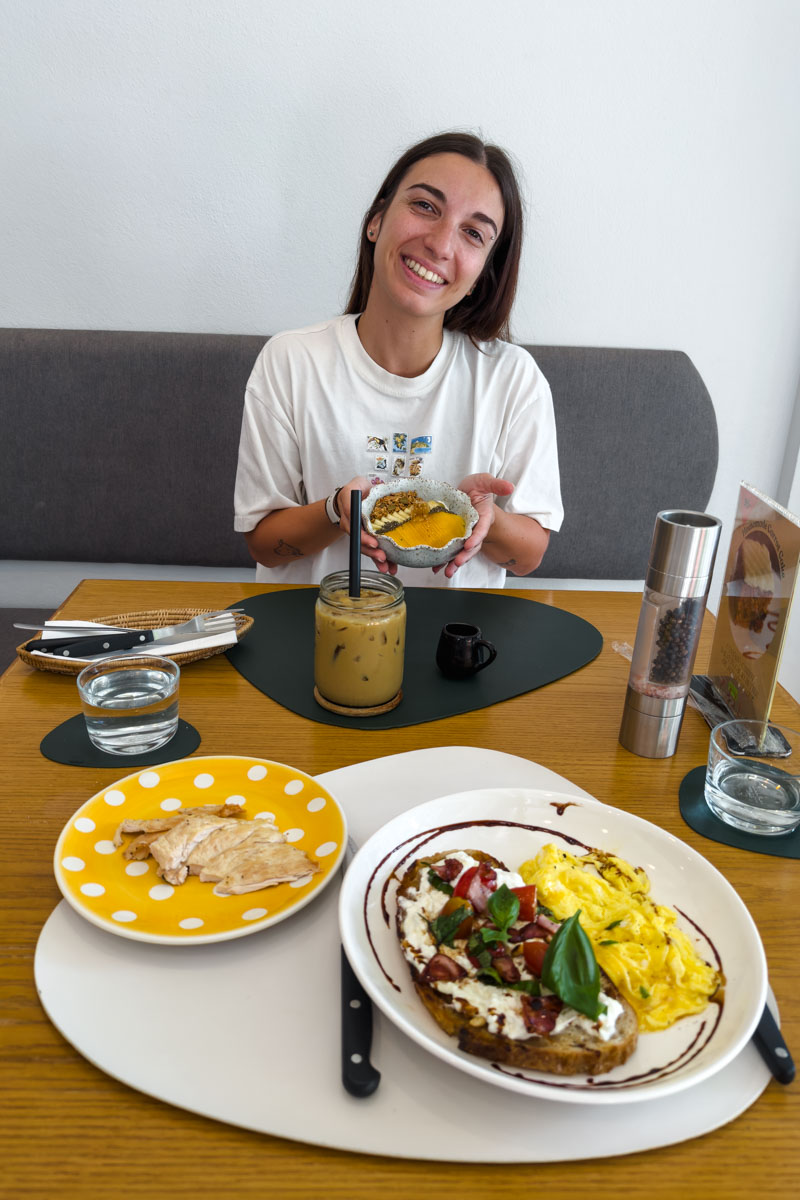
As soon as we arrived, we checked into our apartment and immediately started exploring. Before long, we discovered our favourite places to eat—like Healthy Junk, The Bowl Spot, and Why Not?—and jumped into searching for our community.
Through social media and nomad apps like Nomeo, it only took about a week before we had a huge group of friends.
Every single person was a freelancing nomad, grinding on their own businesses while traveling the world. Each unique story we heard inspired us to grow as both individuals and entrepreneurs.
Speaking of entrepreneurship, working in Chiang Mai was a breeze. There’s a unique energy in the city, fueled by everyone working towards their goals. We found ourselves incredibly productive, whether at home, in a café, or at a coworking space.
All in all, we don’t have a single bad thing to say about Chiang Mai as a base. We already know we’ll be heading back on several occasions in the future.
Digital nomad visa options for Thailand
Destination Thailand Visa
The Destination Thailand Visa (DTV) is the shiny, new nomad visa introduced by the Thai government in July 2024. It’s the most affordable long-term visa Thailand offers… it might even be the most affordable long-term visa on the planet!
For just ฿10,000 ($291), you can gain access to Thailand for five consecutive years. But what’s the catch?

Well, there are a few things to keep in mind:
- You need to prove savings of ฿500,000 ($14,595) in your bank account to apply.
- You can stay in Thailand for a total of 180 days at a time before you need to leave and re-enter. However, you can apply through immigration to extend your 180-day limit to one year, after which you still need to leave and re-enter.
- Every 90 days in Thailand, you must check in with immigration to update your registered address.
- You must be a freelancer or remote worker and be able to prove consistent income, either through bank statements or a contract.
Even with those requirements, it still seems like a sweet deal to us! We’re even considering it as a “just in case” option—what’s $300 for a five-year backup plan at our disposal?
Tourist Visa (Visa on Arrival)
The other option, and the most popular for short-term visitors, is to be issued a tourist visa upon arrival at immigration. There are 93 different nationalities who are allowed a 60-day visa-free stay when entering Thailand, with the option to extend for an additional 30 days.

We extended our visa during our first visit to Thailand, and the process was both simple and complicated at the same time. To extend, you need to visit the local immigration office and bring the following:
- Your passport
- Printouts of your passport information pages and Thai visa
- A passport-style photo
- ฿1900 in cash ($55.46)
- A completed TM7 form, signed by your hotel or accommodation
The entire extension process takes a few hours if you have all the required documents. We didn’t realise we needed the TM7 form, so we had to leave the immigration office, head home, have it signed, and then return.
You can find the TM7 form online, or pick one up at the immigration office.
Remote working is allowed in Thailand on a tourist visa, so long as the company your work for is outside of Thailand.
Arriving in Chiang Mai
Getting from Chiang Mai airport to Chiang Mai
There are a few ways to get from CNX to the city, and it helps that it’s really not far away. The quickest, cheapest, and easiest option, though, is to book a Grab.
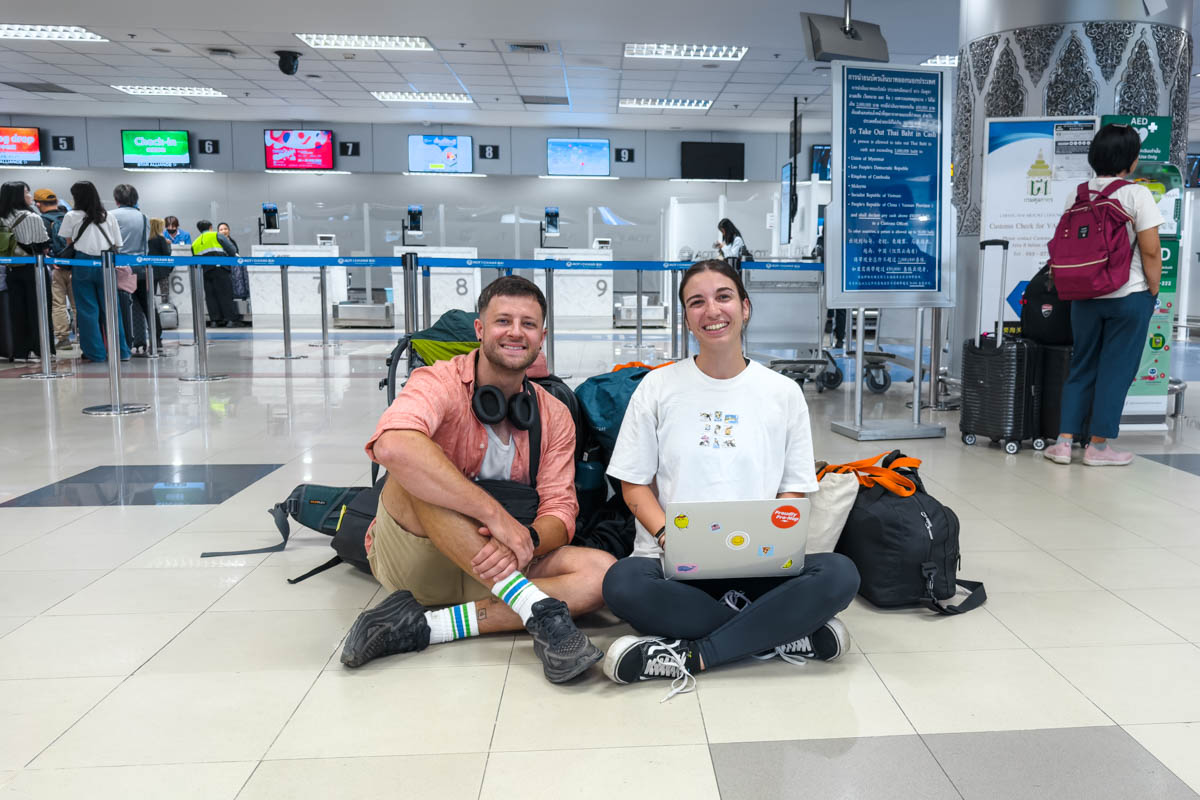
If you’re just arriving in Southeast Asia (SEA), you’ll need to download the app for the first time. It’s essentially just like Uber—only better! That’s because Grab combines everything in one app: you can book taxis, order food, and even send packages.
A Grab from the airport to Chiang Mai should only cost around ฿250 ($7.30). Depending on where you’re heading to in the city, the trip can be as quick as 10 minutes, but it usually takes about 15 minutes to reach the city centre.
Alternatively, there’s a bus that runs every 30 minutes from the international terminal. The journey takes about 10 minutes and costs less than $2. Just ask the information desk inside the airport to direct you to the bus station, and voilà—you’re on your way to the city!
How to get a Thai SIM card in Chiang Mai
Setting up a local SIM card in Thailand is a breeze compared to many other countries we’ve based in. There are two main companies we’d recommend: True and AIS. Both are great options, so just pick whichever is more convenient to find!
Sara and I chose True. We went to Maya Mall (which was within walking distance from our apartment) to visit the local True branch. As far as we know, you can find branches of both True and AIS in most malls.


We walked into the shop, took a ticket, and waited for our number to be called. Since we arrived at 11 a.m. when the shop opened, we were seen right away. Keep in mind—you’ll need your passport to buy a SIM card in Thailand, so don’t forget it!
We opted for a 30-day unlimited data plan, which cost us ฿1150 (~$26).
Complete cost of living breakdown in Chiang Mai
What is the monthly cost of living in Chiang Mai?
On average, we each spent around $900 to $1100 per month in Chiang Mai. However, everyone’s spending habits are different. You could just as easily live on $500/month in Chiang Mai as you could on $1,500/month.
Our advice: figure out a monthly budget you’re comfortable with and stick to it.
Sara actually made a YouTube video about a breakdown of our costs during our first visit to Chiang Mai in March 2023! Inflation has hit a bit since then, but generally the prices haven’t risen too much.
Cost of coffee shops and restaurants
Like most living expenses, cafés and restaurants in Chiang Mai can cost as much or as little as you’d like.
In our experience over three months, a local Thai meal typically costs between ฿50 ($1.50) and ฿100 ($3). This includes dishes like pad Thai, papaya salad, red Thai curry, and fried rice, among others.
When it comes to Western menus, we tried every cuisine we could find. Here’s a list of our favourite restaurants and their average costs:
- Why Not? (Italian): ฿400–600
- Healthy Junk (Health foods): ฿250–500
- Accha Indian: ฿400–500
- The Bowl Spot (Poke Bowls): ฿200–400
- Lucky’s Vietnamese: ฿170–250
- Hummus (Middle Eastern): ฿300–500
- Salsa Kitchen (Mexican): ฿300–500
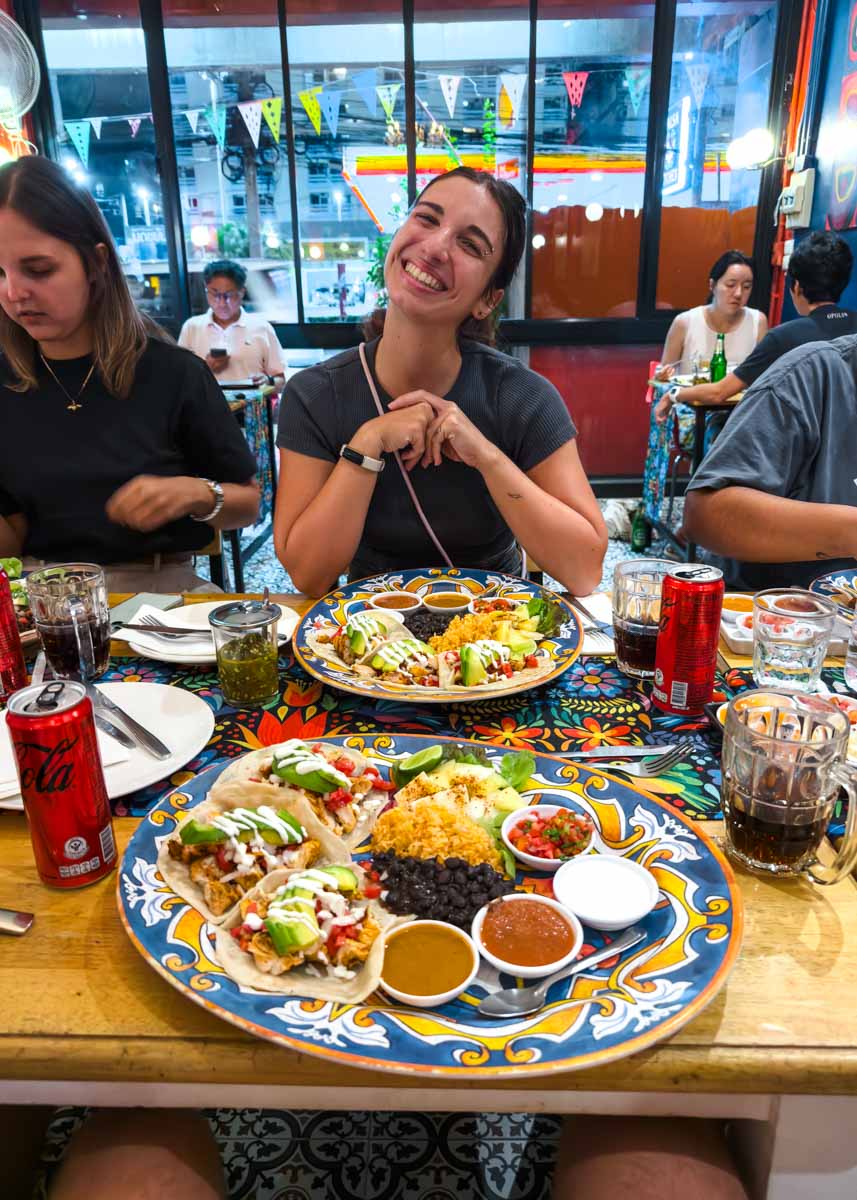
Cafés, on the other hand, tend to be a bit cheaper. We found that the average price of a latte is around ฿70 ($2), with our cheapest find being ฿55 ($1.60) and the most expensive around ฿90 ($2.60).
We also frequented plenty of breakfast café spots offering meals for around ฿100–200 ($3–6).
Grocery costs
We can’t lie—the cost of groceries isn’t something we’re overly clued up on. With restaurant prices being so affordable, we always chose to eat out!
In fact, during our first visit to Chiang Mai, we had a craving for home-cooked food, so we zipped off to the supermarket. All we wanted to make was a simple tomato sauce-based chicken pasta. But just the tinned tomatoes, pasta, and vegetables alone would have cost us more than ordering the same meal at a restaurant.
So, we relented, put everything back, and drove to La Fontana instead.
That said, there were a few things I bought regularly: 30 eggs, a loaf of bread, and ketchup. With access to a kitchen, it was actually cheaper to cook scrambled eggs on toast every morning than to pay for breakfast. Turns out, eggs and bread are cheap no matter where you go.

This haul usually cost me around ฿250 ($7.30) with the ketchup or ฿160 ($7.59) without it.
Cost of accommodation
Accommodation is always a funny thing to explain in terms of cost. What are you looking for? Hostels? Hotels? Serviced apartments? Local houses? Coliving spaces?
Well, as nomads, it’s probably not hostels!
We stayed in the same serviced apartment building throughout our entire time in Chiang Mai. It’s called PT Residence, located in the heart of Nimman.
For our first month at PT Residence, we lived in an apartment with a sliding glass door separating the bedroom and living room. We booked it on Airbnb for $462. You can see a full tour of this apartment in Sara’s YouTube video!
During the second month, we rented a one-bedroom apartment with a spacious living and kitchen area. This Airbnb also cost us $462.
In our final month, we stayed in a double room—similar to a hotel room, but again booked on Airbnb. It was modest but incredibly affordable at $326 for the month.
However, we’ve had friends find local apartments or houses for as little as $250/month. The trick, if staying long-term, is to book a hotel for the first month and use that time to search for an apartment in person.

Our friends, @freelifepassport, stayed in a condominium called Base. It’s a new building that rents apartments on 6- to 12-month contracts for ฿15,000/month ($438). Along with the room, they had access to a coworking space, pool, and gym too.
Alternatively, we visited Alt Coliving (featured in our coliving spaces in Chiang Mai guide), which was stunning and offered an incredible sense of community. However, it prices start around $1,500/month, which is significant for Chiang Mai.
Cost of scooter rental and taxis
Transportation is super affordable in Thailand—and SEA in general. Below our apartment was a company called Budget Catcher, which has branches all over the city. However, simply strolling around Nimman or the Old City will lead you to plenty of rental companies.
We rented a Honda Click 125cc for a monthly price of ฿2,970, or ฿99/day ($2.89). Generally, that’s all you need to zoom around Chiang Mai. Oh, and it just costs us around ฿120 ($3.50) every two weeks in fuel.

The aforementioned Grab taxis are also inexpensive. A motorbike taxi can take you across the city for around ฿100 ($2.92), while hopping in a car will cost about ฿200 ($5.84).
Miscellaneous costs
Miscellaneous, or what we like to call “life admin”, costs are everything else you may need to pay for in Chiang Mai. Things like laundry, haircuts, massages, etc. Like all things, the cost of services depends on which place you visit, but in our experience, our costs were the following:
- Coin Laundry: ฿90 (wash & dry)
- Barber Shop Haircut: ฿300
- 1h Cheap Thai Massage: ฿300
- 1h Spa Thai Massage: ฿800
- Cheap Salon Haircut: ฿400
Living in Chiang Mai
Best neighbourhood to stay in Chiang Mai as a digital nomad
To start, we just want to mention that we’ve only based ourselves in the Nimman neighbourhood. It’s where we first lived in Chiang Mai, and we loved it so much that we didn’t feel the need to try anywhere else!
That said, we’ve extensively explored the other options too. Here’s a brief overview for now. For a more in-depth look, we published a “Best Areas to Live in Chiang Mai” guide—so check that out!
Around Nimman Road
Like we said, this is our favourite area in Chiang Mai. It’s a fairly sized neighbourhood that spans about three or four blocks on either side of Nimmanhaemin Road. It’s here that we found most of our favourite restaurants and coworking spaces.
Nimman is super walkable and has everything you need, from food and groceries to the huge Maya Mall. It’s known as the “digital nomad” neighbourhood of Chiang Mai.

In the Old City
The Old City is the area that most tourists and backpackers choose to base. It makes sense, it’s the heart of Chiang Mai. If you look at a map, you’ll see the four walls of Chiang Mai’s original settlement, everything within these walls is the Old City.
There are still a good amount of restaurants and the like in the Old City, but it’s a lot more local and less modern than Nimman. However, its age does mean there are a ton of temples to explore, and old-timey restaurants to try.

Santitham neighbourhood
Santitham is like Nimman’s younger, more local, and more affordable little brother. It’s an area that surrounds Santitham Road (a lot of neighbourhoods in Chiang Mai are named after its main road).
Our favourite working cafe was in Santitham (Bob Coffee), and we often visited Lucky’s Vietnamese in this area too. It’s super chaotic and local, it’s the kind of neighbourhood you’d expect in SEA. However, it’s this local vibe that makes apartments here a lot cheaper than in Nimman!
The night bazaar area
Our friends Garrett and Nina chose to base themselves in the Night Bazaar area for an entire 15 months! If you think Santitham and the Old City are local, take that local vibe and multiply it by 10—that’s the Night Bazaar!
Located on the east side of the city, this area is named after the huge Night Bazaar, along with its endless local malls and tailor shops. There are multiple night markets in this area, including one that pops up every single night along the main road at sunset.
We even had a couple of fun nights out in the sleazy Thai bars around this neighbourhood… though we’re not entirely sure we can recommend that!

Top coliving options in Chiang Mai for digital nomads
There are a few coliving spaces around Chiang Mai, each offering different services and price points. If you don’t know what a coliving space is (we didn’t until recently), it’s a type of accommodation that provides an ensuite room with shared living and kitchen areas—sort of like a guest house.
But unlike guest houses, coliving spaces usually have attached coworking spaces and include a hot desk as part of the package. They also host weekly community events for residents who want to meet each other and socialise.

In Chiang Mai, we found three coliving spaces that stood out for different reasons:
- The Social Club: Located in the Old City, this coliving space has a super friendly vibe, focusing heavily on community and making residents feel like family rather than guests.
- Atelier 36: Found in Santitham, this coliving space is a converted Thai house that feels incredibly homely. It also gives off the vibe of a large family rather than just guests. Plus, it’s surrounded by nature, which we really liked!
- Alt_ChiangMai: With two locations—one in the Old City and one along Ping River—these coliving spaces are more “luxury” than the others. The quality and design of the accommodation really reflect this. At this price point, we feel only bona fide nomads and business owners would stay here, so the networking opportunities are likely better!
Join our FREE Facebook community!

Sara and I started the Digital Nomad Collective as a free, safe space where both seasoned and aspiring nomads can connect and support one another. It’s completely free to join!
Every day, Sara shares tips, tricks, and advice about becoming, traveling, and living as a digital nomad. Whether you have questions about the nomadic lifestyle or just want to meet like-minded people, we’d love for you to join the group!
How to find an apartment in Chiang Mai
Arguably, the best way to find accommodation in Chiang Mai is to turn up and look for it. Most nomads advise against booking a long-term apartment online without checking its quality in person first.
Sometimes property owners haven’t updated their photos in years, so the apartment doesn’t actually match what’s advertised. This is a common issue throughout SEA.

We recommend booking a place for the first week or two, or maybe even up to a month. During that time, you can check out accommodation listings on Facebook groups and look out for “apartment for rent” signs around the city.
It’s worth noting that the high season (November to February) is the most challenging time to find long-term accommodation. Our friends Marta and Sam arrived in Chiang Mai in October hoping to find an apartment or house for a year. It took them almost six weeks to find a property that suited them!
Here are a couple of Facebook groups to get you started:
Banking in Chiang Mai
Opening an account with a local Thai bank is a difficult and complicated process for foreigners. If you’re on a tourist visa, your chances are slim to none. Even with the five-year DTV, people have struggled to open accounts because they’re not viewed as Thai residents but still as tourists.
A few people in the DTV Facebook group have reported some success in opening a bank account. It seems to depend on the bank you choose, the branch you visit, and even the specific bank teller who assists you… so just luck really!

Our friend, Evelina, does have a local account. She moved to Thailand a few years ago to teach English, and her teaching visa allowed her to be considered a resident. Those on student visa or with a work permit can also open bank accounts.
Generally, having a local bank account, as opposed to using services like Wise or Revolut, doesn’t come with too many benefits.
The main advantage is being able to pay via QR code. In our experience, most places charge a 3% fee for card payments, and ATMs charge a flat ฿220 ($6.24) fee to withdraw cash. Being able to pay by QR code avoids these fees.
How to get around Chiang Mai
There are numerous ways to get around Chiang Mai, but we found that some ways are more convenient than others.
For starters, Chiang Mai is super walkable. Unlike some SEA cities, if you wanted to walk from one side of the city to the other, you could do so, safely.
But we found the most convenient way to get around Chiang Mai is to rent a scooter. Compared to Bangkok, traffic generally isn’t too bad, but Chiang Mai still experiences some outrageous rush hours. Being able to ride a scooter sometimes halves the time of a trip.

If you’re new to scooters and have never ridden before, then why not take a Grab bike taxi instead. It’s more affordable and a lot quicker than getting a cab, and what we would recommend besides walking.
Useful apps to use in Chiang Mai
Similar to most Asian countries, Thailand uses different apps for various services compared to Europe or the US. Before heading to Chiang Mai, here’s a list of useful apps you should consider downloading:
- Grab: The most essential app to download. We use Grab for ordering taxis, motorbike taxis, and, most importantly, food delivery.
- InDrive: We first discovered InDrive in South America, but it’s also widely used in SEA. It’s similar to Grab but allows you to negotiate the fare with the driver on the app before accepting.
- Foodpanda: Another food delivery app, similar to Uber Eats or DoorDash.
- Line: If you’re planning to stay in Chiang Mai, we recommend downloading Line. It’s pretty much WhatsApp, but is widely used across Asia.
- Bolt: Another app for finding taxis and rideshares.
- Lazada: Think of this as the Asian version of Amazon. It’s great for ordering products online and having them shipped directly to your door.
What is the air quality like in Chiang Mai?
The air quality in Chiang Mai depends on the time of year you visit. For most of the year, it’s fairly clean and fresh. However, between late February and April, it’s the burning season, and Chiang Mai becomes one of the most polluted cities in the world for two months straight.
We spent one month in Chiang Mai during the burning season, and we highly recommend avoiding it at all costs. For the rest of the year, though, there’s no need to worry about the air quality too much!

Working as a digital nomad in Chiang Mai
How is the internet in Chiang Mai?
The internet in Chiang Mai is incredible. To be completely honest, Thailand has some of the best internet speeds in the world.
Most cafes and coworking spaces in Chiang Mai offer internet that’s significantly faster than what we’re used to back home in the UK and Switzerland.
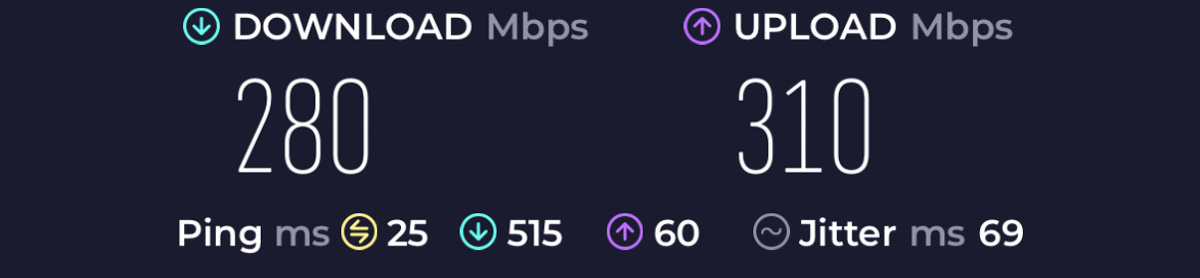
If you need it, it’s easy to find download and upload speeds exceeding 300 Mbps. When visiting cafes in Chiang Mai, make sure to check if there’s a 5G Wi-Fi option, as it’s usually faster.
Popular coworking spaces in Chiang Mai
The most popular coworking space in Chiang Mai is called Yellow. However, we believe its popularity has become its downfall. The prices at Yellow have risen to twice the cost of most other coworking spaces in Chiang Mai, and it’s always super busy.
An alternative coworking space in Nimman that we loved is called Life Space. It doesn’t have a monthly payment model, just a daily fee. Compared to Yellow’s ฿400 ($11.68) daily entry fee, Life Space charges ฿120 ($3.50) for a five-hour pass or ฿180 ($5.25) for a full day pass. The price even includes a drink from the cafe, and they offer free equipment rentals like extension cords and external monitors.

If you’re looking for a more relaxed workday, we found that BuriSiri Hotel offers a ฿150 ($4.38) coworking day pass that also includes access to their pool.
Alternatively, there’s CAMP Coworking on the top floor of Maya Mall, which provides a workspace in exchange for buying food or drinks. However, it’s often busy, so make sure to arrive early!
Laptop-friendly cafes in Chiang Mai with great internet
We worked hard to visit over 20 cafes in Chiang Mai during our recent stay, testing them all out for working. We compiled a list of them all in our ‘Best Cafes to Work in Chiang Mai’ guide.

But here are three of our favourites:
- BOB Coffee: Located in Santitham, this cafe felt more like a coworking space than a typical cafe. Everyone inside was working, the Wi-Fi was excellent, and we ended up spending almost every day here toward the end of our trip. It’s Chiang Mai’s best-kept nomad secret, so shhhh!
- Carrot Coffee CNX: Similar to BOB but on the south side of the city, Carrot Coffee has a rustic vibe, plenty of seating, and fantastic drinks. The Wi-Fi speed was great, and we felt super comfortable working here.
- BeansLiquor: This cafe was close to our apartment, which added to its convenience for us. It has huge tables with plenty of workspace, fast Wi-Fi, and a pretty solid food menu too!
Is Chiang Mai family-friendly?
Since we don’t have kids, we can’t confidently give a definitive answer to this question. But from an outside perspective, we’d lean toward saying that Chiang Mai is family-friendly.
As we mentioned, the city is very walkable, and we saw plenty of mums strolling around with prams. There are lots of public toilets available for changing little ones and tons of fun activities for older kids to enjoy.
Thailand was ranked the 70th safest country in the world in 2024, between Poland and the US, with local children often going to and from school on their own. While the traffic is more chaotic than in the West, it’s still calmer compared to countries like Vietnam or Indonesia.
Whenever we’d see families entering a restaurant, the staff would quickly accommodate them with things like high chairs or other kid-friendly setups.
That said, we’re not entirely sure what families tend to look for in a destination. If you have specific questions about family life in Chiang Mai, feel free to drop us a message or post your question in our Digital Nomad Collective group on Facebook–we may have some families in there that could help!
How is the lifestyle in Chiang Mai?
Health & Fitness
Sara and I religiously attend the gym four times a week, and every time we land in a new base, we need to find a new gym. Luckily, there were a few options to choose from!
Ultimately, we signed up for The Wall. It’s beside Maya Mall, was within walking distance from our apartment, and only cost ฿1000 ($29.19) per month. It was super well-equipped, and around 4 p.m. daily, it was never overly crowded.
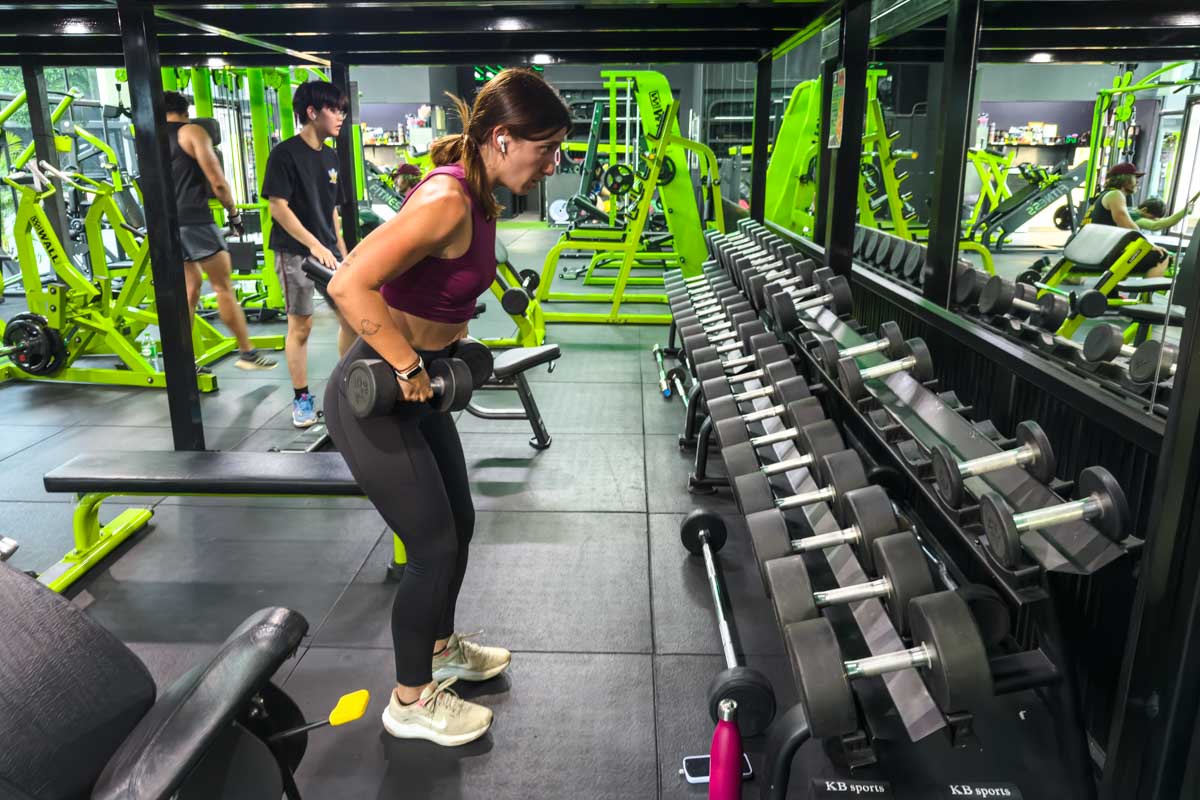
Other options we looked at were Maxx Fitness inside Maya Mall, Jetts 24-Hour Fitness in One Nimman, Pump Fitness to the north of the city, and Pump Fitness 2.0 to the south.
How is the digital nomad community in Chiang Mai?
Sara and I found that the digital nomad community in Chiang Mai was one of the best we’ve ever experienced. Not a single person made us feel awkward for trying to participate in events or conversations.
Within a week of arriving in Chiang Mai, we had already put together a huge Whatsapp group of people we’d met. Every single person ended up becoming one of our close friends that we’ll stay in contact with forever.
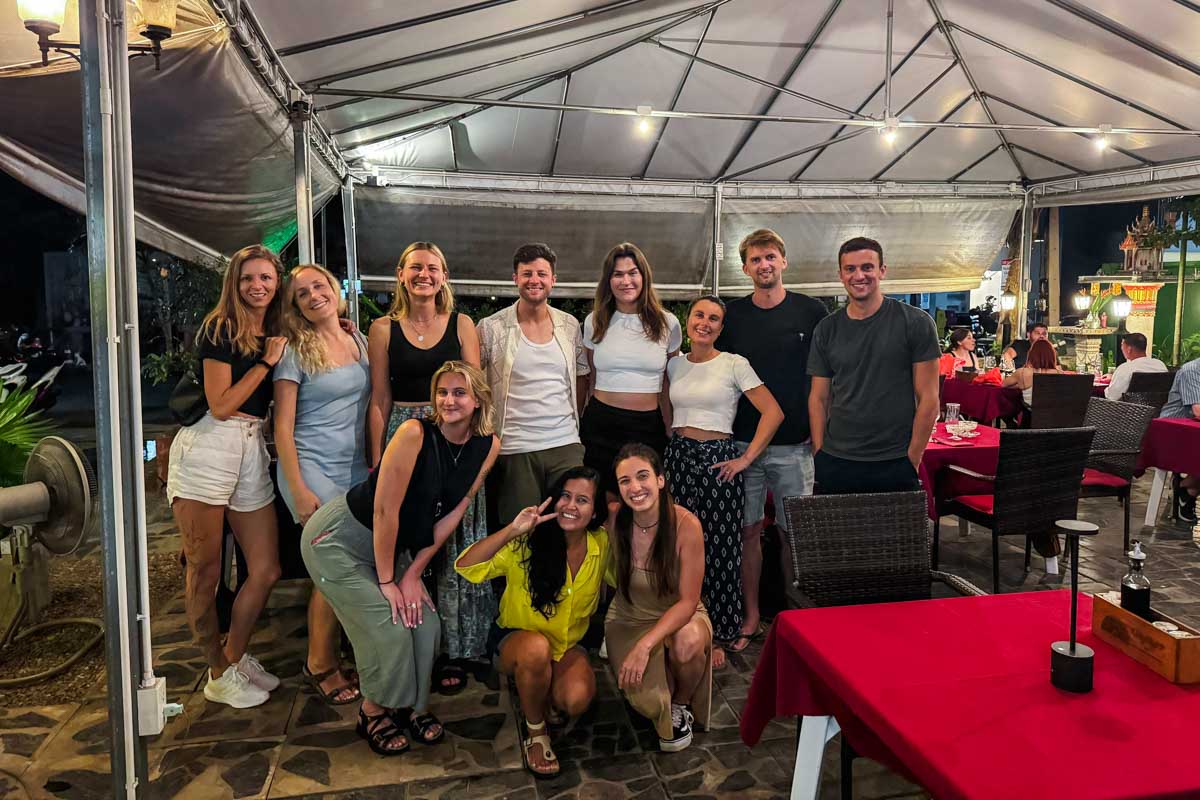
A great way to meet new people is to head to Real Space on a Saturday night. They run a ‘social night’ that costs ฿250 ($7.30) to enter–with a drink included–and is an awesome spot to meet other nomads.
Alternatively, you can find regular nomad meet-ups on Nomeo, to expand your community even further!
Is medical care good in Chiang Mai?
Luckily, we haven’t had much experience with medical care in Chiang Mai. However, we have had friends who needed to go to the doctor or visit the hospital for routine check-ups.
Every account we’ve heard has only praised the healthcare system in Chiang Mai. Our friend, Vania, had to go to the hospital and said she received the sort of treatment you’d expect at a 5-star hotel.
Another friend of ours, Denise, needed to see a doctor for a routine check-up. She said the entire experience was great, with excellent privacy standards and super professional doctors.
However, if we needed complex medical care, we’d probably still head to Bangkok or fly to Kuala Lumpur or Singapore.
Bonus Tip: The best hospital we’ve heard of in Chiang Mai is Chiangmai Ram Hospital. The second best is Chiangmai Hospital. Both of these are private hospitals.
About culture and food in Chiang Mai
Food in Chiang Mai
The food scene in Chiang Mai is incredible. We like to compare it to places like Canggu, Bali. But the real star here is the Thai food—it’s such a diverse cuisine with a huge range of dishes to explore.

If we had to recommend a few of our favourite Thai meals to try, they’d be:
- Pad Thai
- Pad Kra Pao
- Mango Sticky Rice
- Massaman Curry
- Panang Curry
- Chicken Satay
- Khao Soi (a northern Thai specialty)
Beyond these, the street food scene in Chiang Mai is almost on par with Bangkok. If you visit the ‘food center’ in the middle of the Sunday Market in the Old City, you’ll find tons of vendors offering a huge variety of dishes to taste.

We also found the quality of western food in Chiang Mai to be impressive. While we’ve already shared our favourite restaurants above, it should be pointed out that it was rare for us to try a new place and not enjoy it.
In fact, I can’t think of a single time that happened!
What language is spoken in Chiang Mai
The main language spoken in Thailand is, unsurprisingly, Thai. It’s a complex language with a completely different writing system from the Latin alphabet that we’re used to.
Thai is also a tonal language, meaning the meaning of a word can change based on the tone used. For example, the word ‘mai’ can have multiple meanings depending on the tone:
- Spoken with a low tone (ใหม่), it means ‘new’.
- With a falling tone (ไม่), it means ‘no’ or ‘not’.
- With a rising tone (ไหม), it means ‘silk’.
The unique alphabet and tonal nature of the language make Thai a challenge for Westerners to learn—but not impossible! It may just take a bit longer to reach conversational fluency compared to languages like Spanish or French.
Additionally, Thailand is home to a wide variety of dialects and languages—around 72 other living languages!
For example, when we visited the Chai Lai Orchid Elephant Sanctuary, we took a quick tour of a local Karen Tribe village. Our guide spoke a completely different language than Thai when communicating with the residents.
Which religion is practiced in Chiang Mai?
The largest and most widely practiced religion in Chiang Mai—and Thailand as a whole—is Buddhism. This religion was introduced to Thailand in the 3rd century BCE by Emperor Asoka of India.
In modern times, a 2021 estimate suggested that 92% of the Thai population identify as Buddhist.

From our experience, Buddhism plays a significant role in the daily lives of people in Thailand. There are countless temples in Chiang Mai, sometimes only a few blocks apart. Often, we’d visit and see locals praying at the altars.
We also regularly saw monks, dressed in their iconic orange robes, walking around town. In Thailand, monks are shown the utmost respect, and they’re treated accordingly. But they always found time to share a warm smile with us whenever we passed by!
While Buddhism is dominant, there are also populations of Muslims and Christians in Thailand, although they are significantly smaller. While exploring, we even came across a church or two.
What’s the nightlife like in Chiang Mai?
Chiang Mai nightlife is a lot of fun! Thai locals know how to have a good time and love to enjoy a drink on the weekend.
We had a few nights out during our time in Chiang Mai. Sara and I visited a jazz bar in the north of the city, a small nightclub in the centre, and a group of clubs and bars called Zoe in Yellow.

One of our favourite weekend activities was heading out around Nimman to discover new bars. Nimman is one of the liveliest neighbourhoods on a Friday and Saturday night, with an amazing atmosphere and live music everywhere.
A couple of our favourite spots were the Newtown Beer Garden, Living Machine, and Botan. Surprisingly, we rarely saw other foreigners in these bars and were usually surrounded by Thai locals… so that was nice!
Just a word of caution about the alcohol: be wary when ordering spirits and mixers. There have been a string of methanol poisonings in Laos recently, linked to a now-closed factory. While it doesn’t seem to be an issue in Thailand, it’s always best to make sure the places that you visit are reputable.
Is it safe to live in Chiang Mai?
Chiang Mai, and Thailand in general, is one of the safest places in the world. The Buddhist culture means that most locals prioritise being kind to one another, so crime is minimal.
In fact, Chiang Mai has been rated the safest city in all of Southeast Asia!
We would leave our laptops at tables in coffee shops for a prolonged period of time and had no issues. I accidentally left my bank card in an ATM, and managed to pick it up from the 7-Eleven the following day because someone had handed it in.

We would regularly walk around at night, and not once were we worried about our safety. Sara would even take taxis in the wee hours of the morning by herself after a night clubbing.
The only thing we think you need to keep an eye out for in Chiang Mai is being overcharged by metered taxis and tuk tuks.
A quick break in this article to talk about best global travel and health insurance for nomads and travellers!
By far the best insurance option we’ve found as full-time traveling nomads is SafetyWing. We’ve been with them for over three years now, and honestly, they’ve been a lifesaver.
Their customer support is some of the best we’ve ever experienced, we can renew from anywhere in the world (no residency required), and the payout process has always been smooth and hassle-free.
SafetyWing offers various insurance plans depending on how much coverage you think you’ll need:
Essential Insurance
- Emergency medical needs while travelling
- Travel protection (delayed planes, lost luggage, etc.)
- $250,000 limit
- 30 day coverage in your home country
Complete Insurance
- Emergency and ongoing medical needs while travelling
- Travel protection+
- $1,500,000 limit
- Ongoing coverage for new conditions
- Indefinite coverage in your home country
- Health & dental check-ups
- Maternity coverage
What are the downsides of living as a digital nomad in Chiang Mai?
There genuinely aren’t too many downsides to living in Chiang Mai as a digital nomad. But there are a few things that could make your life just slightly more uncomfortable if you stuck around for a year or more:
- Burning Season: Running from mid-February to April, the burning season results in some of the worst air pollution in the world.
- Traffic: Like most Southeast Asian cities, Chiang Mai experiences its fair share of traffic. Also, people don’t drive with the same health and safety mindset as in the West.
- Language Barrier: As we mentioned, Thai is a difficult language to learn. But luckily, many Thai locals tend to have a pretty decent level of English.
- Bureaucracy: It’s difficult to fully assimilate into the Thai community in Chiang Mai, and dealing with paperwork at places like banks is a pain.
Tops things to do in Chiang Mai
Head out on a temple adventure
The density of temples in Chiang Mai is almost unbelievable. Especially in the Old City, they are everywhere! In fact, there are over 300 temples in Chiang Mai alone.

Sara and I have been traveling around Asia for a long time, so we understand that people can get ‘templed out’ pretty easily. So, we wouldn’t suggest visiting all 300 temples. However, here are a few of our favourites that should definitely be on your bucket list:
- Wat Chiang Man: The oldest temple in the city, built by King Mengrai, the founder of Chiang Mai, in 1296.
- Wat Lok Moli: Located at the northern side of the city, this temple features a uniquely designed building with a black and white facade.
- Wat Chedi Luang: Also known as the Temple of the Big Stupa, the main attraction here is the ruins of the City Pillar shrine, which stands 86m (282ft) tall.
- Wat Phra That Doi Kahm: We drove to the foothills of Chiang Mai for this temple, where we found three giant Buddhas: one sitting, one standing, and one reclining. There’s also an incredible view of Chiang Mai from here!
- Loha Prasat Sri Mueang Pong: About a 25-minute ride from Chiang Mai, this is an ornate, multi-tiered pagoda that gives off a white castle vibe rather than a traditional temple.
Taste the mouth watering street food at the night markets
If there’s one thing Thailand is famous for, it’s street food. With countless markets across the country, Chiang Mai is no exception. From tasty treats like noodles, BBQ skewers, seafood, curries, and even… insects, there are few places in the world with such a variety.

Here are a few of the best night markets we visited in Chiang Mai:
- Sunday Walking Market: As the name suggests, this market pops up every Sunday after sunset and stretches the length of Rachadamnoen Road. It’s by far the biggest night market in Chiang Mai and took us a good hour to walk from one end to the other.
- Chiang Mai University Night Market: Located on the university campus, this market is open daily from 5 PM to 11 PM. You’ll find a wide range of food options here. Bonus tip: There are also several groups of pop-up food stalls around the campus at night.
- Chang Phuak Gate Night Market: We never got around to visiting this one, but we drove past it at least twice a week. It always looked busy and inviting—we’ll make sure to stop by next time!
- Kalare Night Bazaar: This market is part of the larger Night Bazaar area. Kalare is a square off the main road with street food and live music. Plus, Changklan Road transforms into a market every single night, making it easy to pair the two.
Relax with a massage
Something Sara enjoys far more than I do is a good massage! A typical Thai activity, it’s almost impossible to visit without indulging at least once.
The best part about Thai massages is that they’re super affordable! At most places, a 60-minute Thai massage costs around ฿350 ($10.22), and some spots are even cheaper.
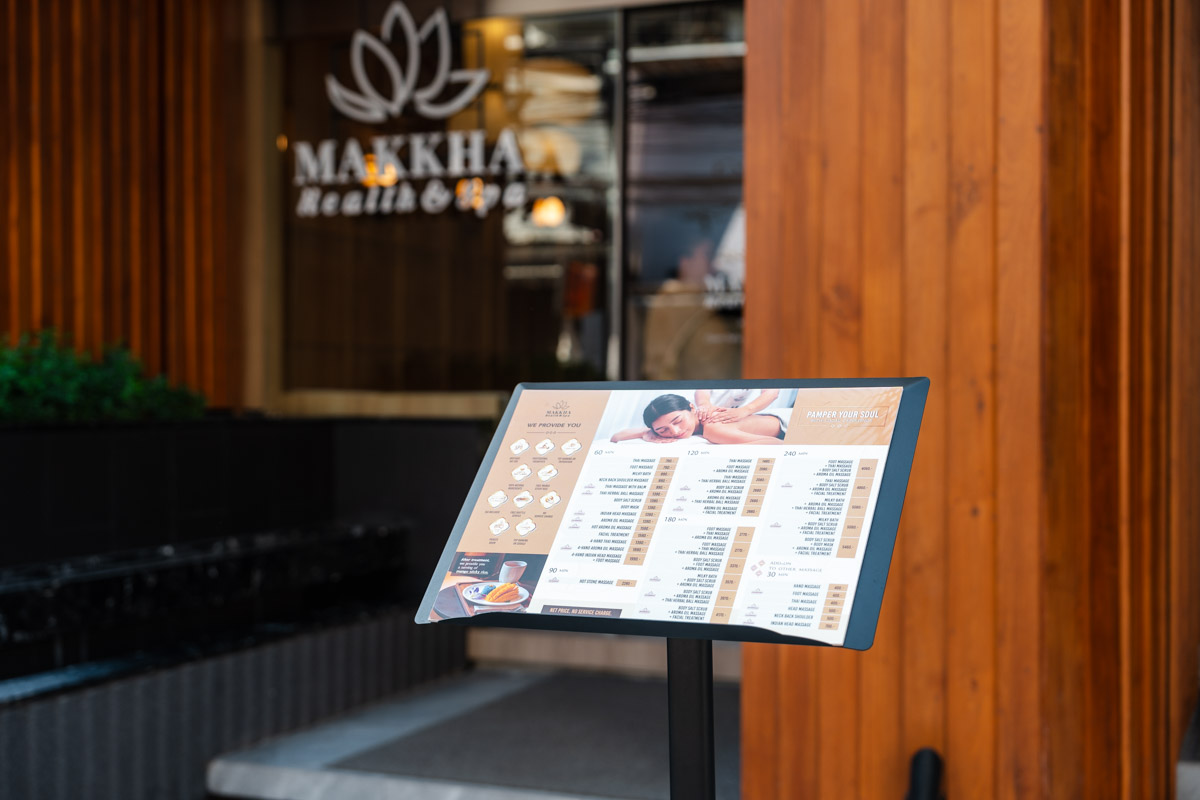
I’m a big fan of Thai massages. They’re strong and deep, with the masseuse working into the tight spots in your muscles and joints.
Sara, on the other hand, prefers something softer and more relaxing. She’s a fan of Swedish massages, which, she says, use a lot of oils. Because of this, they’re a bit pricier at ฿560 ($16.35), but she swears they’re worth it!
Top day tours from Chiang Mai
Visit Doi Inthanon: Thailand’s tallest mountain
One of the most fun and memorable road trips we took was to Doi Inthanon, the highest point in Thailand.
The journey takes about 1 hour and 45 minutes by scooter or motorbike. The first half is along a highway, while the second half winds through scenic mountain roads.
Alternatively, you can book a tour from Chiang Mai. We also noticed plenty of glamping sites in the area, which would make for an awesome two- or three-day getaway!

Inside the national park, we explored the Royal Pagodas of Doi Inthanon, hiked up to the highest point in Thailand at 2,565m (8,415ft), and stood in the refreshing spray of Wachirathan Waterfall.
But honestly, one of the best parts of visiting Doi Inthanon is riding through the mountain roads. The views are absolutely breathtaking, and the winding roads are a blast to cruise along. If you’re comfortable on a scooter or motorbike, we can’t recommend it enough!
Combine Chiang Dao & the sticky waterfalls in one road trip
Another one-day road trip we decided to take was up to Chiang Dao, a small town about an hour and a half north of Chiang Mai.
The road is pretty much just highway the whole way, so this trip isn’t really about the journey itself.
Since we started early, we managed to fit in a few activities during the day.
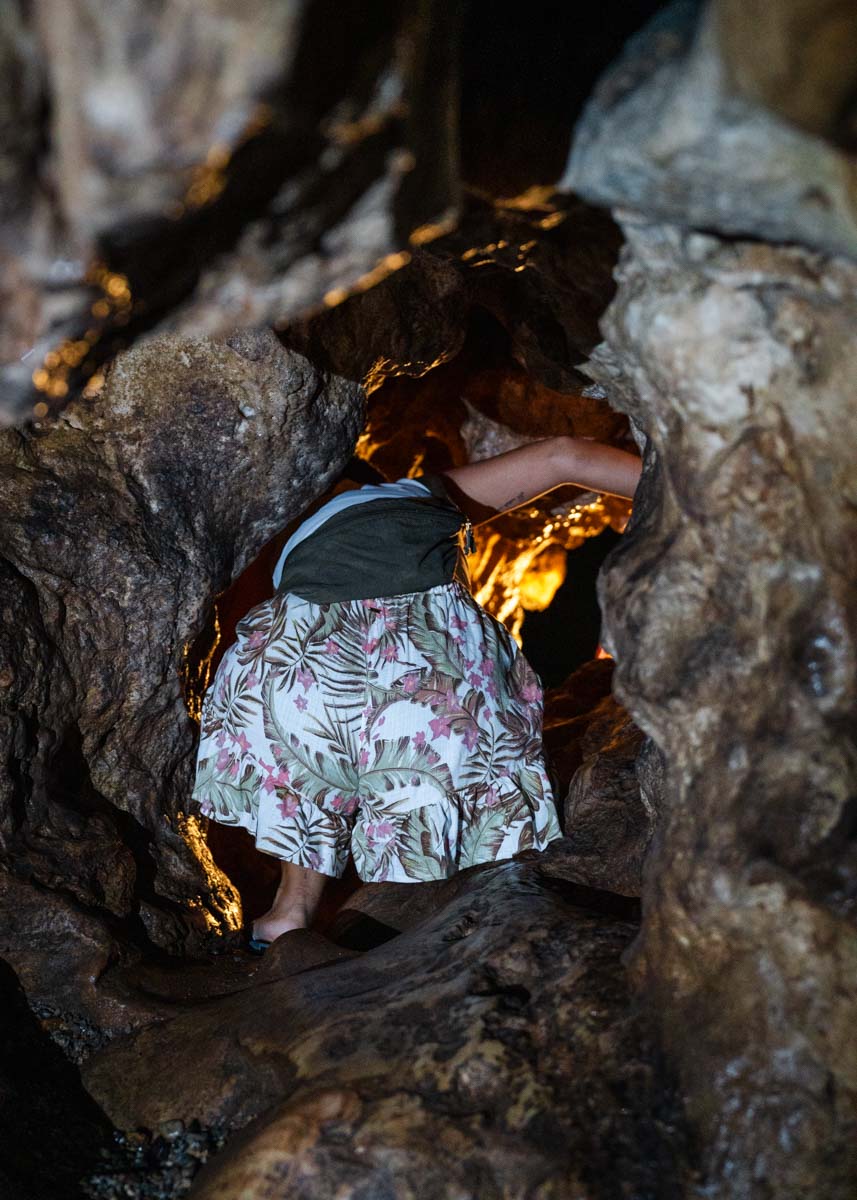
We began at the furthest point–Chiang Dao Cave. It’s a massive cave network you can explore with a guide. Then on the way back, we pulled in at Dantewada, an artificial waterfall. Even though it’s entirely man-made, the waterfall is stunning.
Finally, we ended the day at the Bua Tong Sticky Waterfalls. This spot is so unique because the rocks the water flows over aren’t slippery—they’re actually incredibly grippy. Using some strategically placed ropes, we climbed all the way from the bottom to the top. It was such a fun and memorable experience!
Admire the view along the Samoeng Loop
The Samoeng Loop is yet another awesome road trip. Thanks to Chiang Mai’s mountainous location, there are plenty of scenic mountain routes to ride.
This particular loop takes around two and a half hours of riding, but there are so many attractions along the way… way too many to fit into just one day!
So, we had to pick and choose where to stop. Our first two stops were Wat Phra That Doi Kham and Loha Prasat Sri Mueang Pong, both of which we’ve already mentioned in the temple section above.
After a traditional Thai lunch at Max Wine & Coffee on the Hill, we made a quick stop at Elefin Farm & Cafe. But we noticed they offer elephant rides, so we’re not entirely sure about how ethical this spot is.
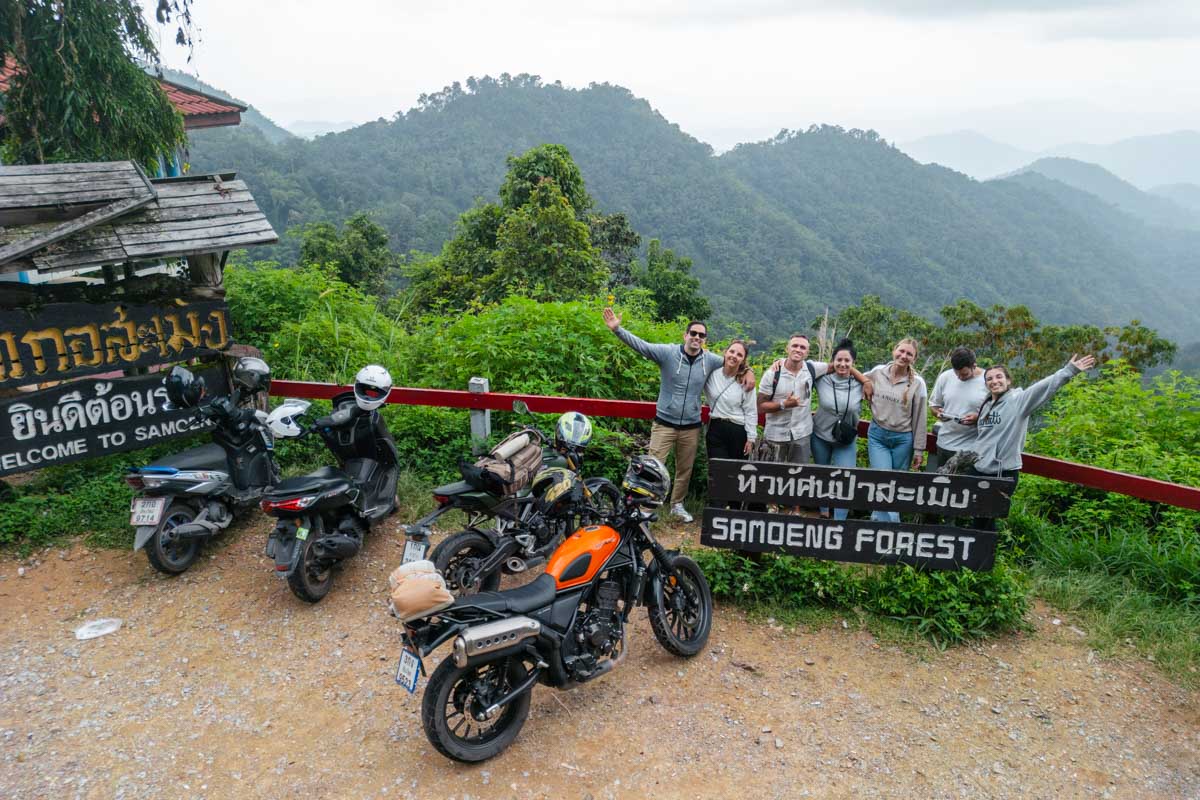
Then we rode out to Mae Sap Cave, a fascinating cave complex with four different caves to explore. Followed by the popular Samoeng Forest Viewpoint.
Finally, we wrapped up the day with a bit of fun at Pong Yaeng Jungle Coaster. For just ฿200 ($5.84), we got three adrenaline-packed minutes zooming down some metal rails in a slightly questionable plastic car. It was the perfect way to end the loop!
Weekend trips from Chiang Mai
The famous Mae Hong Son Loop
The Mae Hong Son Loop is another road trip that you’ll need to dedicate at least three days to—or preferably four or five.
It starts in Chiang Mai and stretches all the way to Mae Hong Son town, near the Burmese border.
The ride takes you through Pai, one of the most popular backpacking spots in Northern Thailand. Along the way, there are plenty of waterfalls, viewpoints, natural springs, and caves to explore.

Just be cautious—this route isn’t ideal for beginner riders. Make sure you’ve got at least a few months of riding experience under your belt before tackling the Mae Hong Son Loop. Otherwise, you might want to consider booking a tour or renting a car instead.
Ryan’s been wanting to ride this loop for years, but time constraints have always gotten in the way. We have friends who’ve raved about the journey, saying the entire route is incredible and the views are absolutely stunning. So, we’re definitely making it happen next time we’re in Chiang Mai!
Find yourself in Pai
Speaking of Pai, if you’re looking for a relaxed but adventurous getaway, spending a few nights in this hippie backpacker village will do the trick!
There are a few temples around the village, some hiking trails, markets, and even a big Buddha. One of the more popular spots to check out here is Pai Canyon.
Otherwise, it’s the kind of place where you can kick back, enjoy nature, smoke some (legal) weed, and probably listen to some guy strumming Wonderwall on his guitar.
Just don’t get caught in the famous “Pai Hole”—you might never leave!
Visit some of the most famous Thai temples in Chiang Rai
The last weekend trip we’d definitely recommend is heading to Chiang Rai.
For this journey, we actually suggest taking the bus. The road is all highway, and four and a half hours of it wouldn’t be pleasant on a scooter—at least that’s what our friends told us.
We spent two nights and three days in Chiang Rai, which we think is plenty of time. During our stay, we managed to visit the White Temple, the Blue Temple, Baan Dam Museum, the Golden Triangle, and more!

Chiang Rai is smaller and a lot less touristy than Chiang Mai. Many people just visit for the day on a super long tour. Because of that, we didn’t find the same level of food options or accommodations here.
But, in our opinion, the temples are some of the best in Thailand and are an absolute must-visit!
When is the best time to visit Chiang Mai
The best time to visit Chiang Mai is between November and mid-February. This is after the rainy season and before the burning season. It’s also the peak season for Chiang Mai, so expect it to be busy during these months.
We arrived in October, at the tail end of the rainy season. In our opinion, the rainy season in Thailand—or any country in Southeast Asia, in our experience—isn’t the worst time to be around. Yes, it’s a bit more humid, but the rain tends to be predictable, so it didn’t ruin our plans too often.
But for the love of god, avoid March and April in Chiang Mai at all costs. This is the burning season, and for both months, the level of pollution in Northern Thailand is some of the worst, if not the worst, on the planet.

Alternative digital nomad hubs in Thailand
Bangkok
One of our favourite cities in the world, Bangkok is an international hub that boasts super modern infrastructure. The internet speeds are crazy, the food is insane, and the nightlife is unparalleled.
What we love about Bangkok is the fully equipped condos on offer. They’re usually around $600-800 per month and come with access to a pool, gym, and coworking space.

The downsides of basing in Bangkok, in our opinion, are the perpetual pollution and the smell. For some reason, the sewage system in the city runs very close to the surface, and open drains lead to unbearable stenches.
Koh Samui or Koh Phangan
If you’re seeking laid-back island life, then maybe you’d like to consider Koh Samui or Koh Phangan.
Koh Samui is the bigger of the two, big enough to host an airport and even a McDonald’s. It’s still pretty well developed for an island and has all the modern conveniences you might be looking for in a tropical destination.
On the other hand, if you’re looking for more off-the-grid living, then Koh Phangan might be for you.
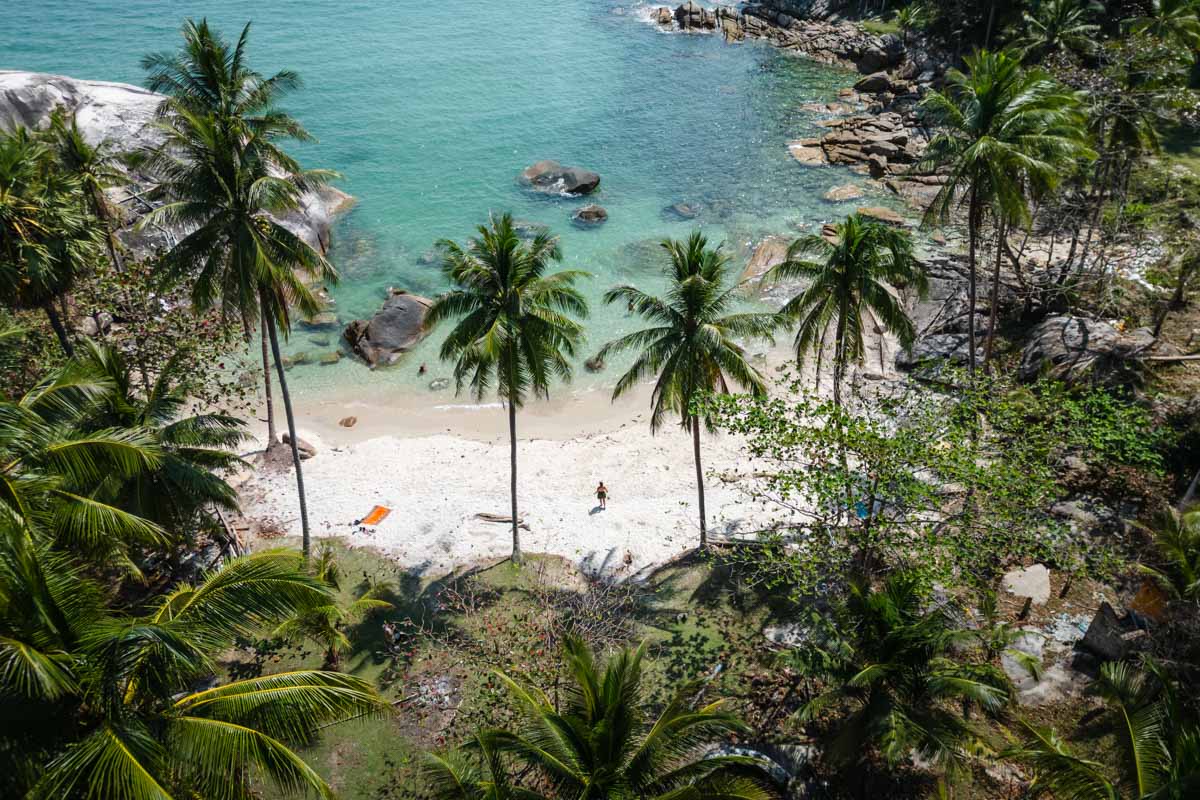
We spent a week on this island (for the full-moon party, obviously) and loved exploring its stunning beaches and mountains. But for us, it doesn’t have the infrastructure we look for in a base. Still, some people might enjoy the simple life!
Phuket
The island of Phuket has always been a popular destination for digital nomads. People have flocked to this area of Thailand to set up base for decades.
And for good reason: Phuket is home to some of the best beaches in the country. The weather is great in southern Thailand, and you get the island vibe on a much larger scale.
However, we’ve been receiving reports from friends that Phuket has become quite expensive—it’s probably the most expensive place to live in Thailand. Accommodation is becoming increasingly harder to find, and the island is getting unbelievably busy.
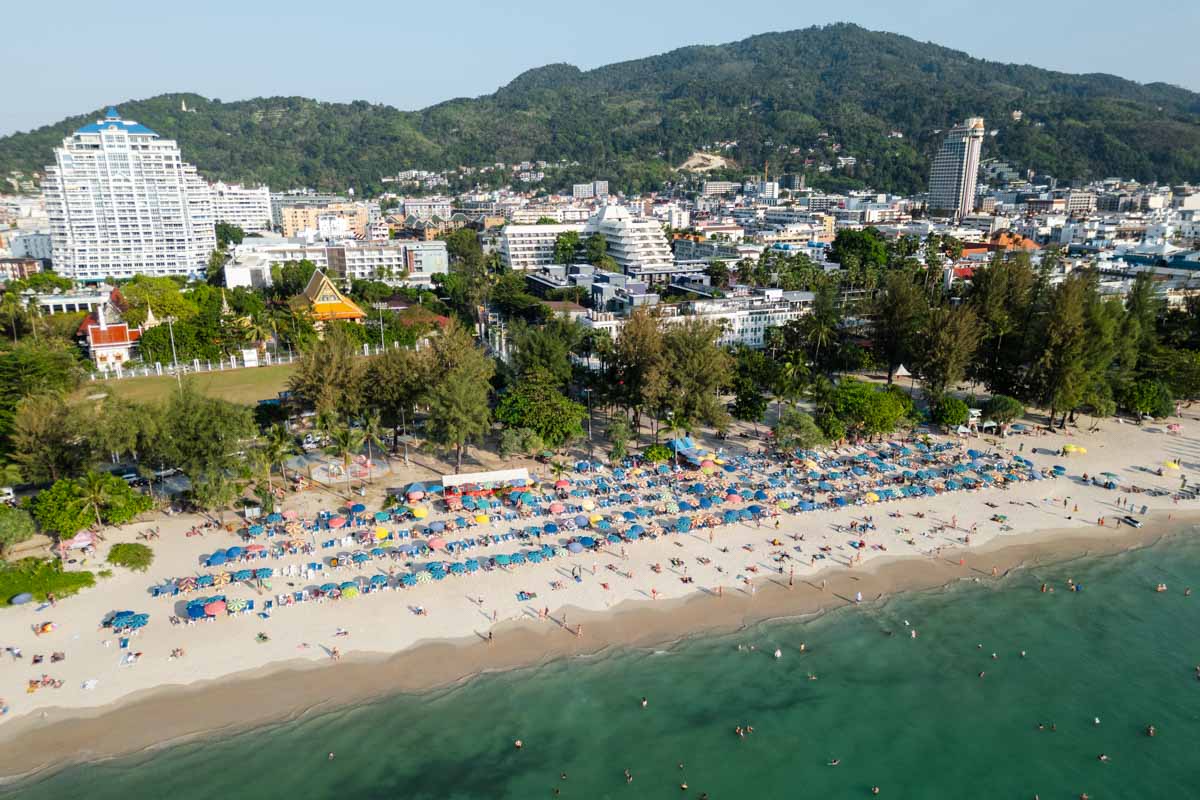
When we spent a couple of weeks in Phuket, we really enjoyed exploring the area. But we could never see ourselves settling there as a long-term base.
Pattaya
From what we hear (we haven’t visited yet…), Pattaya is like the seedy underbelly of Thailand. It started out as a beautiful, tiny seaside village 50 years ago, but since then, it has developed into a metropolis.
Pattaya is home to bars, clubs, resort hotels, and a ton of sex tourism. The stories we’ve been told by friends make us both want to visit Pattaya out of curiosity and avoid it at the same time!
It seems to be the place where older Western men head to retire. However, we’re sure there must be quieter areas outside of the city that could still be a relaxing place to live.
It’s time to make your decision!
Just because Chiang Mai is one of our favourite digital nomad bases, doesn’t mean that it’s right for you!
Our goal with this guide was to provide all of the information one might need to make an informed decision about making Chiang Mai a base. Whether that’s for short-term, or long-term.
If you’re looking for more in-depth information on more of these topics, then check out all of our other nomad-related guides from Chiang Mai. You might find a nugget of information that will swing your decision one way or another.
Or, if you’re interested in the digital nomad lifestyle, check us out on Instagram. We post daily about being nomadic, working remotely, and travel blogging.
Otherwise, we hope to see you there someday, because we definitely plan to head back to Chiang Mai in the future!
We hope that our guide covered everything you need to know about living as a digital nomad in Chiang Mai. We always strive to offer the most accurate and up-to-date information we can but if you think something we’ve said is wrong, please let us know!
Read more about life in Chiang Mai:
- Complete guide to living as a digital nomad in Chiang Mai
- 22 Best coworking spaces in Chiang Mai
- 25 Laptop-friendly cafes to work in Chiang Mai
- 7 Best Chiang Mai coliving spaces to stay in as a digital nomad
- 8 Best areas to stay in Chiang Mai for tourists and nomads
- Is Chiang Mai safe in 2025? Everything you need to know!
- Chiang Mai vs. Chiang Rai: Which City Fits Your Style?
- Chiang Dao Cave: Thailand’s Hidden Underground Gem
- Climbing Bua Tong Sticky Waterfall: A day trip from Chiang Mai
- Chai Lai Orchid Ethical Elephant Sanctuary in Chiang Mai: A Must-Visit!
- Day Trip to Chiang Rai from Chiang Mai: Is It Really Worth It?
- Cost of Living in Chiang Mai: How much you really need in 2025!
- Best Time to Visit Chiang Mai? We Lived There for 3 Months – Here’s the Truth!


