
Is Chiang Mai safe in 2025? Everything you need to know!
When people ask us, ‘Is Chiang Mai safe?’ we always smile—because after three months living here, we’ve learned the truth isn’t as simple as a yes or no!
Sara and I consider ourselves super lucky to have lived and worked in Chiang Mai for so long. Over that time, we’ve explored as many corners of the city, and surrounding area, as we possibly could!
Between walking around at night (sometimes maybe slightly drunk), and hanging out with both locals and expats, to zipping around the city on a scooter. We’ve really pushed the boundaries on staying safe in Chiang Mai.
So, is it really as safe as people think it is? Let’s take a closer look!
This post may contain affiliate links. Please read our Disclosure Policy.
An overview about safety in Chiang Mai
Before we decided to make Chiang Mai our base, we wanted to take an objective look at safety and crime levels in the city. The last thing Sara and I wanted was to show up somewhere without any idea of potential dangers!
So, I dived headfirst into some research and quickly found out that Chiang Mai ranks 18th on the world safety index out of 380 cities. Or, if you flip it, 363rd out of 380 on the world crime index… depends on how you want to look at it!

What reassured us even more was that in 2023, Chiang Mai was named Southeast Asia’s safest city—beating even a more modern and developed Singapore!
At least on paper, it seemed like a solid choice for Sara and me to base ourselves as nomads, let alone visit as tourists.
Our experience with safety in Chiang Mai
It’s all well and good looking at statistics and skimming (possibly biased) news articles. But if you’re reading this guide, chances are your curiosity goes beyond just tables and numbers.
We spent over three months living in Chiang Mai, so what was our actual experience with safety in the city?
To neither of our surprise, Chiang Mai felt just as safe as the research suggested. We had zero issues or hesitations walking around—day or night. A couple of times, we even found ourselves wandering the city centre after a few too many beers.


Not once did we feel threatened or in danger. Quite the opposite, actually—most people we met would flash us a smile or say hello!
During our time there, Sara and I never fell victim to scams, never felt unwelcome as foreigners, and found every local we met to be super friendly.
Then what is the biggest risk in Chiang Mai? Probably the traffic. If you’re planning to ride a scooter, take it slow until you get used to the flow. But even then, the roads here aren’t the craziest in Asia—that title probably goes to Indonesia or Vietnam!
Is Chiang Mai safe for tourists?
If Sara and I were picking out your next holiday destination, we probably wouldn’t go for Chiang Mai. But that’s not because it isn’t safe—it’s just missing one thing most people love to relax on… beaches!
Regardless of its lack of beaches, if you’re planning a trip to Chiang Mai, you can rest easy knowing it’s a completely safe place for tourists to visit. While it doesn’t rely on tourism as much as Southern Thailand, the locals still welcome visitors with open arms.

We’d actually recommend getting to know both the expat and local communities while you’re here. Head out to bars, check out local cafés, and visit cultural attractions—it’s the best way to immerse in the real Northern Thailand experience!
Is Chiang Mai safe for backpackers and solo travellers?
The first time Sara visited Chiang Mai was back in 2018. She wasn’t working remotely then—just your regular backpacker!
And just like during her first visit, Chiang Mai is just as safe for backpackers and solo travellers in 2025. Not much has changed in the past seven years—it’s still a key stop along the Banana Pancake Route, just like it was back in 2018.

We saw plenty of backpackers wandering around town, Google Maps in hand, searching for their hostel. The nightlife is still thriving too, with spots like Zoe in Yellow catering specifically to the backpacker crowd.
So, if you’re planning a world trip (or a Southeast Asia adventure) and wondering whether Chiang Mai is safe, the answer is a solid yes—go ahead and add it to your itinerary!
The only thing we’d recommend being wary of is methanol-laced spirits. It wasn’t necessarily something that concerned us before, but the recent deaths of 6 female backpackers in Vang Vieng, Laos, and a recently engaged couple in Hoi An, Vietnam, have made us extra careful!
Is Chiang Mai safe for solo female travellers?
Travelling as a solo female isn’t something little ol’ me is qualified to talk about. So this following advice comes from Sara herself, who has extensive solo female travel experience. She says:
“This is always a tricky question because “safety” is relative—it depends on personal experience. Also, there’s always a chance of being in the wrong place at the wrong time.
But if a girl asked me whether Chiang Mai is safe, based on my personal experience—having visited four times between 2018 and 2025—I’d say, yes, Chiang Mai is totally safe for female travellers.
If they wanted more details about safety for female travellers, especially solo female travellers, I’d say: Do you know that stress-free feeling of just being a girl, travelling around without a worry in the world? That’s exactly how I’d describe the vibe in Chiang Mai.

I’ve never once felt in danger as a solo female traveller exploring Chiang Mai, even when walking home alone in the early hours of the morning after a night out.
In my experience, it’s safe to walk around in the morning, during the day, and even at night. Because:
- I’ve never been catcalled.
- I’ve never had men staring at me.
- I’ve never felt like I was being followed or had my instincts send me warning signals.
Honestly, if a girl asked me for the best place for solo female travellers in Southeast Asia—especially first-timers—I’d say Thailand. And more specifically, Chiang Mai!”
Is Chiang Mai safe at night?
As you’ve probably guessed from reading to this point in our guide, Chiang Mai is super safe to walk around at night.
That doesn’t mean you should throw common sense out the window—we always make sure to stay aware of our surroundings. Like most cities, Chiang Mai has a bit of petty crime, but nothing that should cause major concern.
From our experience living here, walking around after dark feels completely fine. Just keep an eye on scooters and cars when crossing the road!

Is Chiang Mai safe to live in?
Chiang Mai is easily one of the safest cities in Southeast Asia for expats and digital nomads to live in. Whether you’re solo, part of a couple, or moving with your family, safety is one of the biggest draws for the estimated 30,000 people that have immigrated here.
Sara and I loved our time living in Chiang Mai and rarely had any reason to worry. In fact, one time, I stupidly left my bank card in an ATM (the cash comes out first, and the card second—unlike the UK!). The next day, I went back to the 7-Eleven that the ATM was attached to, and someone had actually handed my card in!

Crime is so rare here that we could live pretty worry-free. It’s also a big reason why we fully intend to keep coming back to base ourselves in Chiang Mai again and again!
Is the tap water in Chiang Mai safe to drink?
No, the tap water in Chiang Mai is not safe to drink. Like most places in Southeast Asia, we had to purchase water from the local supermarket.
However, there are numerous water refill stations around the city—we had one in our apartment block. You can bring your old 7L water bottles and fill them up with clean water for just a few baht.

Sara also wants me to touch on shower water in this section—a note for the girls. Shower water is the same non-drinkable water that comes out of the tap (so don’t drink it), and it’s pretty hard water on the hair. Therefore, if you plan to live in Chiang Mai long term, we’d recommend fitting a water filter to the shower head to prevent damaged hair and excessive hair loss!
Is there a drug problem in Chiang Mai?
As far as we are aware, there is no drug problem in Chiang Mai. Yes, it’s fairly easy to source most drugs in Thailand—especially as marijuana is legal—but there’s hardly a drug issue in the country.
That said, if you intend to partake, it’s always wise to be cautious about where you get them from. Most marijuana dispensaries are safe—we even visited a couple. Beyond that, our general advice is to steer clear of anything harder. Jail time is a real possibility if you’re caught with illegal drugs in Thailand!

Are there any safety issues in Chiang Mai?
We’ve established that Chiang Mai is one of the safest cities in the world. So, is there actually anything to worry about when you visit?
Let’s find out!
Air quality & burning season
In our opinion, the element that is going to be most dangerous to visitors in Chiang Mai is the burning season. Whereas physical crime poses minimal threat, the air quality of Northern Thailand during the burning season is inescapable.
Sara and I were basing in Chiang Mai back in March 2022, right in the middle of the smoky season (February to April). The only reason we booked to stay here during this time is because we thought the air quality couldn’t be that bad… We were wrong.
When we landed at the airport, the plane descended through a blanket of smog. We then spent the following month walking around in a dense cloud of smoke—caused by the farmers all burning their fields at the same time. Sometimes we could barely see 100m ahead of us!

Admittedly, although unhealthy, exposure to the burning season for a short period of time isn’t going to kill you. But believe us when we say, breathing becomes uncomfortable, our throats started to hurt, and not seeing the sun for a month straight becomes a bit depressing.
Regular flooding in Chiang Mai
Another seasonal natural disaster that we experienced during our time in Chiang Mai was flooding. Luckily, we were based in Nimman—a neighbourhood on the opposite side of the city away from the Ping River—so we didn’t feel the effects of the flooding too much.
We did, however, venture over to the east side of town a few times after the flooding. What we saw was devastating. There was river sediment all over the roads, we could see the marks on the walls of hotels and restaurants where water levels had risen above waist height, and people were working hard to fix the damage.
Between the flooding in Chiang Mai and Chiang Rai, 16 people unfortunately lost their lives. So if you visit this area during the rainy season (May to October), just beware that the Ping River is liable to flooding.

Tuk-tuk and taxi scams in Chiang Mai
Moving on from smoggy clouds and natural disasters, there are a couple of scams that are worth mentioning.
Like in most Thai cities, it’s best to watch out for tuk-tuk and taxi scams. In both cases, they will try to overcharge you. You should not take the first price for a tuk-tuk, and you should always insist that taxi drivers turn the meter on before entering the car.
When Sara and I have to agree on a fixed price, we always negotiate before stepping into the vehicle. Sometimes the best negotiation tactic for tuk-tuks is to just walk away. They’ll usually quote you a price that’s 5–10 times inflated, hoping that you’ll just agree, so walking away means less money for them, which often results in them chasing you down the road and offering a more reasonable price.

Finally, some taxi and tuk-tuk drivers work with local shop owners to bring tourists to the shops for a commission fee. Sometimes drivers will intentionally take you to the wrong place to make money off you. It’s not the worst-case scenario, but it’s a pain, so just be aware of your route when being driven through town!
The jewellery scam
The jewellery scam is something that Sara and I have heard about, but never experienced ourselves. Basically, the scam involves shop sellers trying to pass off cheap, synthetic jewellery pieces as expensive gemstones.
Another layer to this scam involves tuk-tuk drivers, who might bring you to these knock-off shops, claiming they know of a great deal. All the while, they’re fully aware you’re getting ripped off.
With this particular scam, it takes just common sense to avoid. Does the shop look reputable? What are their online reviews like? Does the jewellery feel cheap?
And sometimes, it’s best to just go with your gut! If a shop feels dodgy, we’d recommend cutting your losses and trying another one, just to be safe!
Check your rentals
Sara and I almost always rent a scooter whenever we visit new cities. We truly believe that, at least in Southeast Asia, it’s the most efficient way of getting around.
When renting, the first thing we do is take pictures and videos of the scooter in front of the agent renting it to us. Quite often, the agent will take theirs and WhatsApp them to you, but we always take our own anyway, just in case they send us old images.
Doing so prevents the rental agency from being able to claim you damaged the bike, when in reality, the damage was already there before you rented it.

Sara and I have probably rented more than 20 scooters and motorbikes during our travels, and so far, we’ve been lucky enough to never have issues with rental agencies. But we’ve heard of this happening at dodgier places, so it definitely pays to be cautious.
A great rental company we always use in Chiang Mai is called Budget Catcher, they have branches all over the city!
ATM skimming and cloning
ATM skimming and card cloning happen worldwide, so it’s no surprise that this can occur in Chiang Mai too. Referring back to common sense, it’s best practice to give any card slots a quick wiggle to see if they’re loose. If they are, just show caution and try another ATM!
Traffic issues in Chiang Mai
When it comes to physical safety in Chiang Mai, the biggest threat to us was the traffic. Although not as crazy as other areas of the world, it’s still pretty hectic compared to the US or Europe. We found it wise to be especially careful during rush hour!
When walking around Chiang Mai, we always made sure to pay attention to the roads when crossing. Also, there are a lot of areas without dedicated pathways, forcing us to walk on the side of the road. So we always tried to stay alert in these areas of town.

It’s worth mentioning that, unlike in more developed countries, drivers in Thailand will not stop at zebra crossings. Right of way doesn’t exist in Thailand, so don’t expect cars and bikes to stop while you stand at the side of the road. Sometimes even red lights are just a suggestion to Thai drivers!
Is there corruption in Chiang Mai?
Unfortunately, corruption does exist in Thailand. However, we generally found it to be less prevalent here than in countries like Indonesia, Vietnam, or the Philippines.
The main experience we have regarding corruption is driving scooters without an international driving permit (IDP). Whenever we were pulled over by the police in Bali, they basically ran a giant bribing operation. They charged us money, which could actually be haggled, that went straight into their pockets. No tickets, no receipts, nothing. It was all about getting as many tourists in, paid, and out as fast as possible.

When we were pulled over in Chiang Mai, they directed us to a government building to pay. We had to queue up, see the counter, present our ticket from the police officer, pay legitimately, and even receive a receipt so that we couldn’t be issued another ticket for the next three days.
Needless to say, our experience with this in Thailand felt a lot more authentic than in Bali. However, I have since obtained an IDP, and I’d recommend you do too!
Safety tips for visiting Chiang Mai
Now that we’ve covered all of the potential dangers and scams in Chiang Mai, we also have a lot of tips to offer to increase your levels of safety while visiting!
Don’t flash your valuables
The first thing Sara and I always preach, no matter the destination, is to not flash your valuables. There are opportunistic thieves everywhere in the world, and the threat of being pickpocketed is real.
In Chiang Mai, muggings and burglaries aren’t all that common. But they do still happen, so it’s always worth taking the necessary precautions to alleviate that possibility.
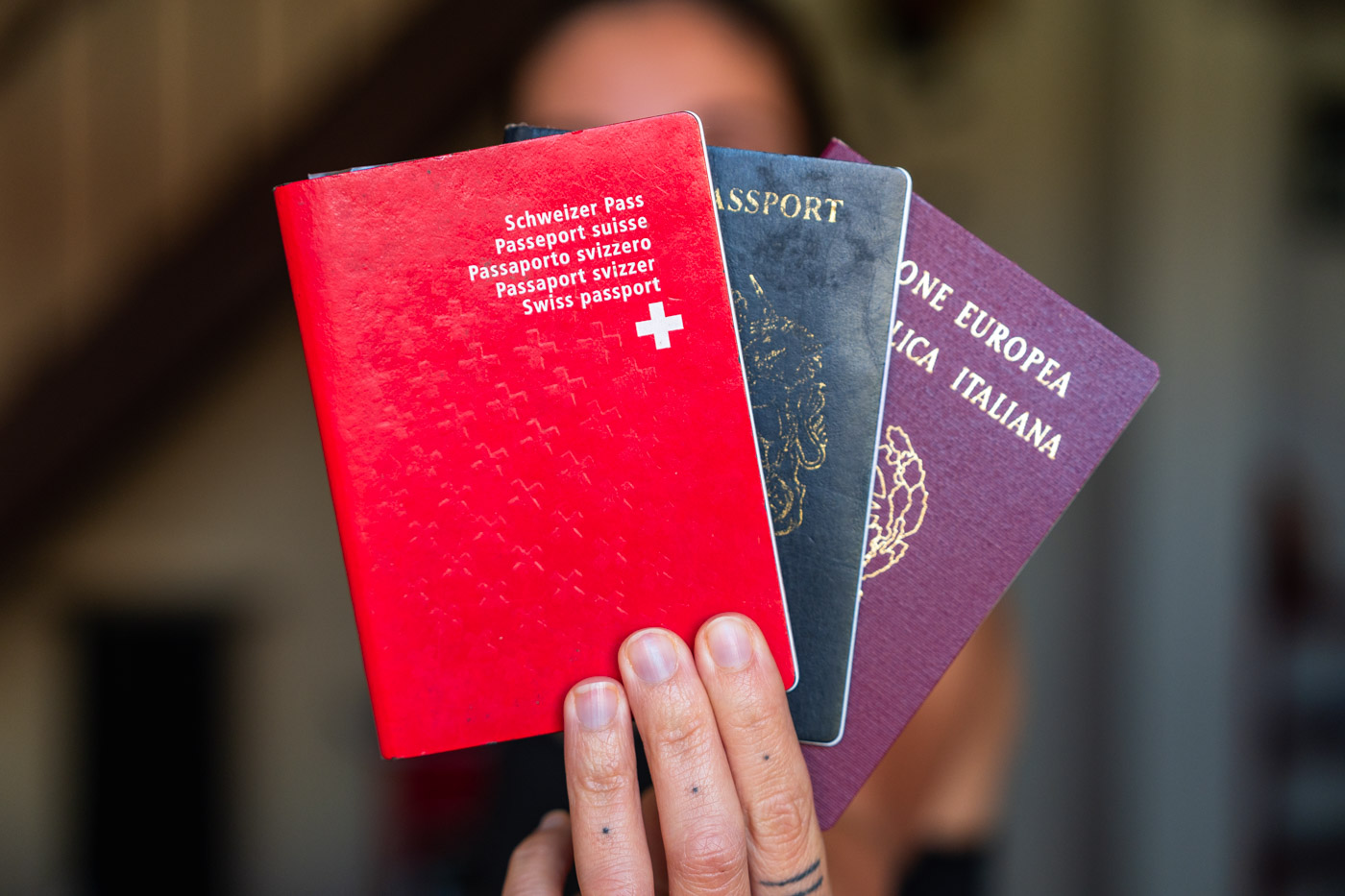
Always be aware of your surroundings
Just because Chiang Mai is a safe city, doesn’t mean you should let it lull you into a false sense of security. Even if crime is rare, it’s worth always being alert and aware of what is going on around you. If you suspect every stranger, you’ll be difficult to rob!
Make sure to have travel insurance!
By far the best insurance option we’ve found as full-time traveling nomads is SafetyWing. We’ve been with them for over three years now, and honestly, they’ve been a lifesaver.
Their customer support is some of the best we’ve ever experienced, we can renew from anywhere in the world (no residency required), and the payout process has always been smooth and hassle-free.
SafetyWing offers various insurance plans depending on how much coverage you think you’ll need:
Essential Insurance
- Emergency medical needs while travelling
- Travel protection (delayed planes, lost luggage, etc.)
- $250,000 limit
- 30 day coverage in your home country
- Best for backpackers & mid-term travellers
Complete Insurance
- Emergency and ongoing medical needs while travelling
- Travel protection+
- $1,500,000 limit
- Ongoing coverage for new conditions
- Indefinite coverage in your home country
- Health & dental check-ups
- Maternity coverage
- Best for digital nomads & long-term travellers

Avoid the back streets at night in the greater Chiang Mai area
This particular tip is more of a caution than a must. Generally, walking around anywhere in Chiang Mai is safe at night, but why risk elevating the chances of attracting opportunistic thieves by walking on a dark back street alone?
Again, this isn’t a tactic that Sara and I necessarily abide by, especially as we’re lucky to be in a pair. Instead, we tend to follow our gut. If it feels safe, we’ll continue but remain alert; if it feels dodgy, we’ll search for another route.
If you’re unsure, take a tour!
Overall, Sara and I would probably advise you that you shouldn’t be worried when visiting or basing in Chiang Mai. However, we are aware that some people have a cautious disposition when travelling outside their comfort zone.
So if you are worried about exploring Chiang Mai on your own, then why not consider a tour? There are countless tour options in Northern Thailand, booking on one means that you’ll be part of a group, and with a trusted guide to take you to all the right places!
Grab a local SIM and always stay connected
Picking up a local SIM card is by far the cheapest way to stay connected to the internet while on the move in Thailand. Of course, there are e-SIM options too, but we’ve found them to be overpriced and underperforming. However, if you find yourself with a new iPhone from the US, then you probably have no choice but to choose and e-SIM!
There are two main service providers in Thailand: True and AIS. Both providers offer several branches across the city. We decided to sign up with True and paid around $12 for 20GB for the month.


Memorise the emergency numbers
Whenever you arrive in a new place, no matter which country, you should always learn the emergency numbers. For Thailand, the emergency number is 191.
Consider the Smart Traveler Enrolment Program (STEP)
This one is for the Americans. STEP allows US citizens to enrol their trip abroad with the Department of State. This enables the department to contact you quickly and efficiently if any issues arise in the country you’re visiting.
This includes unnatural weather patterns, natural disasters, political unrest, disease outbreaks, and more.
Sign up to Facebook groups to meet people
If you’re a solo traveller, or even part of a couple, then Sara and I always recommend signing up to local Facebook groups to meet new people. It’s a method that we use everytime we arrive somewhere new, as we’re all about finding new friends!

By doing this, you can put together a decent sized travel group, and as we all know, there’s safety in numbers. Here are some groups in Chiang Mai to consider:
Be wary of street food
If you’re heading to Chiang Mai from the West, then it’s always a good idea to tackle street food slowly—especially if this is your first time in Asia or if you haven’t visited for a while!
It takes the stomach some time to adapt to the new food. Even now, after spending years in Southeast Asia, Sara and I still sometimes suffer from mild belly issues because of the food.
In addition, when choosing where to purchase your delectable street food, take a look at the conditions of the restaurant or vendor. Is there lots of trash around? Do the cooking utensils look clean? Using a bit of common sense will go a long way in avoiding food poisoning.

But don’t worry too much! Street food is usually clean and safe to eat. We’ve probably had more issues with restaurants selling Western food when it comes to upset stomachs rather than local restaurants and street food!
Use mosquito spray
There are mosquitoes almost everywhere in Thailand. It doesn’t matter if you’re down south in the islands or up north in Chiang Mai—you should always carry some mosquito repellent!
The most worrisome mosquito-borne disease in Chiang Mai is probably dengue. Dengue is a virus that will leave even the strongest people bedridden for a week. We’ve had plenty of friends succumb to dengue, and they all say the same thing: it’s the worst illness they’ve ever experienced.

Luckily, neither Sara nor I have ever had dengue (although Sara may have picked up yellow fever in Tayrona, Colombia). But the virus is a threat in Chiang Mai, so remember the repellent and cover up with long clothes if you’re heading to a particularly bad mosquito-infested area.
On the flip side, you don’t have to worry about malaria—there’s no malaria in Chiang Mai!
Respect the royal family
Something that most people don’t consider when visiting Thailand is that the Thai Royal Family demands the utmost respect. The Thai King is thought of as the “Father of the Nation,” which elevates him higher than just a symbol of power.
Some things to make sure you abide by are:
- Not wrinkling the King’s face on Thai banknotes.
- Stopping if the national anthem is played in public (this happened to us at Chiang Mai’s Sunday Market—everyone stopped moving, it was so surreal!).
- Standing in the cinema when the King’s tribute is played before a movie.
- Never insulting the monarchy, or you risk breaking the lèse majesté law.
- Not speaking negatively about the Royal Family.
- Always dressing modestly when entering temples or royal residences.

Download offline maps and Thai on Google
Two of our most used apps when exploring Chiang Mai were Google Maps and Google Translate.
Before we arrived, Sara and I both downloaded Chiang Mai and the surrounding regions on Google Maps. This meant that even if we didn’t have data, we still had some ability to continue navigating the city.
Another great tip that we always use is to download Thai on Google Translate. Although the app works seamlessly with the internet, if we ever found ourselves without a connection, we could still communicate with locals.
How to get around Chiang Mai safely
There are a couple of ways to move around Chiang Mai—some are safer than others. We’re going to discuss two different methods: driving by yourself or using taxis and tuk-tuks.
But there are still other modes of transport in Chiang Mai that we won’t discuss here, as they’re less popular options.
Is it safe to drive in Chiang Mai?
Whether it’s safe to drive in Chiang Mai or not is kind of subjective. In our opinion, the amount of danger you put yourself in by driving totally depends on what experience you have.
If, like me, you’ve been driving scooters and motorbikes around Asia for several years, then Chiang Mai is actually a super safe and chill city to drive around.

We found the traffic to be fairly light outside of rush hours, and people are generally quite friendly drivers—looking out for scooters and letting people go. The traffic is the complete opposite of somewhere like Vietnam, where cars and bikes will not wait and push through small gaps whenever they have the chance.
However, if you’ve never ridden a scooter before, or even if you have but not in Southeast Asia, then we’d recommend taking it easy. Maybe practice on some of the back streets before hitting up the main roads.
That being said, we think that Chiang Mai (outside of rush hour) isn’t the worst Southeast Asian city to be a first-time scooter rider—thanks to the smaller city traffic!
Are taxis and tuk-tuks in Chiang Mai safe?
In terms of physical safety, there’s a 99% chance that you’ll be safe in a Chiang Mai taxi or tuk-tuk. But we do recommend being self-aware of your surroundings when hiring them, just in case you run into any of the previously mentioned scams!

The best way, we think, to use taxis in Chiang Mai is to download the app Grab. It’s an all-in-one platform where you can hire taxis and order food, something we used almost every day in Thailand. A car from one side of the city to the other is about $3–5, and a motorbike taxi only $2–3.
There’s also the added protection through the Grab app, which is preferable to hiring a taxi in person.
Best time to visit Chiang Mai
Chiang Mai has quite a distinct peak season. The best time to visit is definitely from November (after the rainy season) until January (right before smoky season). During this window, the sun will be shining, the temperature will be hot but not humid, and the air quality is good.
The trade-off, however, is that this is the busiest time in Chiang Mai. Accommodation will be at its highest price, tourist destinations will be busy, and there will be crowds everywhere.

So if you’d rather a peaceful visit and you don’t mind a bit of rain, then between May and October isn’t the worst time to visit. We were in Chiang Mai last October, and despite a couple of hours of rain here and there, the weather generally wasn’t that bad! Thanks to predictable storms, we could schedule our plans around the downpours.
Just beware of possible flooding on the east side of town!
Where to stay in Chiang Mai
It can be overwhelming when choosing the best area to stay in Chiang Mai. But to make the decision easier, Sara and I are going to discuss the four most popular options!
Nimman
Nimman is the favoured area for digital nomads to base themselves in. This is thanks to its countless bars, numerous restaurant options, and great accommodation availability. There are plenty of convenience stores around, it’s a pretty walkable neighbourhood, and Maya Mall is an awesome spot to shop or visit the arcades and cinema.
Old City
The Old City is generally where we’d recommend backpackers and first-time visitors to base themselves. Although not as modern as Nimman—well, the Old City is 800 years old—it still has plenty of restaurant options and lots of travel agents. Thanks to its age, the Old City is also home to nearly 20 different temples!
This neighbourhood makes for a great base to explore the rest of Chiang Mai and beyond.

Night Bazaar
Moving east, the Night Bazaar area is perfect for anyone looking to get into the nitty-gritty side of Chiang Mai. This neighbourhood is super local, with tons of markets around and the huge Night Bazaar to explore. Despite this, it’s still pretty modern, with McDonald’s, Western cuisine restaurants, and great bars nearby!
Riverside
Riverside is a slightly rogue option on this list. The neighbourhood covers basically any area on either side of the Ping River.
During our research, we found that it’s apparently a fairly popular place to stay. However, when we checked it out in person, it seemed pretty sparsely populated. There weren’t too many restaurants or hotels around. So, we’d probably recommend one of the previous three neighbourhoods over Riverside.

Things to do in Chiang Mai
Even during three months in Chiang Mai, we still haven’t been able to do everything on offer. In terms of what we’ve missed out on but would love to do, Sara and I really wanted to visit the giant, inflatable water park at the Grand Canyon.
Besides that, I’ve been wanting to ride the Mae Hong Son Loop for years, but time has been my enemy.
Out of everything we have been able to do, our favourite recommendations would be:
- Riding the Samoeng Loop: A day trip with caves, viewpoints, waterfalls, and a jungle coaster.
- A temple day out: Some of the best in the city are Wat Chedi Luang and Wat Lok Moli. On the outskirts of Chiang Mai, we enjoyed Wat Umong and Loha Prasat Sri Mueang Pong the most.
- Climb to the highest point in Thailand: Another day trip, riding up to the peak of Doi Inthanon (2565m/8416ft) and into the clouds.
- Visit the Sunday Market: A huge night market that takes place in the Old City every Sunday, starting from around 5/6pm.
- Climb up Bua Tong Sticky Waterfall: A unique experience being able to literally walk up a waterfall, thanks to the rough surfaces of the rocks.
- Check out an ethical elephant sanctuary: Some people can take or leave this, but the inconvenient truth is, without money from tourism, a lot of these sanctuaries would have to close and the elephants would likely die. We visited Chai Lai Orchid and it was a beautiful day out with the elephants in a safe environment!

FAQs
Is Bangkok or Chiang Mai safer?
Both Thai cities are safe to visit, and we’ve never had any issues in either. However, as Chiang Mai is much smaller with fewer people, it’s definitely the safer of the two.
Why is Chiang Mai so popular?
Chiang Mai is popular for its high-quality food (both Western and Thai), high-speed internet, and budget-friendly prices. The city also serves as a gateway for backpackers heading to other destinations, like Chiang Rai or Pai.
Is it better to go to Phuket or Chiang mai?
It depends on what kind of traveller you are. If you love white sand beaches and crystal-clear waters, then Phuket is definitely the place for you. But if, like me, you prefer mountains, jungles, and more mild temperatures, then Chiang Mai is probably a better fit!
Is Chiang Mai safe for kids?
While living in Chiang Mai, we saw plenty of families strolling around with kids of all ages. As long as you prepare them for crossing the road in Thai traffic, Chiang Mai is completely safe for kids.
Is Chiang Mai worth visiting?
After doing all the research and accounting for how safe a city Chiang Mai is, Sara and I are in complete agreement that Chiang Mai is worth visiting. In fact, we have no doubt that we’ll end up back in this city time and time again as the years go on!
If you’re a digital nomad looking for a new base, we’d strongly suggest considering Chiang Mai. The infrastructure has been built perfectly to support remote working, with great Wi-Fi, awesome laptop-friendly cafés, and plenty of coworking spaces to choose from.
If you’re a backpacker, maybe your next stop will be the northern Thai city of Chiang Rai?
But whether you’re a backpacker or a nomad, you need to make sure to research which neighbourhood will suit you best, as well as consider the possibilities of a coliving space if you intend to stay long-term.
And if you’re a world exploring looking to elongate your travels, why not check out our Digital Nomad Start Pack? It’s a full guide on getting your foot in the door as somebody who dreams of earning money and travelling at the same time!
We hope that our guide covered everything you need to know about safety in Chiang Mai. We always strive to offer the most accurate and up-to-date information we can but if you think something we’ve said is wrong, please let us know!
Read more about life in Chiang Mai:
- Complete guide to living as a digital nomad in Chiang Mai
- 22 Best coworking spaces in Chiang Mai
- 25 Laptop-friendly cafes to work in Chiang Mai
- 7 Best Chiang Mai coliving spaces to stay in as a digital nomad
- 8 Best areas to stay in Chiang Mai for tourists and nomads
- Is Chiang Mai safe in 2025? Everything you need to know!
- Chiang Mai vs. Chiang Rai: Which City Fits Your Style?
- Chiang Dao Cave: Thailand’s Hidden Underground Gem
- Climbing Bua Tong Sticky Waterfall: A day trip from Chiang Mai
- Chai Lai Orchid Ethical Elephant Sanctuary in Chiang Mai: A Must-Visit!
- Day Trip to Chiang Rai from Chiang Mai: Is It Really Worth It?
- Cost of Living in Chiang Mai: How much you really need in 2025!
- Best Time to Visit Chiang Mai? We Lived There for 3 Months – Here’s the Truth!


