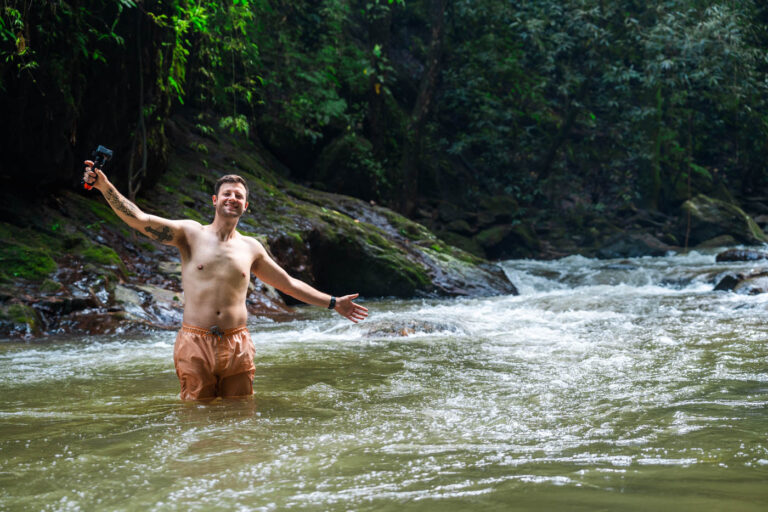
9 Easy things to do in Cusco while acclimating
At such a high elevation, you have to be smart during your first few days in Cusco. That’s why Sara and I have put together our top 9 things to do in Cusco while acclimating!
We lived in Cusco for almost two months, exploring every inch of the city and the Andes around it. We’ve been in your shoes, arriving in a city that was higher than anywhere we’d been before.

Luckily for us, we only experienced mild altitude sickness. But it was enough for us to know that we needed to take it easy, or it would get worse.
So this guide will cover the less strenuous things we did in Cusco. On top of that, we’ll answer all your questions about acclimatising and give you our top things to avoid while you’re getting over altitude sickness.
This post may contain affiliate links. Please read our Disclosure Policy.
How high is Cusco?
At 3400m (11,150ft) above sea level, Cusco is one of the highest cities in the world. Only slightly behind where Sara and I travelled to after – La Paz, Bolivia.
To put that in perspective, 3400m is:
- 39% of the height of Mt. Everest
- Over half the height of Mt. Denali (the tallest mountain in the US)
- Higher than any city in the US
- Almost 3x higher than Ben Nevis (the tallest mountain in the UK)
- Over 2x higher than Denver – the mile high city
So arriving in Cusco is arriving at some serious altitude!
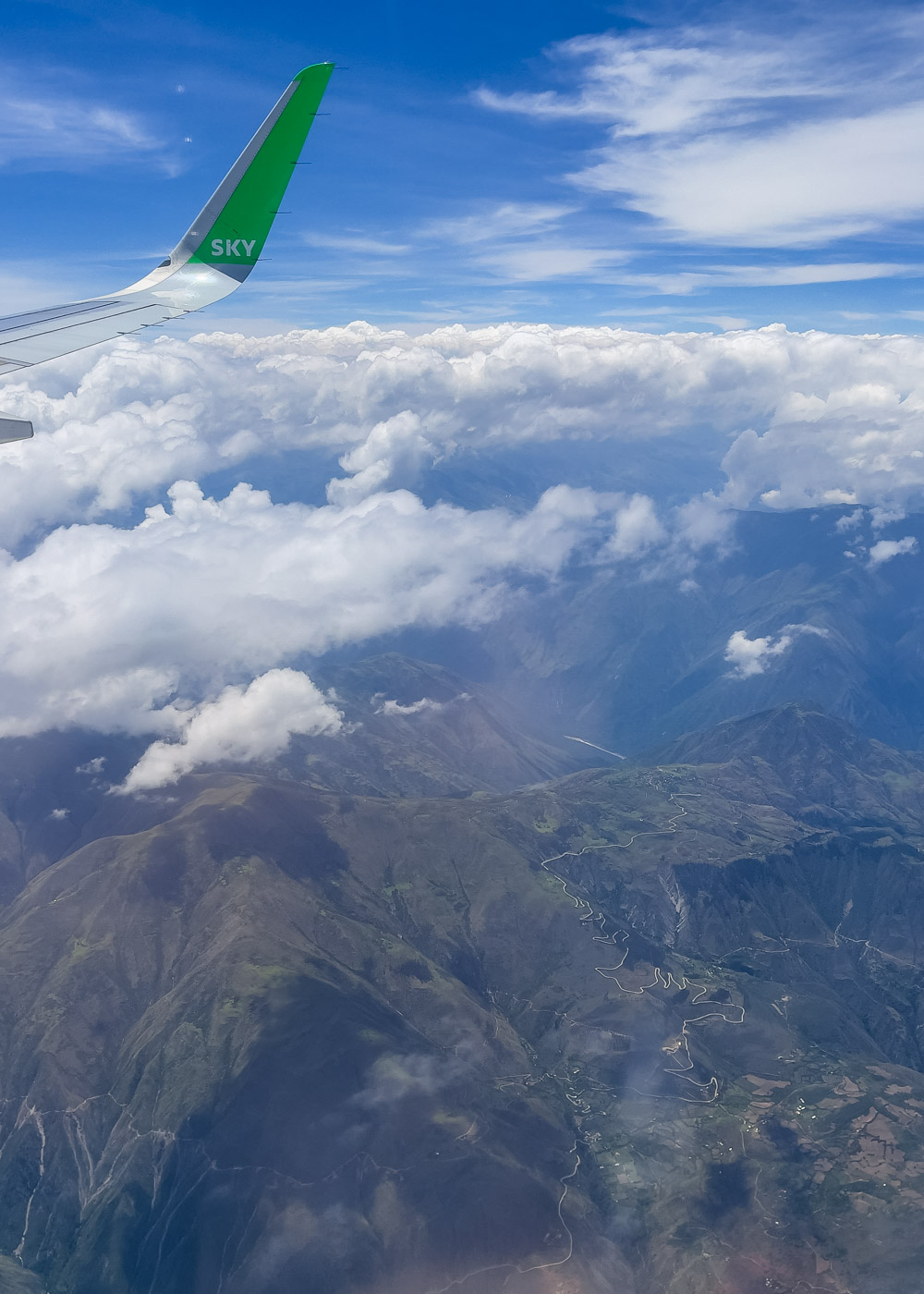

Symptoms of altitude sickness begin when we clear 2400m (7870ft) above sea level. The higher up from here the higher the likelihood of worst symptoms.
What to expect from altitude sickness in Cusco
For Sara and I, our altitude sickness in Cusco was fairly mild. If we moved around a bit too much, we’d get super tired and experience headaches and nausea. We would feel better after relaxing for an hour, drinking water and not walking.
However, the symptoms of altitude sickness can vary from person to person. While we might get a tad dizzy and sick, others might not feel anything whatsoever. Or you might be keeled over, vomiting into the toilet for a day – who knows!

If you experience more serious symptoms and they don’t disappear after a couple of days, then definitely see a doctor or consider dropping your altitude lower and acclimatise somewhere else.
Things to do in Cusco while acclimating
The activities we cover below are all things to do in Cusco that are a bit more relaxing. They can be enjoyed at a leisurely pace with plenty of down time in between!
Stroll around Plaza de Armas
One of our favourite things to do while acclimating in Cusco was to bimble around Plaza de Armas. It’s the beating heart of Cusco, a main square surrounded by restaurants, cafes and shops.
For us, nothing beats chilling on one of the park benches and people watching. Watching the city go about life around us is something that’s always been fascinating!

Join a FREE walking tour
Every time we arrive in a new city, we always book onto a free walking tour! For us, there’s no better way to learn about a new place than exploring on foot with a knowledgeable guide.
We always recommend Guru Walk as the company to book with. We’ve used them multiple times now and the guides are always great. They do sort of expect a tip at the end, but the amount is completely up to you!
Just be careful, because the walking tour in Cusco does tackle a couple of smaller hills. So if you have severe altitude sickness symptoms, then maybe you should hold off an extra day or two.

Visit the ancient Sun Temple
During the Spanish conquest, the Spanish thought it would be a great idea to demolish all of the Incan temples in Cusco. They did so in an attempt to convert the locals to catholicism and used the bricks to build their own churches.
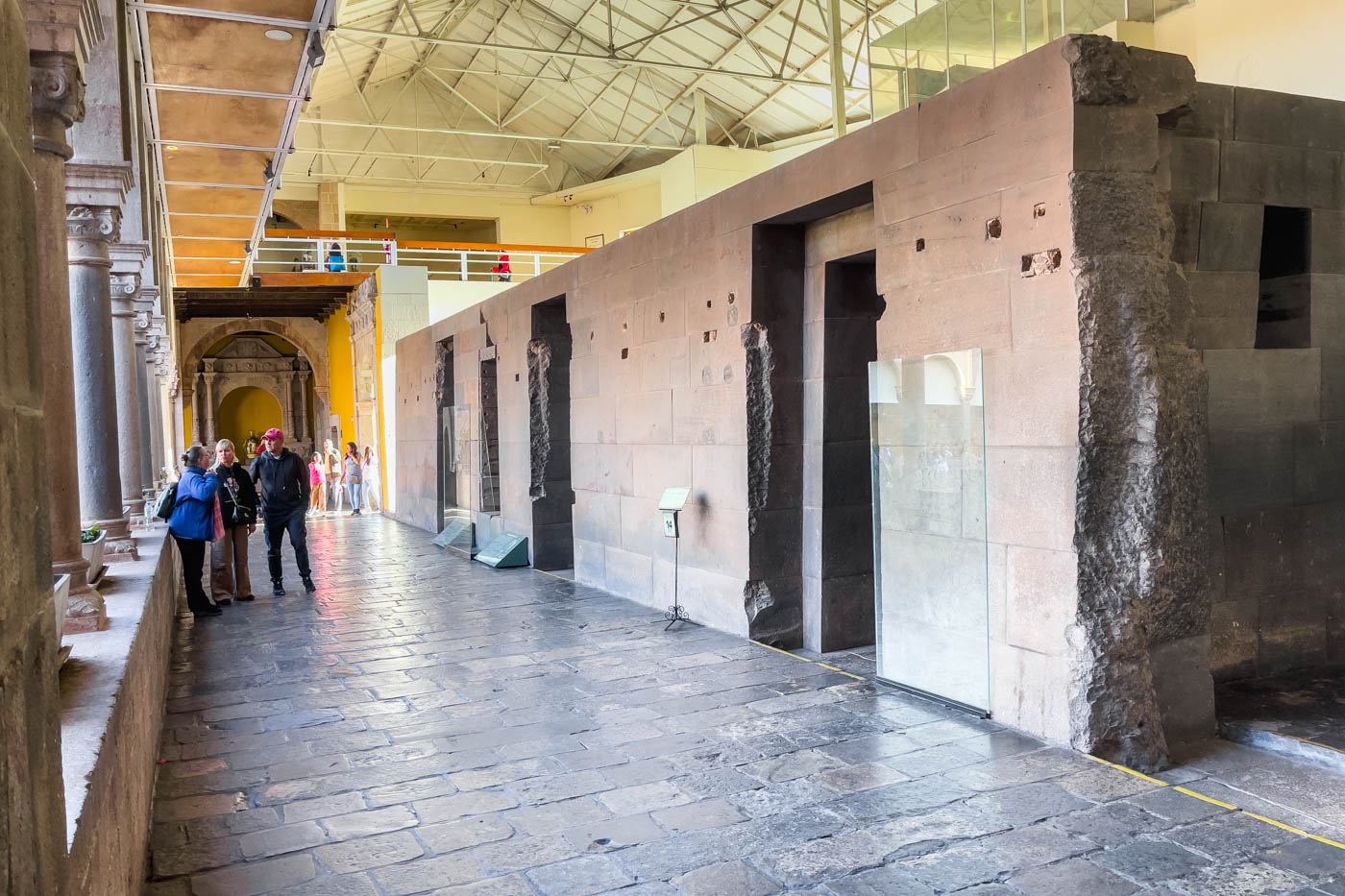
Luckily, the most important Incan temple in the city – the Sun Temple – was preserved.
Today you can venture into the Santa Domingo Church and Convent to see these Inca ruins. The perfectly carved brick walls and square structures are certainly something that we marvelled at. We could even walk inside and touch it!
Explore San Pedro market or San Blas market
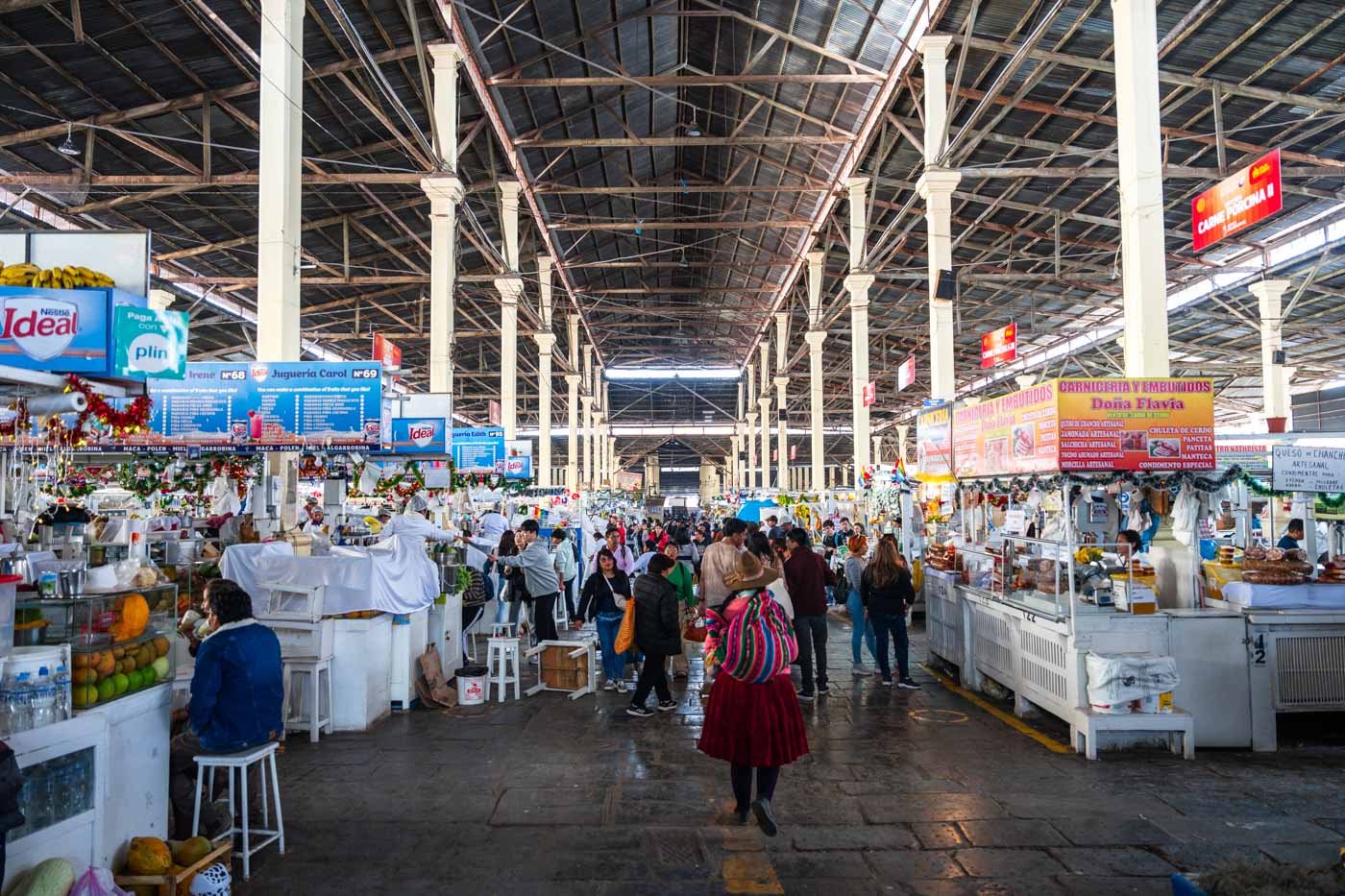
Depending on where you base in Cusco, we’d recommend hitting up a market – either San Pedro or San Blas.
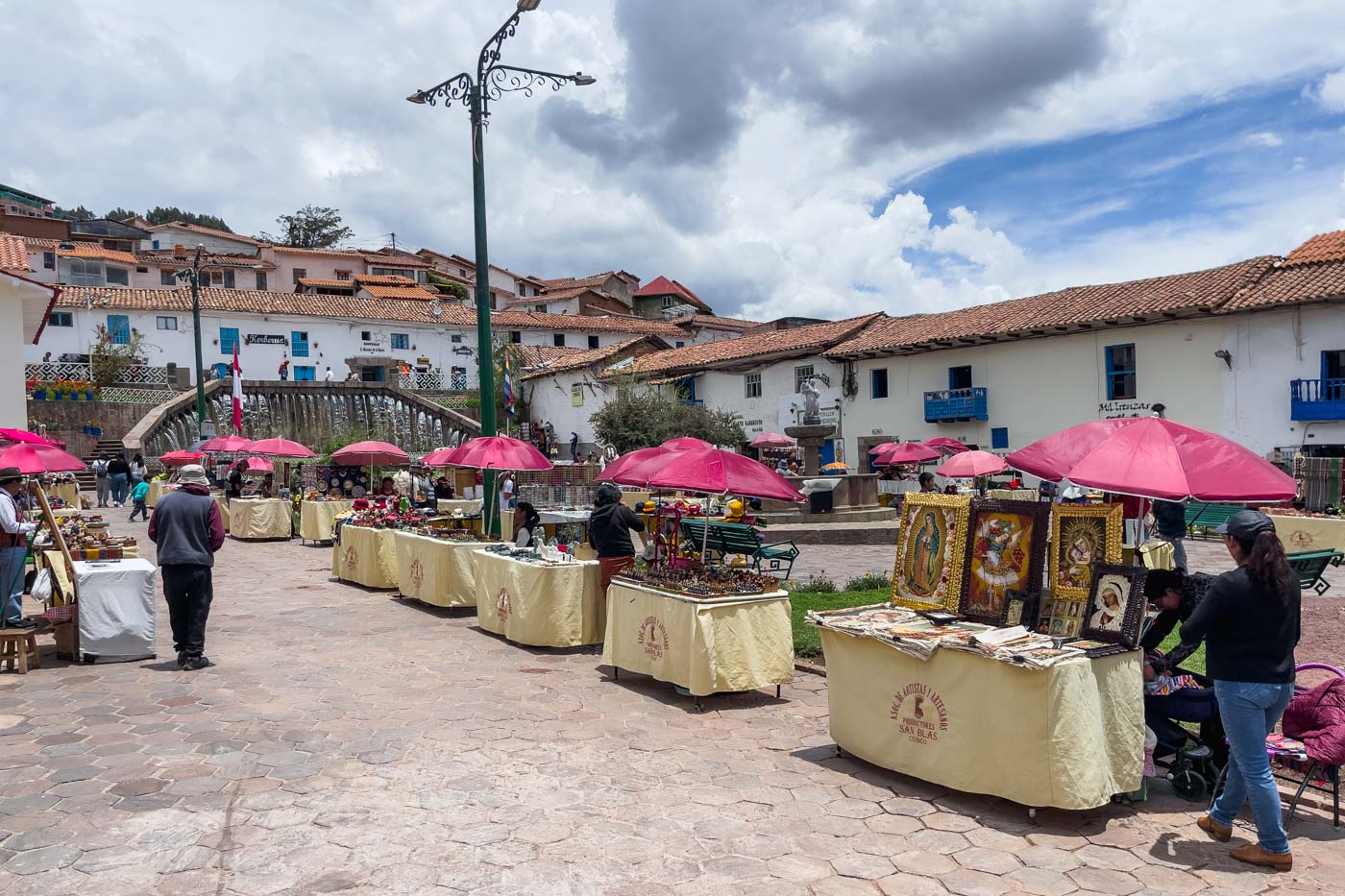
San Blas is quite an uphill trek from Plaza de Armas. But if you’re based in the San Blas neighbourhood, definitely head here!
If you’re more central in Cusco or even the opposite side of the city to San Blas like we were, then head to the larger Mercado San Pedro.
Both markets offer great food, an interesting atmosphere and unique, local experience.
Chill in one of the many cafes
If you want to level up your people watching experience from Plaza de Armas, then head to one of the cafes around the square.
Many actually have balconies overlooking the Plaza. You can pick up a locally roasted coffee, chill on the balcony and watch the world go by with a nice hot cuppa!

Try your taste buds with cuy
If you don’t know, cuy is the quechuan word for guinea pig – sounds rough right?
But hear us out, cuy is actually a delicacy in this part of the world. For decades or longer, it’s been a traditional meal served up at important events and celebrations. So much so that you’ll find it on the menu in most Peruvian restaurants in Cusco.
When we stayed in Cusco, we actually lived with a local family who offered to prepare it for us. So the grandma of the family went to work and served it up to us on a plate.
Now, seeing a whole guinea pig on a plate is quite disconcerting. Honestly, it doesn’t have much meat to it but the flavour is delicious. It’s certainly an experience, one we don’t plan on doing again anytime soon. But hey, at least we can tick it off the bucket list!

Book a chocolate workshop
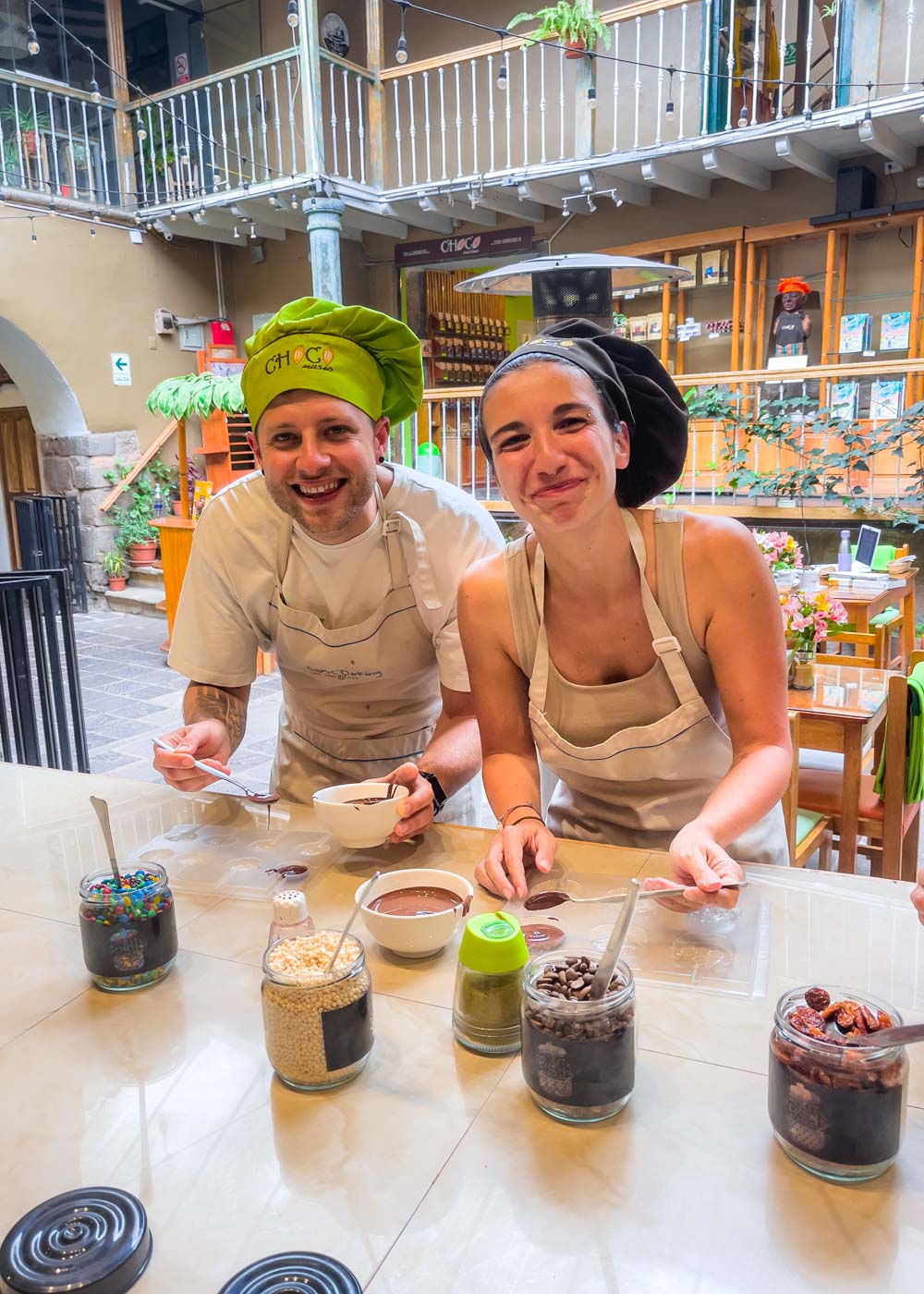
Sara and I didn’t book our workshop while acclimating in Cusco, but it’s definitely a great activity to do!
It’s at the ChocoMuseo and costs about $33 and is a 2-hour masterclass on the chocolate industry in Peru. While learning about that, we worked through the process of making our own chocolates!
Pro tip: pick the chocolate mould that has the biggest volume of chocolate. Ryan picked the emojis but his chocolates were tiny haha!

Walk around Cusco Cathedral
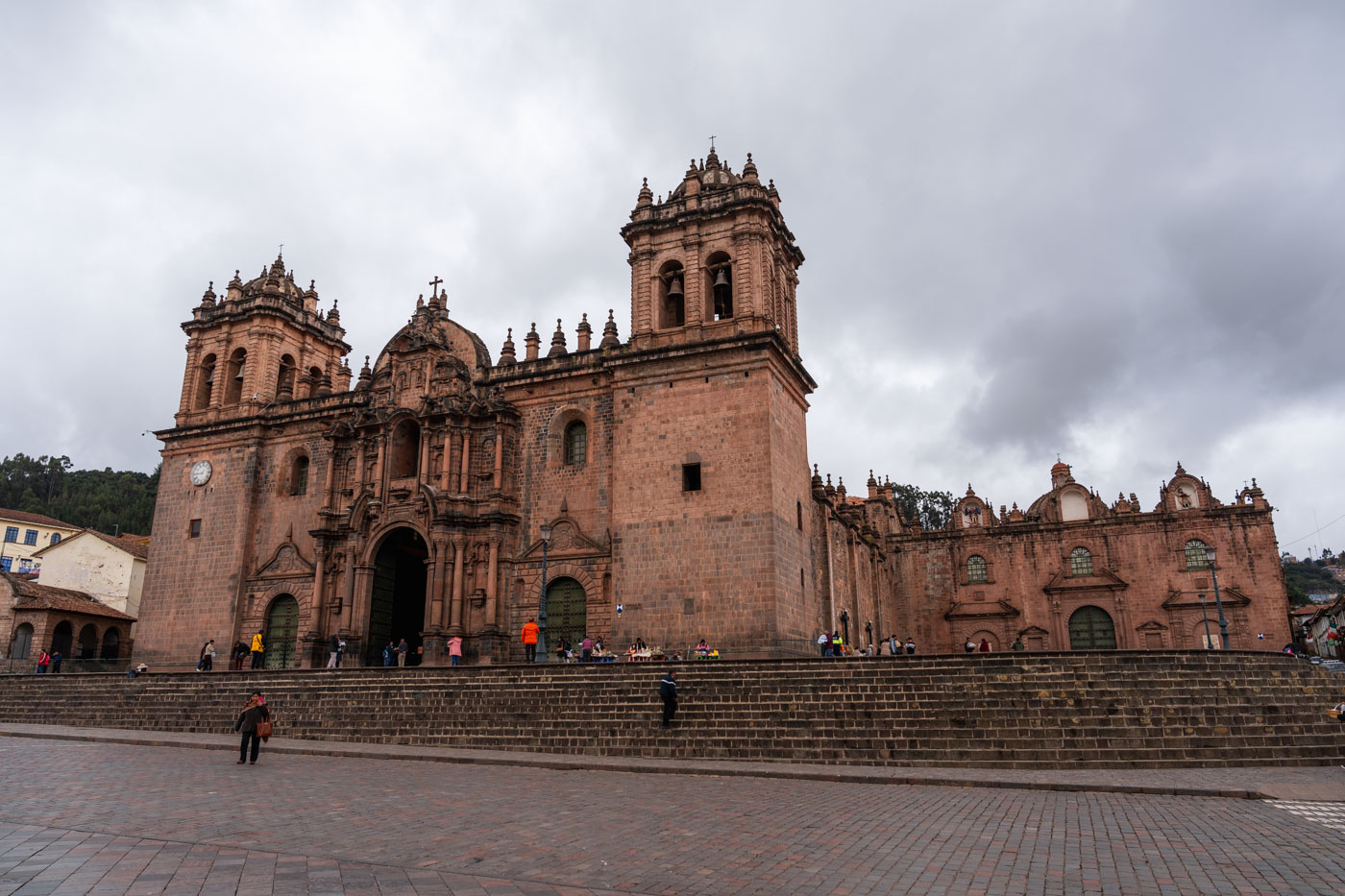
At the north end of Plaza de Armas you’ll find Cusco Cathedral. Built in 1668, this is one of the largest religious buildings in the city.
Entry tickets will set you back a hefty S/.40 ($10.76), but it’s a very relaxed experience admiring an insane feat of architecture.
Learn new things in a museum
There are a few museums in Cusco that you can visit super easily. Around Plaza Regocijo you’ll find the modern art museum and the Regional History Museum of Cusco.
However, one of our favourite museums to explore was the Inca Museum. It took us on a historic journey from pre-Inca times, to the Inca Empire, through the colonial period all the way up to the current republic.

Should you book a tour when acclimating in Cusco?
There are a lot of blogs out there that recommend heading out on a Sacred Valley day tour while acclimating. You might be feeling a day trip, but realistically this isn’t something we would recommend.
Yes, most places like Ollantaytambo, Pisac and Moray are all below Cusco’s altitude, but it’s still a long day out. You’ll need to climb steep stairs, walk up and down hills, and in general it’s a lot of driving through windy mountain roads.

We personally think we were better off just chilling around the city.
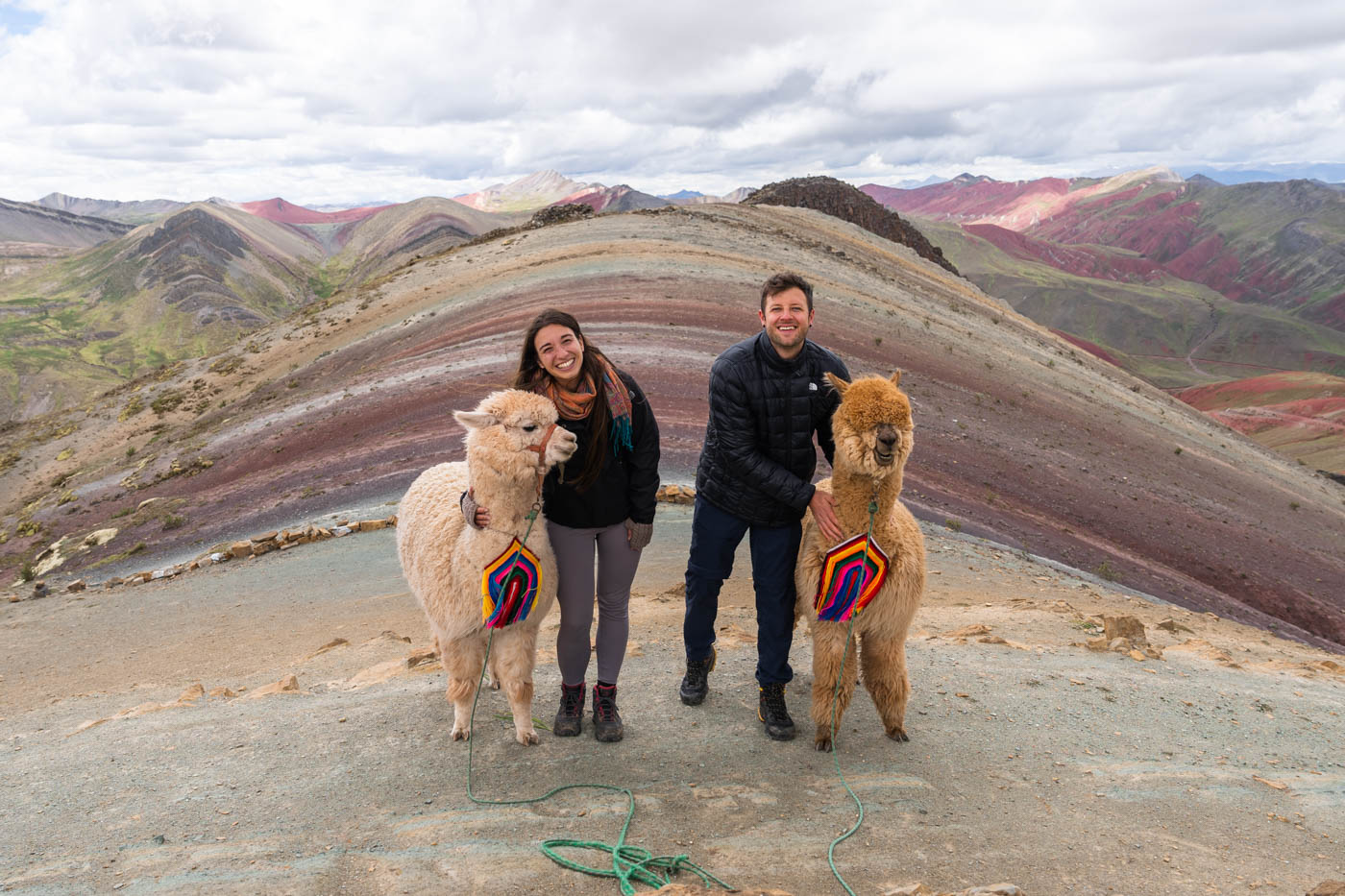
And most definitely DO NOT book a tour to a rainbow mountain or to Humantay Lake. They’re both at a much higher altitude than Cusco and we had to hike up to them. The recommended time to acclimatise before these is 3 days.
But we’d say book these tours at a time you know you’ll be over your altitude sickness!
Can you visit Machu Picchu while acclimating?
The short easy answer would be yes. Aguas Calientes (the town beside Machu Picchu) sits at 2040m (6670ft) and the citadel itself is 2430m (7970ft). Both of which are below or on the cusp of where the average person experiences altitude sickness symptoms.
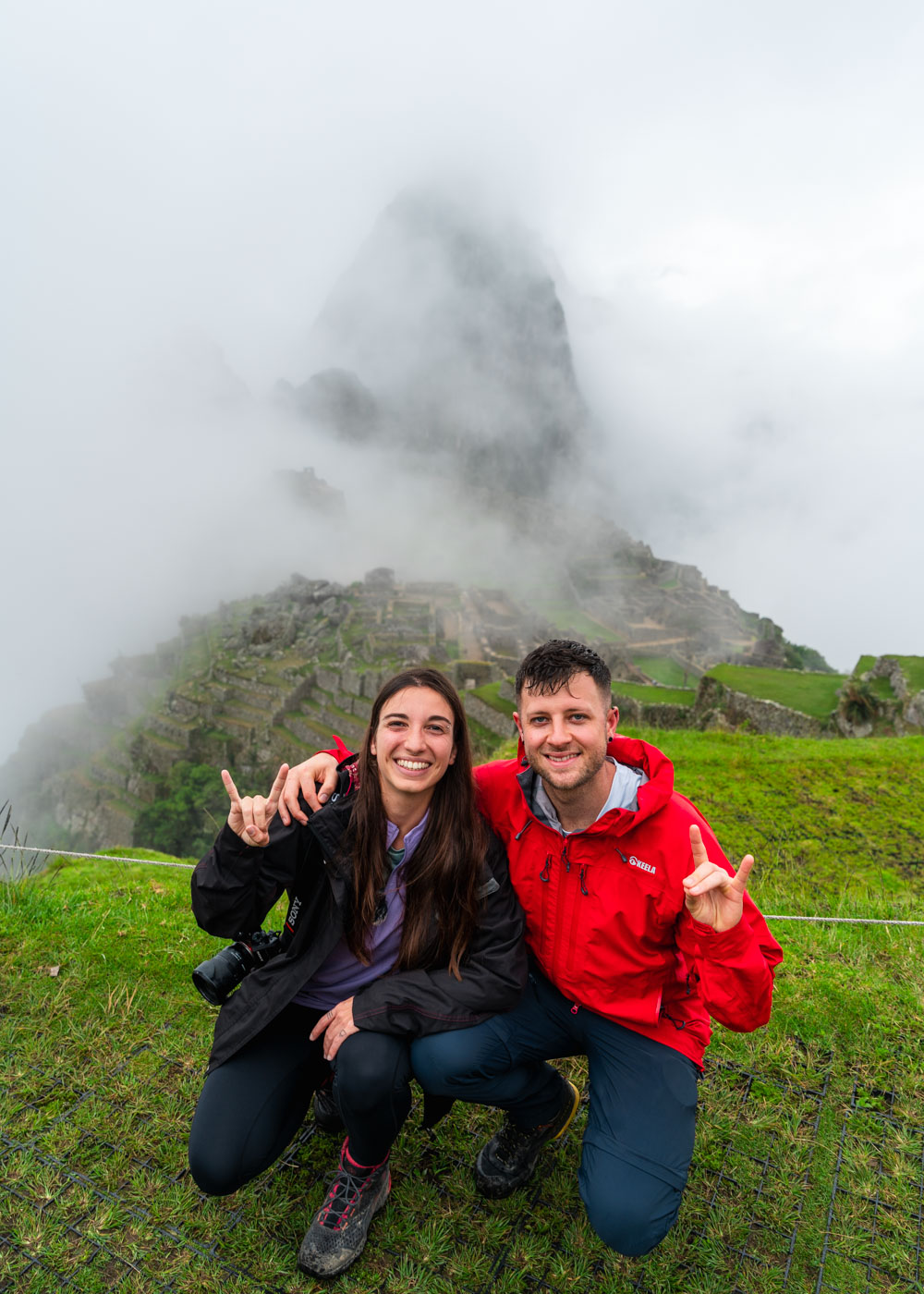
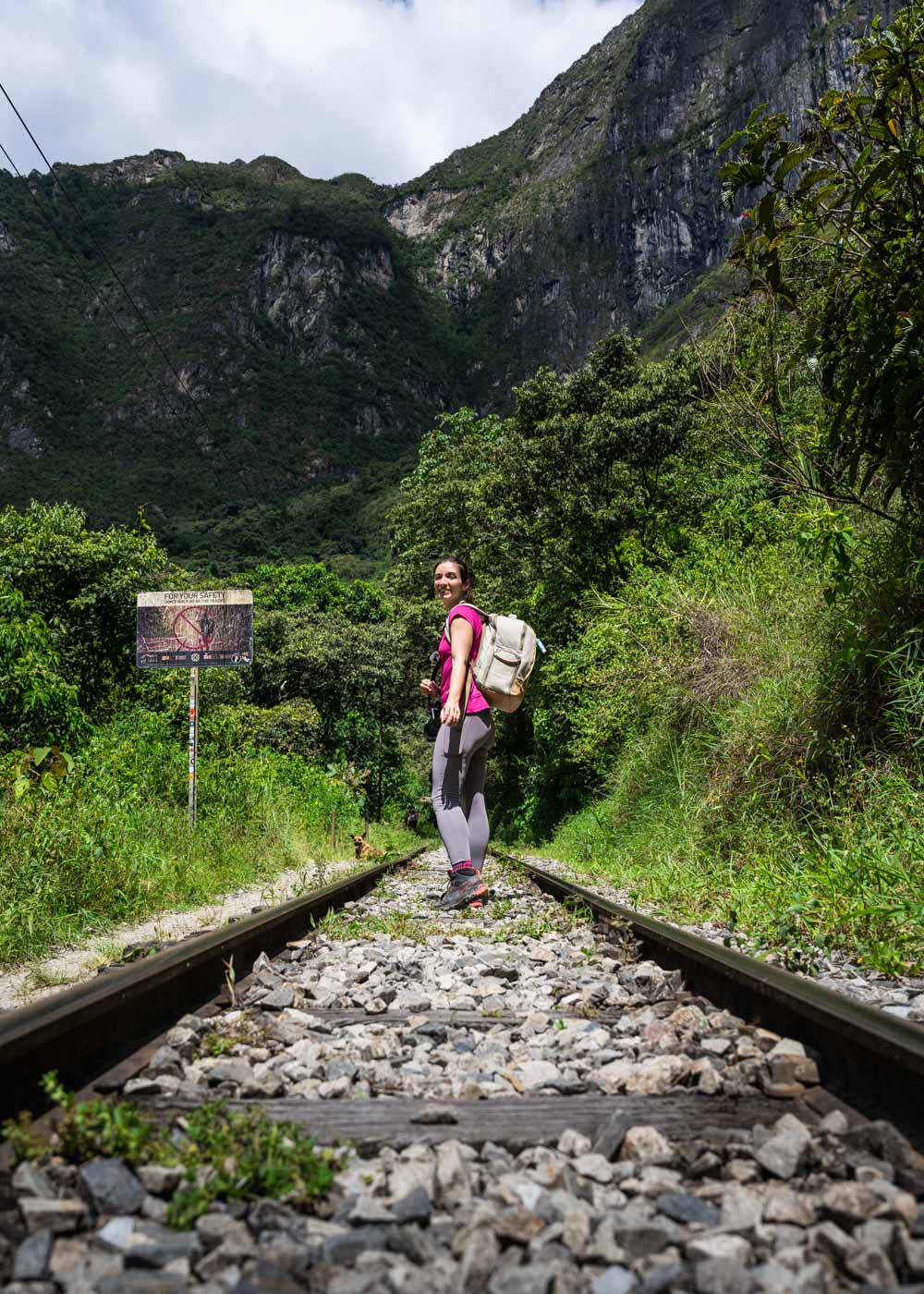
But if you were to visit Machu Picchu immediately after arriving in Cusco, then we highly recommend taking the train. It’s the most expensive option but this route doesn’t require any hiking or strenuous exercise. The entire journey can be done in one day tour.
If you plan to hike the Salkantay trail or the Inca trail, then definitely spend a few days acclimatising in Cusco first!
Things to avoid in Cusco while acclimating
Now we figured you might be thinking “well, what shouldn’t I do while acclimating?”
Don’t worry because Sara and I gotchu!
Strenuous exercise
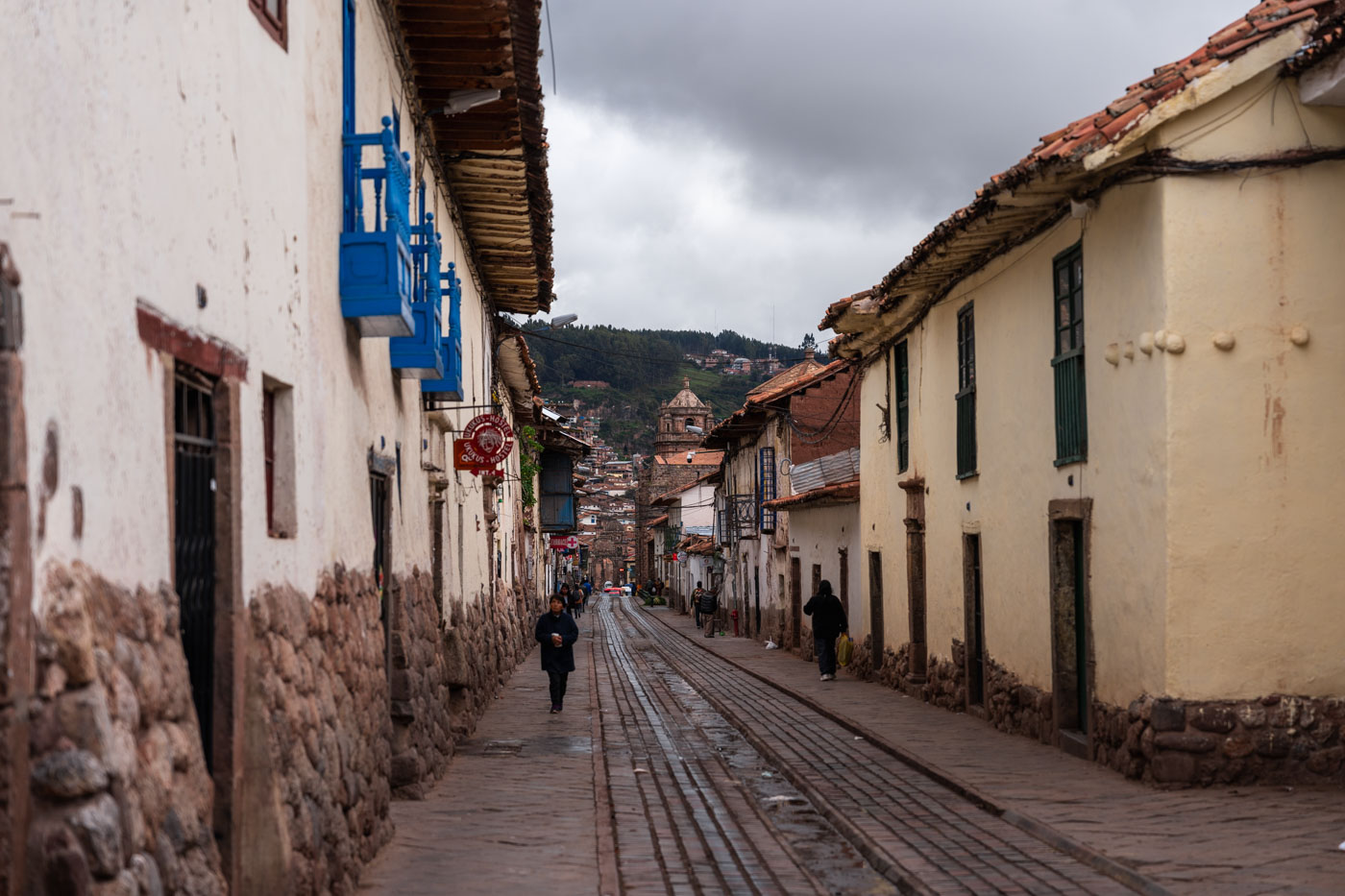
The worst times we ever felt the symptoms of altitude sickness were when we were walking up hills. Unfortunately there are a lot of hills in Cusco, so they’re hard to avoid.
But maybe, if you know you have a large uphill stint coming up, try to break it up with rest stops for lunch or coffee.

Hiking
We mentioned it above, but avoid hiking completely. During our first few days in Cusco, we constantly felt like we weren’t getting enough oxygen in our system.
There was absolutely NO WAY we were hiking. Whether that was to Palcoyo Rainbow Mountain or just up to the Temple of the Moon, it just wasn’t happening.
Excessive alcohol
Alcohol is the enemy to altitude sickness. Even at sea level, alcohol makes it harder for oxygen to get around your body. Don’t exacerbate something that’s already bad.
Poor quality sleep from going to bed drunk will also slow down acclimatisation.
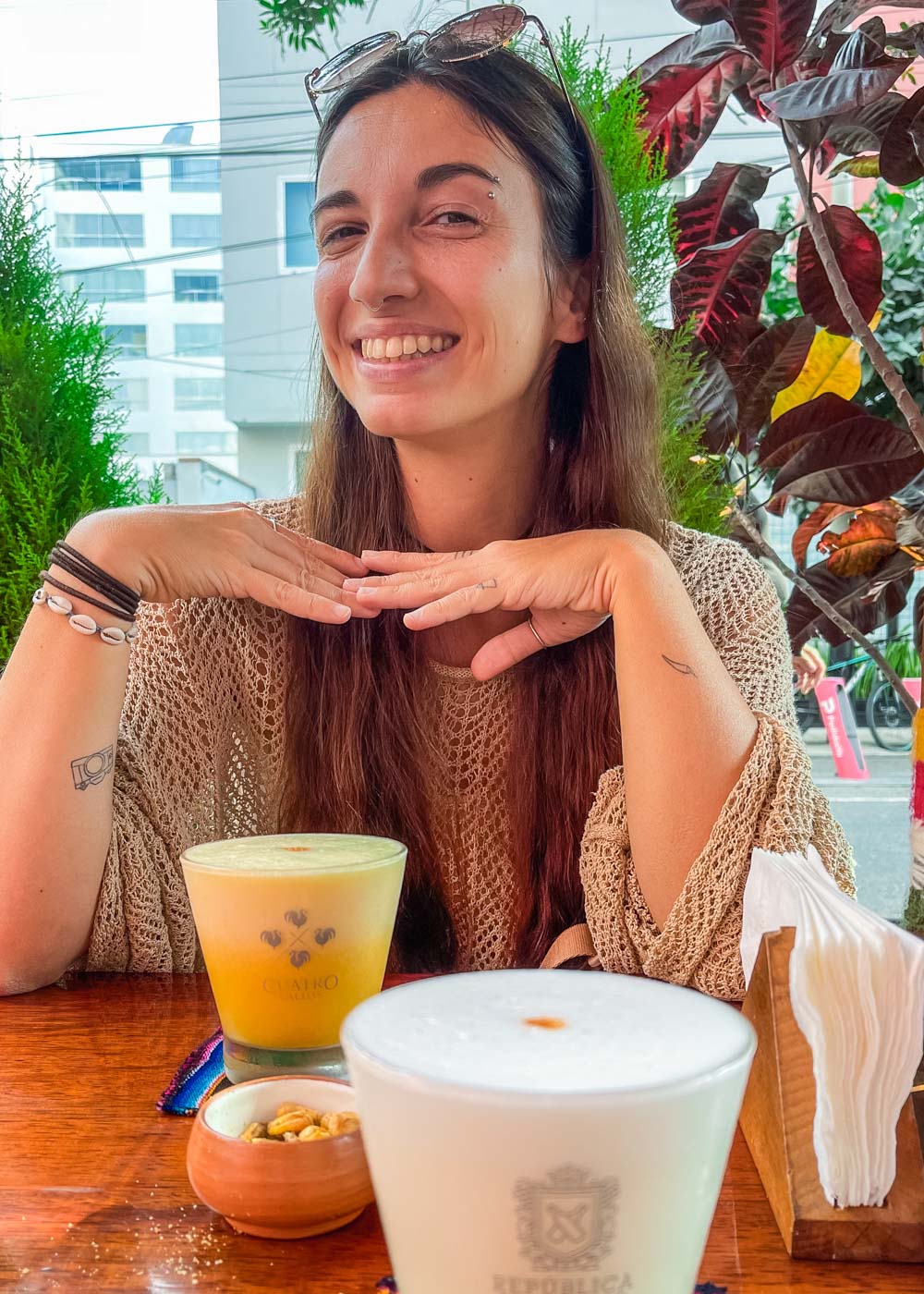
Eating street food
Another thing it’s probably best to avoid is street food or, in general, cheap local food.
If you’re like Sara and I, we often felt nauseous when the symptoms kicked in. So it’s best to stick to food your stomach is used to until it passes.
Stay up late
We sort of covered it in the alcohol section, but we found that a good, long and quality night’s sleep really helped our symptoms. Sleep is crazy powerful when it comes to recovery, and you’ll acclimate faster with a couple of good night’s kip!
What you can do to help yourself acclimate in Cusco
Here are a few things that Sara and I really found helped alleviate the symptoms of our altitude sickness.
Drink coca tea
Yes, coca leaves are what cocaine is produced from. No, chewing the leaves or drinking the tea isn’t the same as taking cocaine.
In the Andes, chewing coca leaves is actually a huge cultural tradition. But for non-mountain folk like us, the effects from the leaves help stimulate blood flow, suppress hunger and in turn reduce nausea and headaches.

We did try chewing the leaves with an activator like bicarbonate of soda. However it made our mouths go pretty numb! Instead, we preferred to steep the leaves in boiling water and drink it.
Usually, our symptoms would disappear around 15 minutes after drinking the tea!
Stay hydrated
One of the best advice we received, and that we’ll impart to you, is to stay SUPER hydrated.
Water is one of the key molecules that helps get oxygen and energy to your body. I have a degree in Biology, so I could bore you by talking about the electron transport chain… but I won’t.
You’ll just need to trust us!
Get plenty of rest
I think this is the third time we’ve mentioned it now, but get tons of rest!
Get a long and good night’s sleep, take breaks when walking around the city, relax at home if your symptoms are a bit difficult to deal with.
How long does it take to acclimate in Cusco?
The general recommendation is spending two full days to acclimate, or three before you take on a location even higher than Cusco.
From our own experience, this amount of time seems about right. We never really got used to the shortness of breath being at altitude, even after a couple of months. However, after around three or four days, the worst of our altitude symptoms had pretty much disappeared!
Is acclimating in Cusco necessary?
The need to acclimate will be different for everyone. Some people might experience quite severe altitude sickness, while others might not even get a headache.
We do believe that it’s necessary to AT LEAST plan for two days of acclimating. On top of this, it might be worth just keeping a flexible schedule for an extra day or two just in case you need it.
However, if after your first day in Cusco you still don’t feel any symptoms then you’re probably good to go. But we aren’t medical professionals, so just listen to your body!
Where to stay in Cusco
If you’re planning this 2 days in Cusco itinerary, here are a few great spots in the historic centre to stay!
Hostels:
- Wild Rover Cusco ($7-15/night) ← Cusco’s party hostel.
- Viajero Kokopelli Hostel Cusco ($15-40/night)
- Cusco Rock Hostel ($16.50/night)
Budget Hotels:
- Eco Bunnu Inn ($23/night)
- Cochito Cusco ($28/night)
- Andean Valley Hotel ($26/night)
Mid-Range Hotels:
- Amaru Colonial ($57/night)
- Casa Montes San Blas ($49/night)
- Hotel Hacienda Cusco Centro Historico ($56/night)
Luxury Hotels:
- Union Hotel Cusco ($100/night)
- Auka Boutique San Blas ($74/night)
- Anahuarque Hotel Boutique ($72/night)
Things to do in Cusco while acclimating – final thoughts
We don’t want to scare you, but we’ve heard some horror stories from people who’ve failed to acclimate at altitude properly. So we recommend taking this subject super seriously and really plan the beginning of your trip around it.
Keep the first couple of days simple and easy with the above activities and set yourself up for a great trip in the Andes!
Check out our other Cusco guides:
- Is Cusco safe to visit in 2024? Everything you need to know
- What’s the rainy season in Cusco like? – Peru Travel Guide
- Cusco Weather in January: A good time to visit?
- Cusco in December: Weather, celebrations, things to do and more!
- Spending Christmas in Cusco: Things to do and how to celebrate!
- One day in Cusco: The perfect 24 hour itinerary!
- 2 Days in Cusco: The best way to see everything quickly!
- 3 days in Cusco: A full itinerary and everything you need to know!
- 4 days in Cusco: A full itinerary and everything you need to know!
- 16 Completely FREE things to do in Cusco!
We hope that our guide covered everything you need to know about things to do in Cusco while acclimating. We always strive to offer the most accurate and up-to-date information we can but if you think something we’ve said is wrong, please let us know!